
Originally published in Rock Hard.space · October 2019
This Feeling Inside Me: The Story Behind “Metropolis Part 2: Scenes From A Memory”
By Sakis Fragos · October 26, 2019
InterviewTranslatedJordan Rudess46 min read
Translated from the original language with DeepL, so the wording may differ from what was actually said.
Dream Theater’s “Scenes From A Memory” is one of my two favorite albums of all time (the other being “Images And Words”) and by far the album I’ve listened to more than any other in my life. I had the good fortune, 20 years ago, to do a great interview with Mike Portnoy about this album, but now the time has come to set up a Skype appointment with my dear friend Jordan Rudess, for the 20th anniversary of the album, as part of the “Fly on the wall” column. Unfortunately, 50 minutes didn’t seem like enough time to cover more than 60-70% of the questions, but I think a lot of important things were said that show how this band works and what really happened during that period when history was made... Another marathon, here we go...
How did your European tour this summer go, really?
It was amazing. The band seemed stronger than ever and the audiences everywhere were numerous and demonstrative. It’s a bit weird, because just when we and other people might think that our career has reached a “quieter” point so to speak, you see that it’s still on the rise and that’s amazing but also crazy.
That’s all well and good, but our interview today will be about “Scenes From A Memory” and its twentieth anniversary. I read a lot and listened to the album four more times, making it 10004 or so [laughs]. Let's start from the beginning: Just before you join the group, after the "Falling Into Infinity" tour, the situation in the band was rather awful. Mike Portnoy had basically quit once and was very unhappy with a lot of things in the Dream Theater organization, the group had fired Derek Sherinian after just one studio album, there were problems with the record label... Did you notice these things when you joined Dream Theater?
No, the moment I joined the band, they had a new member and it was exciting for everyone, it was a renewal. I didn’t feel for a moment the turbulence that had happened before I joined the band. When I went into the studio to write the album, there was just full-on positive energy and a drive to move forward. I guess everything was back on track because I never heard of any problems with the record company and we were all looking to make the best album possible. Maybe it had something to do with the fact that the group was seeing a new beginning by getting a new person and we were going very strongly down a new road.
So we’re not talking about a band that was about to break up.
Just the opposite. I would say it was the next level of Dream Theater that was ready to take off.
Obviously Liquid Tension Experiment was the reason you joined the band. What did you find different from when you played with them for just one show, at the Concrete Foundations Forum in 1994?
When I had worked with John Petrucci and Mike Portnoy on Liquid Tension Experiment, I thought I had a full understanding of the parameters and the limits they set. So when I went into the studio with Dream Theater, I had assumed that I knew everything that was going to happen. But I was wrong. When I joined the group, I realized that I was entering an organization where all the parameters had already been set, on every level. On the musical side, on the business side, even on the specific dynamics that existed within the group. LTE was more of a project where all members contributed almost equally. We were trying something new at the time and there was no specific sound in the band. So when I joined Dream Theater, I wouldn’t say there were rules, but a lot of things that I had to understand, follow and fit in with something that already existed. And what existed was a strong brand name. Although I did not seem to have any problems because I was hired knowing that I could handle it, I had to learn a lot of things like what fit the music of the band and how far I could experiment. My creativity, throughout my life, has been in almost every musical genre on the map, from classical music and soft piano music, to hardcore electronic and all the stuff I do on my solo albums. Of course I knew Dream Theater’s music, but I didn’t know exactly what my role in the band would be. If they wanted me to take them in a different direction, what would it be, a whole bunch of new things for me. I also couldn’t understand their career, because I hadn’t toured with them. I was very excited when I went into the recording sessions of the album and I had brought with me about 60 new ideas, riffs and little themes. I remember Mike Portnoy telling me that they didn’t write like that, but they liked to write in a room together and I was in a very awkward phase of “Oh... I didn’t know” [laughs]. And I asked them if they wanted to hear my ideas eventually and they did, they listened to them all, one by one. But that was the first important lesson I learned, coming into the band: that you don’t have to bring your own ideas, but by playing together to find creativity collectively.
As I had read, almost all of your ideas were rejected.
No!!!! Some may have been thrown away, but there were quite a few that made it onto the album. In those days, Mike Portnoy wanted to be in control of things, to look like he was “in charge” [laughs].
After “Falling Into Infinity”, almost all members of Dream Theater took part in various side-projects and tribute albums that were very fashionable at that time. To mention Liquid Tension Experiment, Platypus, Gordian Knot, Explorer’s Club, Mullmuzzler, tribute albums to Queen, Rush, Emerson, Lake & Palmer and others. Do you think it was a process the band members followed to forget about the “musts” that the music industry dictates? Were they trying to achieve artistic freedom at the time?
It goes without saying that I can’t speak for the rest of them, but I was definitely building my career, since I wasn’t yet in Dream Theater – in a very consistent band. I joined Liquid Tension Experiment because I wanted to work with John Petrucci and Mike Portnoy, and of course Tony Levin; I played on the tribute albums because I liked the ideas. With those kinds of moves, I was building my career while the other members of Dream Theater were part of a band that was already among the best in the business. Speculating, I would say that if you were talking to John Petrucci, he would tell you that for the rest of them it was something like building their careers further, but also that they were interested in doing other things outside of the group.
One of the non-negotiable conditions that was set was that Portnoy and Petrucci would take over production. Why did that happen? Were they so unhappy with their previous producers? Okay, we know about David Prater for example, with whom a very strange incident happened during the tour for “Scenes...” in Dallas, if I’m not mistaken... Really, what had happened then?
Oh, my God... Yeah... [his face took on an expression of complete frustration – ed.] I really don’t remember. In fact, I remember being told that something had happened, but I wasn’t there to see it... [urban legend has it that David Prater, their producer on albums like “Images And Words”, was in the audience at a concert in Dallas and the rascal went to the console, demanding to take over the group’s sound himself, during the encore, unbeknownst to anyone, with Portnoy going ballistic... Magical moments].
So tell me then, why John and Mike really wanted to take over the production.
Yes, of course. They both felt that the pattern they worked on in “Falling Into Infinity” didn’t work well at all. They were frustrated that the label was in control and felt it was the right time to take matters into their own hands. They also had a new person in the group, me, who couldn’t say “no” to them anyway, since I was fresh in the band. I remember one time, Mike and I were driving around after some recording sessions and we were in a car repair shop. Mike said to me: “Look, I need to talk to you about something. Actually, John and I are going to produce the album.” Great, and what was I supposed to say? No? [crazy laughs maniacally] My response was something along the lines of “thanks for inviting me into your band!!!” [laughs] They already had a career for over 10 years in the band and felt they had the performances and experience necessary for such an endeavor. As you can understand, I stayed in the band and I didn’t tell them that I was leaving Dream Theater, but that it was OK by me [laughs]. When Mike Portnoy left the band as well, that’s when John said: “So Mike’s gone, so it’s a chance for me just to produce our albums.” And then my response was “OK, great”!!! What happened with “Scenes...” was the beginning of what followed.
I think part of the problem was that they couldn’t work with “outside” producers anymore...
You mean, they didn’t WANT to work with them. They thought we were self-sufficient and I really think we were self-sufficient. After all, who can tell Dream Theater what to do? We’re talking about people who knew exactly what they wanted from our music, very capable, intelligent and who could work very well with our very unique compositions.
So, great... Dream Theater had problems with their previous producers. To be perfectly accurate, their very last producer, on “Falling...”, was Kevin Shirley. What was the logic behind John Petrucci going to him and asking him to remix the album [“Scenes...”] and in fact within two days? That doesn’t fit with me, no way though.
At the time, John Petrucci was very close to Kevin Shirley, they had a very good relationship. Kevin is very talented and John knew he had a sound he could trust. Kevin wasn’t producing, we got him to mix. The mixing was originally done by David Bottrill, but I remember we weren’t particularly happy with the work he had done. I think John thought he could have the sound he had in mind if he went to someone who knew our sound and could “save us” [laughs].
I see. We’ll talk about David Bottrill again later. But let’s go to the recordings now. You went to BearTracks Studios because you wanted to draw inspiration, since you had written “Images And Words” and “A Change of Seasons” there. Speaking of inspiration, can you start by telling us what kind of thing was this “inspiration corner” of Mike Portnoy’s, something that has caused a lot of discussion from people who didn’t understand what it was about? In the videos we’ve seen, there’s a number of CDs of the Who, Pink Floyd, Marillion and many others in the space you’re in...
Mike Portnoy is a very passionate man. He really likes concept albums and he always said that this album would be Dream Theater’s “The Wall”. So he took a bunch of those kind of CDs: Queensryche, Pink Floyd, Who and put them in a row in the studio. That’s a totally Mike Portnoy thing and I’m sure you understand me perfectly and exactly what I’m saying. I didn’t know him that well at the time, but I was OK with it. It did not affect me, because as a songwriter I don’t work that way at all. I take my musical influences, listen to the harmonies and sounds and try to figure out what makes different kinds of music work right, and then I compose. In a way, that was cool, because Mike was that kind of character and a very unique person. I didn’t want to have anything to do with it, because I wanted to create original music. I didn’t want to copy the Who or Queensryche or Pink Floyd, not to mention I wasn’t interested in a lot of the bands Mike had over there. One of the great things about Dream Theater is that when they start doing something, there’s always a very strong and specific plan behind it. And Mike played a very important role in that. He knew everything about where the band was and where it wanted to go, what we needed to create, what sound we needed to have, what effects we needed to use. Creating that “inspiration angle” was part of the bigger picture, then. I’d say he was reinforcing his vision of what he was doing. And without a doubt, he achieved that. “Scenes From A Memory”, has a very important place in the history of music and a very important reason was certainly the planning that had gone into it. On the musical side of things, if you ask me, I didn’t want to have much to do with it though.
So I guess it wasn’t your “inspiration corner”...
I really like “The Wall” and The Who, but I don’t want to copy anyone.
So Mike wanted to copy someone?
I wouldn’t say he wanted to copy, but he certainly saw things from a completely different perspective.
Since we are talking about copying, “Home” is very similar to Tool’s “46 & 2”. Had you noticed this similarity?
At that time I hadn’t heard a single note from Tool. Unlike John Myung, who first played that on bass, who knew them very well and was obviously his source of inspiration, so what you say makes sense.
And it comes and ties in with David Bottrill, who did your initial mix, who had worked with Tool on “Aenima”, which is where “46 & 2” is from!!! Had you decided to compose a song that sounded like Tool? Was it a conscious decision or did it just come out of Myung’s mouth?
That’s a very good question, but one that John can probably answer for you. What I do know is that he came up with this bass line, which I personally thought was pretty cool.
So if I ask him will he answer? I think he talks by playing notes on the bass! [laughs]
You’re not wrong!!! [laughs]
By the way, how did you give your consent to release an edited version of “Home” that is 7 full minutes shorter? Even for a promo single or compilation where it was actually used...
Wow! Yeah... That was Mike Portnoy and John Petrucci’s job as producers of the album. Our label wanted, if possible, to have something for radio. So they went into the studio to see what they could cut and the next minute the keyboard solo disappeared [crazy laugh]!!! What can I say again, the new guy in the band!!!! It’s amazing how many parts they found to cut though! Sometimes I find that this song has a lot of repetitive parts and I might have to sit down and listen to this version of “Home” one more time.
However, this version comes in handy when I put the song on at the rock clubs I work at!!!
Do me a favor, Saki. Next time play the whole thing for me, so people can hear my solos that got cut [laughs].
The original version of “Metropolis part 2”, which was released on the “Falling Into Infinity demos”, but I had it in my hands quite a bit earlier, was a 20 minute song, continuing the legend of part 1 and definitely had parts of “Overture”, “Strange Déjà Vu”, “One Last Time” and some parts of “The Dance Of Eternity”. Had Derek Sherinian written some of the parts after all?
I really can’t answer that question at all. I have no idea if he wrote anything and only John Petrucci can give you an answer...
How did you finally decide to do a whole concept album on “Metropolis part 2”?
As it turns out, the idea existed before I joined the band. There were quite a few parts, as you said a while ago, which were even in an early form.
Is it true that parts that were not included on “Awake” or even entire demo ideas were used?
The truth is that I don’t remember anything from the “Awake” period. Their ideas probably had more to do with the track you mentioned to me before and during that period.
Were you influenced by the movie “Dead Again” in terms of lyrics and concept?
I wasn’t affected, but someone else was [laughs]. I didn’t write the lyrics. I think there’s a similarity and I read somewhere that someone in the band recently admitted it.
Did you write the music first and then the lyrics?
That always happens with Dream Theater. We write the music first and then the lyrics and melodies.
I find that strange at times... I was listening to “Beyond This Life” for the thousandth time yesterday. With the lyrics referring to newspaper articles and the different characters, and all of that blended together perfectly. The work that has been done is unique. I would never have believed that the lyrics were written after the music...
We always write the music first. But you know what? We take the lyrics very seriously, it’s not something that we take for granted. John Petrucci in particular, when the time comes to write lyrics, he literally disappears and finds himself hiding in a studio room, totally focused. I totally understand what you’re saying, but in the band we take lyrics very seriously and we’re not a typical rock band, where we write lyrics on the fly, just so that the song is not instrumental. One of the things I really like about our band is that everything – from the music to the lyrics – has a lot of thought and a lot of planning behind it.
In the demos of “Scenes From A Memory” we hear some scattered parts with different lyrics. In the end, how difficult was it to write lyrics for this concept?
It’s always difficult to write lyrics to a track. I’m not a lyricist, but what we do in the group is that when we write music, a lot of ideas come from the keyboards. When I write music, I don’t just write chords, but also an outline of the melody that is “hidden” in them. When John or Mike write lyrics, they find those melodies and try to find the right words in the right place in the song.
Was it a conscious act to intentionally leave some questions unanswered in terms of the concept, in terms of the ending of the story, so that fans would talk about it until it was revealed at your shows?
[laughs] Sorry to laugh, but it’s a lot of fun!!! Come on Saki, you’ve known me for so many years and I understand that all these questions burn you up and you want to know what happened for every important or unimportant event! You know what my opinion is on these matters!
I think Mike is so “sick” that he had it all figured out ahead of time!
[laughs] We’ve said it so many times. I think fans are more concerned with some issues than they should be. I don’t want to diminish the work done by the lyricists, but this thing might have grown because the end of the story was open to various explanations and it was a bit “loose”, if you read it so many times you could think of all sorts of different things.
Well, you laugh, but it was a mess back then!!!
Now that I think about it, not explaining exactly what happens at the end of a story is a sure way to drive your fans crazy [laughs]! I don’t want to sound weird, but apart from the fact that I do not write lyrics, I am one of those people who does not pay much attention to them. The only way to get me to pay attention to lyrics is if they don’t match the music. Imagine I was recently reading a synopsis of “Scenes From A Memory” and I was kind of: “oh, really? Did something like that happen? Wow!!!” [laughs] Sorry, you can ask me whatever question you want about the music, but I don’t “get it”, really [laughs].
It’s funny, because you know how we are as fans – especially Dream Theater fans – who have extreme reactions to everything and are meticulous to the point of disgust about even the smallest things...
That’s great though, really. Everyone was excited that the story was “open” to interpretation. The fact that Dream Theater fans analyze every detail and deal with every aspect of things was one of the first things I noticed as soon as I joined the band, and I loved it because it showed that there was a deep connection between them and the band. They never dwell on the music, but look for the deeper meaning in any of our movements. That’s what I was thinking about when I made my last solo album, that fans don’t just care about the music, but also about the concept, about the story. That’s why I put lyrics on it.
“Scenes From A Memory” (along with “Six Degrees Of Inner Turbulence”), were the only Dream Theater albums at the time that didn’t follow a particular mantra. That is, they open and close with an epic song that lasts a long time, the second song is the “commercial” one to be played on the radio and so on. Was it more difficult or did it make it easier for you that while creating a concept album, you didn’t look at these things at all and wrote whatever came to you at that moment?
I wouldn’t say it was harder. Dream Theater doesn’t just write songs, but they’re deeply involved in the classical form of songwriting. That’s what I really liked when I joined the band, that we didn’t care at all about the structure of the songs, the beginning or the end, but there was an open formula. Sometimes, it’s easier that way.
Although James LaBrie was with you in the studio at one point, he recorded his parts in Canada with Terry Brown. How good was that for you? Did you guys choose that way?
Having James away from the studio is always good [laughs]. I’m kidding!!!
In the related videos that Mike Portnoy had uploaded, we see him playing basketball outside the studio!!!
Aside from the fun, it was really nice to have him with us. I remember he was sitting in the lobby and we were working upstairs, until he heard some parts of “Finally Free” and started singing a melody. I came down and we worked on it and the classic melody came out [he started singing the part that says: “This feeling, inside me, finally found my love...” – ed.]. It was really nice to have him with us and we developed a really good relationship. But I think even nowadays, James still wants to be in his own space and concentrate there and I think that’s how it works best. In a more “private” environment, so to speak.
Along the way, of course, this caused you several problems, as you had serious conflicts with his producer Terry Brown [who did a lot of work with Rush – ed.], who played the role of hypnotherapist.
Oh yeah, you’re right... Too bad...
The problem with your live performances, however, was solved, albeit at the last minute, since the parts he spoke were erased and recorded by someone else...
Don’t remind me... People are crazy.
To be fair, it was probably a misunderstanding. I guess both sides failed to state the obvious and it was taken to the extreme. [Terry Brown had asked Dream Theater for money to use his voice in their live performances, mid-tour. The group gave him some money to avoid being sued and he was later included in the No Thanks of the live CD/DVD – ed.]
You’re probably right... [his look and expression said it all, as it was obvious that the memories of this situation were not good at all – ed.]
On this album, what do you think was the different element you brought to the band when you joined? Was it the “duels” between the guitar and the keyboards, something that had never been done before to such an extent? Was it the atmosphere of Liquid Tension Experiment? The melodic instrumental parts? Just your aura?
When I joined Dream Theater, my approach to music was completely different from my predecessors. Maybe it was my musical background or my interest. I think John Petrucci wanted to have a person to write with him and he felt that the band was lacking in that area and he wanted someone to share ideas. Something like that happened all the time. But I would say it was mainly the fact that I am constantly looking for new sounds. That I was stylistically taking them in directions that they hadn’t gone before. Like on “Beyond This Life,” for example, I have a Frank Zappa aesthetic and I like to contribute in that way. So on the one hand we had the parts that I added to the Dream Theater formula, with the piano playing that I like to do in softer and more classical forms, and on the other hand there was the issue of the arrangements. Just know that I played a lot more stuff than what ended up on the album. I think [wink wink] there are now the parts I played that didn’t make it in, if you do an internet search!!! The truth is that I had to know well what the other guys wanted. What things they felt comfortable with. So even though the album was released with a lot of my own sound ideas, there were a lot of things that weren’t included. Some more advanced arrangements, with more layers of sound in my own keyboard orchestra. But it was my first album and one of the things I learned. I think ultimately credit has to go to both me and the band for being able to incorporate my own elements when there are powerful drums, powerful guitars and so many other trademark things in there. I wanted to put in orchestras and soft piano with all sorts of weird sounds and a lot of things like that, but reality dictates that I have to keep my playing simple. So on my first album, I think there was some really cool stuff done on the keyboards, but mostly, I learned a lesson in how to do arrangements in an environment like Dream Theater.
I’d like to focus a little bit on “The Dance Of Eternity”. On the previous studio album, “Hell’s Kitchen” – which was the instrumental – was more atmospheric and melodic and definitely not as complex. Did you want to push the envelope this time with “The Dance Of Eternity” or did it just come out that way?
We wanted to do something crazy and very proggy and adventurous. We all tried to write something that had a lot of unexpected parts and I got the chance to write some cool stuff. We were like “let’s put on our prog hats and write something crazy”.
All the promotional materials for the album did not mention the word “Metropolis” at all. I remember receiving a CDR that said Dream Theater – “Scenes From A Memory” and the tracklisting. Was that so important at the time? Maybe some younger people don’t understand what was going on back then, so please explain. I still remember when we were doing the interview for this album, I told Mike Portnoy that I had the idea that the whole album was “Metropolis part 2”, and he begged me to be quiet and publish it after the album was out...
This situation always confused me a bit, because whenever I look back on the album, I remember it as “Scenes From A Memory”. When they tell me, even now, about “Metropolis part 2”, it takes me some time to figure out which album they’re talking about [laughs], because for me it’s called “Scenes From A Memory”. We all understand why that reference is there, but it confuses people a little bit.
Even though this album got incredible reviews and was praised by people with brains who claim to listen to music, it didn’t actually sell that much. Sure it sold more copies than “Falling Into Infinity”, but it didn’t make the charts and sold around half a million. A number that seems unrealistic today, but in those years it wasn’t particularly high. Were you ultimately happy back then?
For me it was incredible. Having played in much smaller bands up until then, I realized that I had joined a BIG band. On a personal level, I wasn’t looking at whether it sold more than the previous album or anything, just that it sold a lot of copies. But now that the years have passed, it’s awesome to see how much of an impact that album has had, which we didn’t think would happen when we released it. That’s what I want to see for “The Astonishing”, how it will be remembered 10-20 years from now and what people’s perspective on it will be.
If you ask me though, from my first listen to the album, I thought you had made history and that this album would be a monument for generations to come... Let’s go to something else now. The album ends leading to the beginning of the next album, with “Glass Prison”. Is that what you had in mind when you wrote “Scenes...” or did it come up when you wrote “Six Degrees...” in the same studio?
Wow!!!! Another good question!!!! I have the impression as far as I remember, that it was part of the plan. But I’m afraid you’ll have to get Mike or John to confirm.
Did you ever see Mike’s drinking problem back then?
No, never! I had never seen him drink. Okay, of course I had seen him drink on tour, but I could in no way imagine the depth of his problem at the time. But I certainly had never seen him drink in the studio.
The tour that followed was the longest you have done so far!
Really? Isn’t that what we’re doing now?
No, not according to my sources which are never wrong!!!
If you say so, that’s how it will be.
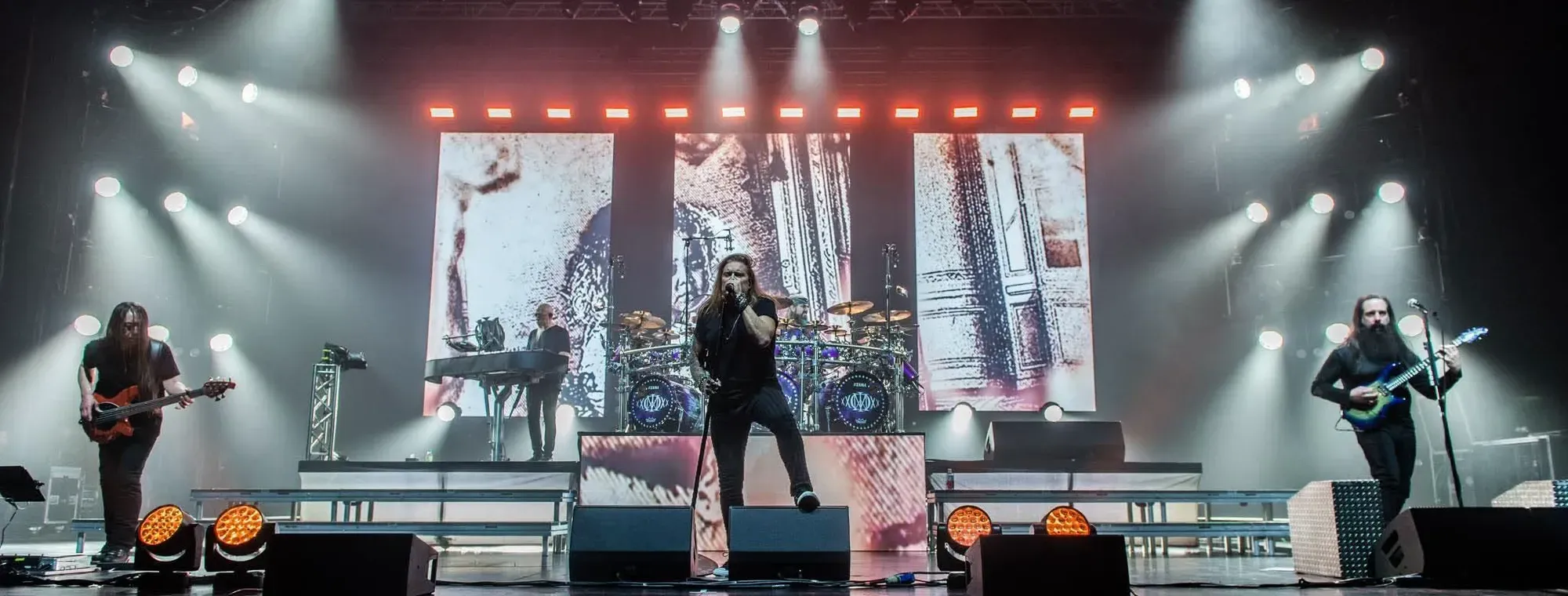
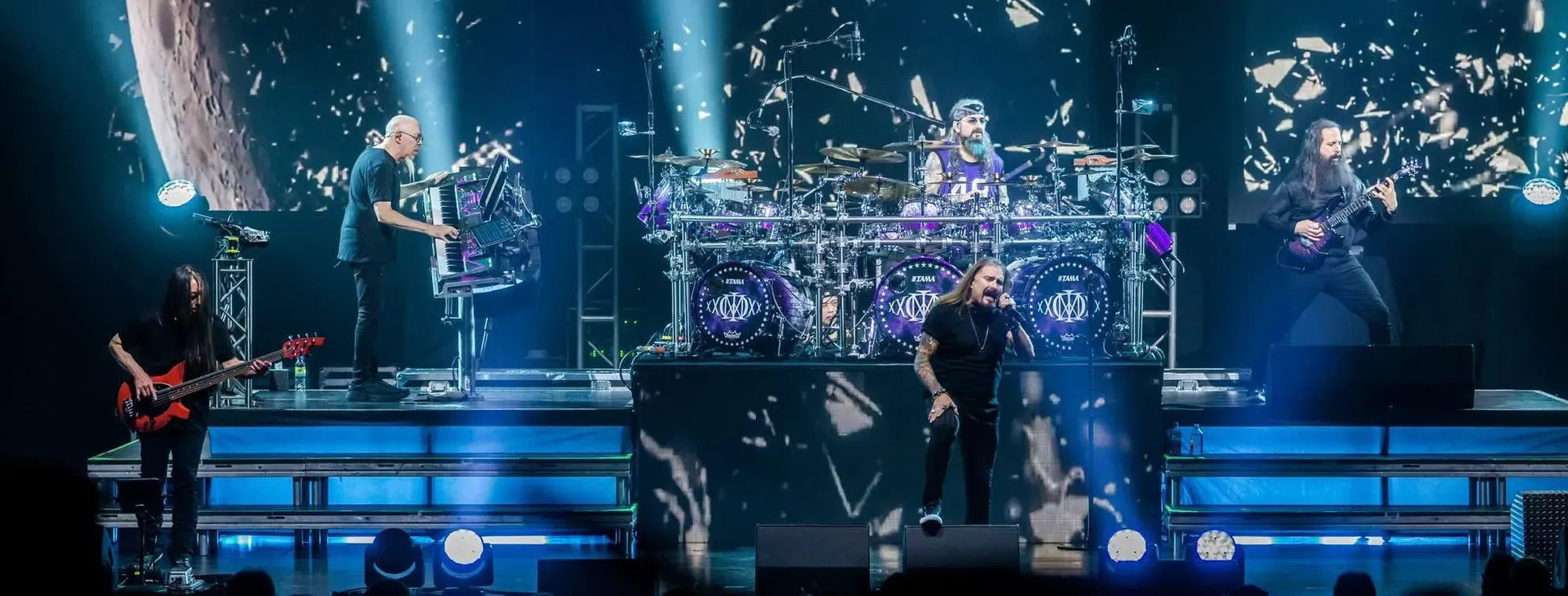
Then it was your first attempt to offer a high-end show, with screens etc...
[laughs] Yeah, I remember we had some 50 inch TVs and we thought it was spectacular!
Well, you can’t compare the technology back then with what you have today. Do you think you were successful though in getting the atmosphere of the album across at the live shows you did where it was played in its entirety?
That was the time when we were trying to make the concert experience a step better for people. I still remember the preparations with my tech guy for various things on my keyboards and how small the screens we used were in general. We were trying to give the best possible result with the budget we had on hand.
Speaking of gigs, do you remember when you had presented “Scenes...” in Greece and you had played headliners on the spur of the moment, because Janick Gers of Iron Maiden was injured? You had covered “Trooper” then and played it at the end, with the crowd running back to listen to it!!!
No, I don’t remember it, to be honest!
(Somewhere here, we had to stop the conversation, as Jordan was already at least 20 minutes late for the next interview... He owes me 6-7 more questions. Where is he going, I’ll corner him next time...)
Sakis Fragos
Original text
This Feeling Inside Me: The Story Behind “Metropolis Part 2: Scenes From A Memory”
Σάκης Φράγκος
October 26, 2019
Το “Scenes From A Memory” των Dream Theater, είναι ένας από τους δύο πιο αγαπημένους μου δίσκους όλων των εποχών (με τον άλλο να είναι το “Images And Words”) και μακράν ο δίσκος που έχω ακούσει περισσότερο απ’ οποιονδήποτε άλλον στη ζωή μου. Είχα την ευτυχία, 20 χρόνια πριν, να κάνω μία μεγάλη συνέντευξη με τον Mike Portnoy σχετικά με το άλμπουμ αυτό, να όμως που και τώρα, έφτασε η ώρα, να κλείσουμε ένα ραντεβού μέσω Skype, με τον αγαπημένο φίλο Jordan Rudess, για την 20η επέτειο του άλμπουμ, στα πλαίσια της στήλης “Fly on the wall”. Δυστυχώς τα 50 λεπτά δεν φάνηκαν αρκετά ώστε να καλύψω πάνω από το 60–70% των ερωτήσεων, όμως θεωρώ ότι ειπώθηκαν πολλά και σημαντικά πράγματα που δείχνουν πώς λειτουργεί αυτό το συγκρότημα και τι έγινε πραγματικά εκείνη την περίοδο, όταν γράφτηκε ιστορία... Άλλος ένας μαραθώνιος, ξεκινάει...
Πως πήγε η ευρωπαϊκή σας περιοδεία το καλοκαίρι, αλήθεια;
Πήγε καταπληκτικά. Η μπάντα φαινόταν πιο δυνατή από ποτέ και το κοινό ήταν σε όλα τα μέρη πολυπληθές και εκδηλωτικό. Είναι λίγο περίεργο, γιατί εκεί που μπορεί ο κόσμος αλλά κι εμείς να πιστεύουμε ότι η καριέρα μας έχει φτάσει σ’ ένα σημείο πιο «ήσυχο» να το πω, βλέπεις ότι συνεχίζει ακόμα να έχει ανοδική πορεία κι αυτό είναι εκπληκτικό αλλά και τρελό.
Καλά όλα αυτά, αλλά η συνέντευξή μας σήμερα, θα είναι για το “Scenes From A Memory” και την εικοστή επέτειό του. Διάβασα πολύ και άκουσα τον δίσκο άλλες τέσσερις φορές, κάνοντάς τες 10004, περίπου (γέλια). Ας πάρουμε τα πράγματα από την αρχή: Αμέσως πριν μπεις στο γκρουπ, μετά την περιοδεία του “Falling Into Infinity”. Η κατάσταση στο συγκρότημα ήταν μάλλον απαίσια. Ο Mike Portnoy είχε ουσιαστικά παραιτηθεί μια φορά και ήταν πολύ δυσαρεστημένος με πολλά πράγματα στον οργανισμό των Dream Theater, το γκρουπ είχε απολύσει τον Derek Sherinian μετά από μόλις ένα στούντιο άλμπουμ, υπήρχαν προβλήματα με την δισκογραφική εταιρία... Τα είχες παρατηρήσει εσύ αυτά τα πράγματα όταν μπήκες στους Dream Theater;
Όχι, την στιγμή που μπήκα στο συγκρότημα, είχαν ένα νέο μέλος και ήταν συναρπαστικό για όλους, ήταν μία ανανέωση. Δεν ένιωσα ούτε στιγμή τις αναταράξεις που είχαν συμβεί πριν μπω στο συγκρότημα. Όταν μπήκα στο στούντιο να γράψουμε τον δίσκο, υπήρχε μόνο φουλ θετική ενέργεια και η τάση να προχωράμε μπροστά. Μάλλον όλα τα πράγματα είχαν μπει στις ράγες ξανά, επειδή ποτέ δεν άκουσα για κάποιο πρόβλημα με τη δισκογραφική εταιρία και όλοι κοιτάζαμε να βγάλουμε τον καλύτερο δυνατό δίσκο. Μπορεί να είχε να κάνει και με το γεγονός ότι το γκρουπ έβλεπε μια νέα αρχή παίρνοντας ένα νέο άτομο και μπήκαμε πολύ δυνατά σ’ ένα νέο δρόμο.
Δηλαδή δεν μιλούσαμε για ένα συγκρότημα που ήταν έτοιμο να διαλυθεί.
Ακριβώς το αντίθετο. Θα έλεγα ότι ήταν το επόμενο επίπεδο των Dream Theater που ήταν έτοιμο να απογειωθεί.
Προφανώς και οι Liquid Tension Experiment ήταν ο λόγος που μπήκες στο σχήμα. Τι βρήκες διαφορετικό απ’ όταν είχες παίξει μαζί τους για μία μόνο συναυλία, στο Concrete Foundations Forum το 1994;
Όταν είχα δουλέψει με τον John Petrucci και τον Mike Portnoy στους Liquid Tension Experiment, νόμιζα ότι είχα κατανοήσει πλήρως τις παραμέτρους και τα όρια που έθεταν. Όταν λοιπόν μπήκα στο στούντιο με τους Dream Theater, είχε υποθέσει πως ήξερα όλα όσα θα συμβούν. Ήμουν όμως λάθος. Όταν μπήκα στο γκρουπ, συνειδητοποίησα πως μπήκα σ’ έναν οργανισμό που όλοι οι παράμετροι είχαν ήδη τεθεί, σε οποιοδήποτε επίπεδο. Σε μουσικό, στην business πλευρά, ακόμα και στις ειδικές δυναμικές που υπήρχαν μέσα στο σχήμα. Οι LTE ήταν περισσότερο ένα project όπου όλα τα μέλη έκαναν τη συνεισφορά τους σχεδόν με ισότητα. Δοκιμάζαμε τότε κάτι καινούργιο και δεν υπήρχε συγκεκριμένος ήχος στο συγκρότημα. Όταν μπήκα στους Dream Theater, λοιπόν, δεν θα έλεγα ότι υπήρχαν κανόνες, αλλά πολλά πράγματα που έπρεπε να κατανοήσω, να ακολουθήσω και να ταιριάξω με κάτι που ήδη υπήρχε. Και αυτό που υπήρχε, ήταν ένα ισχυρό brand name. Παρότι φαινομενικά δεν είχα κανένα πρόβλημα επειδή με είχαν προσλάβει γνωρίζοντας ότι μπορώ να ανταπεξέλθω, έπρεπε να μάθω πολλά πράγματα όπως τι ταιριάζει στην μουσική του σχήματος και μέχρι που μπορούσα να πειραματιστώ. Η δημιουργικότητά μου, σε όλη μου τη ζωή, βρισκόταν σχεδόν σε οποιοδήποτε μουσικό είδος στον χάρτη, από κλασική μουσική και απαλή μουσική για πιάνω, μέχρι hardcore electronic και όλα αυτά που κάνω στα σόλο άλμπουμ μου. Φυσικά και γνώριζα την μουσική των Dream Theater, αλλά δεν ήξερα ακριβώς τον ρόλο που θα είχα στο συγκρότημα. Αν ήθελαν να τους πάω σε άλλη κατεύθυνση, ποια θα ήταν αυτή, ένα σωρό καινούργια πράγματα για μένα. Επίσης δεν μπορούσα να καταλάβω την καριέρα τους, επειδή δεν είχα περιοδεύσει μαζί τους. Ήμουν πολύ ενθουσιασμένος όταν μπήκα στις ηχογραφήσεις του άλμπουμ και είχα φέρει μαζί μου περίπου 60 νέες ιδέες, riffs και μικρά θέματα. Θυμάμαι τον Mike Portnoy να μου λέει, ότι δεν έγραφαν έτσι, αλλά τους άρεσε να γράφουν σ’ ένα δωμάτιο όλοι μαζί κι εγώ ήμουν σε μία πολύ αμήχανη φάση του τύπου «Ω..., δεν το ήξερα» (γέλια). Και τους ρώτησα αν ήθελαν να ακούσουν τις ιδέες μου τελικά και το έκαναν, τις άκουσαν όλες, μία προς μία. Αυτό όμως ήταν το πρώτο σημαντικό μάθημα που έμαθα, μπαίνοντας στο σχήμα. Ότι δεν χρειάζεται να φέρνεις τις δικές σου ιδέες, αλλά παίζοντας όλοι μαζί να βρίσκεις τη δημιουργικότητα συλλογικά.
Όπως είχα διαβάσει, σχεδόν όλες σου οι ιδέες απορρίφθηκαν.
Όχι!!! Κάποιες μπορεί να πετάχτηκαν στα σκουπίδια, αλλά δεν ήταν και λίγες αυτές που μπήκαν στον δίσκο. Εκείνες τις ημέρες, ο Mike Portnoy ήθελε να έχει τον έλεγχο των πραγμάτων, να φαίνεται ότι είναι «επικεφαλής» (γέλια).
Μετά το “Falling Into Infinity”, σχεδόν όλα τα μέλη των Dream Theater πήραν μέρος σε διάφορα side-projects και tribute άλμπουμ που ήταν πολύ της μόδας εκείνα τα χρόνια. Ενδεικτικά να αναφέρω τους Liquid Tension Experiment, τους Platypus, Gordian Knot, Explorer’s Club, Mullmuzzler, tribute άλμπουμ στους Queen, Rush, Emerson, Lake & Palmer και άλλα. Νομίζεις ότι ήταν μία διαδικασία που ακολούθησαν τα μέλη του γκρουπ για να ξεχάσουν τα «πρέπει» που επιτάσσει η μουσική βιομηχανία; Ήθελαν να πετύχουν καλλιτεχνική ελευθερία τότε;
Εννοείται ότι δεν μπορώ να μιλήσω για τους υπόλοιπους, αλλά εγώ σίγουρα έχτιζα την καριέρα μου, αφού δεν ήμουν ακόμη στους Dream Theater, σ’ ένα πολύ συνεπές συγκρότημα. Συμμετείχα στους Liquid Tension Experiment επειδή ήθελα να συνεργαστώ με τον John Petrucci και τον Mike Portnoy, όπως φυσικά και με τον Tony Levin, έπαιξα στα tribute άλμπουμ επειδή μου άρεσαν οι ιδέες. Με τέτοιου είδους κινήσεις, έχτιζα την καριέρα μου, την ώρα που τα υπόλοιπα μέλη των Dream Theater ανήκαν σε μία μπάντα που ήταν ήδη στις καλύτερες του χώρου της. Πιθανολογώντας, θα έλεγα ότι αν μιλούσες με τον John Petrucci, θα σου έλεγε ότι και για τους υπόλοιπους ήταν κάτι σαν να έχτιζαν την καριέρα τους περαιτέρω, αλλά και ότι ενδιαφέρονταν να κάνουν κι άλλα πράγματα έξω από το γκρουπ.
Ένας από τους αδιαπραγμάτευτους όρους που είχαν τεθεί, ήταν ότι οι Portnoy και Petrucci, θα αναλάμβαναν την παραγωγή. Γιατί συνέβη κάτι τέτοιο; Ήταν τόσο δυσαρεστημένοι από τους προηγούμενους παραγωγούς τους; Οκ, γνωρίζουμε για τον David Prater για παράδειγμα, με τον οποίο συνέβη ένα πολύ περίεργο περιστατικό κατά τη διάρκεια της περιοδείας για το “Scenes...”, στο Dallas, αν δεν κάνω λάθος... Αλήθεια, τι είχε συμβεί τότε;
Ω, Θεέ μου... Ναι... (σ.σ. και το πρόσωπό του πήρε μία έκφραση πλήρους απογοήτευσης) Αλήθεια, δεν θυμάμαι. Για την ακρίβεια, θυμάμαι που μου είπαν πως κάτι είχε γίνει, αλλά δεν ήμουν εκεί για να το δω... (σ.σ. ο αστικός θρύλος, λέει ότι ο David Prater, παραγωγός τους σε άλμπουμ όπως το “Images And Words”, είχε βρεθεί στο κοινό σε μία συναυλία τους στο Dallas και πήγε ο αθεόφοβος στην κονσόλα, έχοντας την απαίτηση να αναλάβει ο ίδιος τον ήχο του γκρουπ, στο encore, χωρίς να το ξέρει κανείς, με τον Portnoy να γίνεται έξω φρενών... Μαγικές στιγμές).
Πες μου λοιπόν τότε, για ποιον λόγο ο John κι ο Mike ήθελαν οπωσδήποτε να αναλάβουν την παραγωγή.
Ναι, βεβαίως. Και οι δυο τους ένιωσαν ότι το μοτίβο πάνω στο οποίο δούλεψαν στο “Falling Into Infinity”, δεν λειτούργησε καθόλου καλά. Ήταν απογοητευμένοι που η εταιρία είχε τον έλεγχο κι ένιωσαν πως ήταν η κατάλληλη στιγμή να πάρουν την κατάσταση στα χέρια τους. Είχαν κι ένα καινούργιο άτομο στο γκρουπ, εμένα, που δεν μπορούσα να τους πω «όχι», ούτως ή άλλως, αφού ήμουν φρέσκος στο σχήμα. Θυμάμαι μία φορά, γυρνούσαμε με τον Mike ύστερα από κάποιες ηχογραφήσεις και ήμασταν σ’ ένα συνεργείο αυτοκινήτων. Ο Mike μου είπε: «κοίτα, πρέπει να σου μιλήσω για κάτι. Βασικά, ο John κι εγώ, θα αναλάβουμε την παραγωγή του δίσκου». Ωραία και τι να έλεγα εγώ; Όχι; (τρελά γέλια) Η απάντησή μου ήταν κάτι του τύπου «ευχαριστώ που με καλέσατε στο συγκρότημά σας!!!» (γέλια) Είχαν ήδη μια καριέρα πάνω από 10 χρόνια στο συγκρότημα και θεώρησαν ότι είχαν τις απαραίτητες παραστάσεις και την εμπειρία για ένα τέτοιου είδους εγχείρημα. Όπως καταλαβαίνεις, εγώ έμεινα στο συγκρότημα και δεν τους είπα ότι φεύγω από τους Dream Theater, αλλά ότι ήταν ΟΚ από εμένα (γέλια). Όταν έφυγε κι ο Mike Portnoy από το συγκρότημα, τότε ο John είπε: «Έφυγε λοιπόν ο Mike, οπότε είναι ευκαιρία για εμένα μόνο να κάνω την παραγωγή των δίσκων μας». Και τότε η απάντησή μου ήταν «ΟΚ, σπουδαία»!!! Αυτό συνέβη και το “Scenes...” ήταν η αρχή όσων ακολούθησαν.
Νομίζω ότι μέρος του προβλήματος ήταν ότι δεν μπορούσαν να συνεργαστούν πια με «εξωτερικούς» παραγωγούς...
Θέλεις να πεις, δεν ΗΘΕΛΑΝ να συνεργαστούν. Θεώρησαν ότι ήμασταν αυτάρκεις και πραγματικά νομίζω ότι ήμασταν αυτάρκεις. Στην τελική ποιος μπορεί να πει στους Dream Theater τι να κάνουν; Μιλάμε για ανθρώπους που ήξεραν ακριβώς τι ζητούσαν από την μουσική μας, πολύ ικανούς, έξυπνους και που μπορούσαν να δουλέψουν πολύ καλά με τις πολύ ξεχωριστές συνθέσεις μας.
Ωραία λοιπόν... Οι Dream Theater είχαν προβλήματα με τους προηγούμενους παραγωγούς τους. Για να είμαι απόλυτα ακριβής, ο ακριβώς προηγούμενος παραγωγός τους, στο “Falling...”, ήταν ο Kevin Shirley. Με ποια λογική πήγε ο John Petrucci και τον παρακάλεσε να κάνει remix στον δίσκο (“Scenes...”) και μάλιστα μέσα σε δύο μέρες; Δεν μου κολλάει αυτό, με τίποτα όμως.
Εκείνο τον καιρό, ο John Petrucci ήταν πολύ κοντά με τον Kevin Shirley, είχαν πολύ καλή σχέση. Ο Kevin είναι πολύ ταλαντούχος κι ο John ήξερε ότι είχε έναν ήχο που μπορούσε να τον εμπιστευθεί. Δεν ήταν παραγωγός ο Kevin, τον πήραμε για την μίξη. Την μίξη είχε αναλάβει αρχικά ο David Botrill, αλλά θυμάμαι ότι δεν ήμασταν ιδιαίτερα ικανοποιημένοι από τη δουλειά που είχε κάνει. Νομίζω ότι ο John σκέφτηκε πως θα μπορούσε να έχει τον ήχο που είχε στο μυαλό του αν πήγαινε σε κάποιον που γνώριζε τον ήχο μας και μπορούσε να μας «σώσει» (γέλια).
Μάλιστα... Θα μιλήσουμε παρακάτω για τον David Botrill πάλι. Πάμε στις ηχογραφήσεις όμως τώρα. Μπήκατε στα BearTracks Studios, επειδή θέλατε να αντλήσετε έμπνευση, αφού εκεί είχατε γράψει τα “Images And Words” και “A Change of Seasons”. Μιας και είπα έμπνευση, μπορείς αρχικά να μας πεις τι είδους πράγμα ήταν αυτό το “Inspiration corner” του Mike Portnoy, κάτι που έχει σηκώσει πολλές συζητήσεις από ανθρώπους που δεν καταλάβαιναν περί τίνος πρόκειται; Στα video που έχουμε δει, υπάρχει στον χώρο που βρίσκεστε μία σειρά από CD των Who, Pink Floyd, Marillion και πολλά άλλα...
Ο Mike Portnoy είναι ένας πολύ παθιασμένος άνθρωπος. Του αρέσουν πολύ τα concept άλμπουμ και πάντα έλεγε ότι αυτός ο δίσκος θα ήταν το “The Wall” των Dream Theater. Πήρε λοιπόν μία σειρά από τέτοιου είδους CD, Queensryche, Pink Floyd, Who και τα έβαλε σε μία σειρά στο στούντιο. Αυτό είναι ένα πράγμα εντελώς Mike Portnoy και είμαι σίγουρος ότι με καταλαβαίνεις απόλυτα και καταλαβαίνεις ακριβώς κι αυτό που σου λέω. Δεν τον ήξερα τόσο καλά τότε, αλλά ήμουν ΟΚ με αυτό. Εμένα, δεν με επηρέαζε, αφού σαν συνθέτης δεν λειτουργώ καθόλου με αυτόν τον τρόπο. Εγώ παίρνω τις μουσικές μου επιρροές, ακούω τις αρμονίες και τους ήχους και προσπαθώ να καταλάβω τι κάνει διαφορετικά είδη μουσικής να δουλέψουν σωστά και μετά συνθέτω. Κατά κάποιον τρόπο, αυτό ήταν cool, επειδή ο Mike ήταν τέτοιου είδους χαρακτήρας και πολύ μοναδικός άνθρωπος. Εγώ δεν ήθελα να έχω καμία σχέση με αυτό, επειδή ήθελα να δημιουργήσω αυθεντική μουσική. Δεν ήθελα να αντιγράψω τους Who, τους Queensryche ή τους Pink Floyd, άσε που δεν με ενδιέφεραν καθόλου και αρκετά από τα σχήματα που είχε εκεί πέρα ο Mike. Ένα από τα πολύ σπουδαία πράγματα που έχουν οι Dream Theater, είναι πως όταν ξεκινάνε να κάνουν κάτι, υπάρχει πάντα από πίσω ένα πολύ ισχυρό και συγκεκριμένο πλάνο. Κι ο Mike είχε τρομερά σημαντικό ρόλο σ’ αυτό. Ήξερε τα πάντα για το που ήταν το σχήμα και που ήθελε να πάει, τι έπρεπε να δημιουργήσουμε, τι ήχο έπρεπε να έχουμε, ποιο εφέ έπρεπε να χρησιμοποιήσουμε. Δημιουργώντας αυτήν την «γωνία έμπνευσης», ήταν μέρος της μεγαλύτερης εικόνας, λοιπόν. Θα έλεγα ότι ενδυνάμωνε το όραμά του αυτό που έκανε. Και χωρίς αμφιβολία, το πέτυχε αυτό. Το “Scenes From A Memory”, έχει μία πολύ σημαντική θέση στην ιστορία της μουσικής κι ένας πολύ σημαντικός λόγος ήταν σίγουρα ο σχεδιασμός που είχε γίνει. Από την μουσική πλευρά του πράγματος, αν με ρωτάς, δεν ήθελα να έχω και πολλή σχέση πάντως με αυτό.
Υποθέτω λοιπόν ότι δεν ήταν το δικό σου “inspiration corner”...
Μου αρέσει πολύ το “The Wall” ή οι Who, αλλά δεν θέλω να αντιγράφω κανέναν.
Δηλαδή ήθελε ο Mike να αντιγράψει κάποιον;
Δεν θα έλεγα ότι ήθελε να αντιγράψει, αλλά σίγουρα έβλεπε τα πράγματα από μία εντελώς διαφορετική οπτική γωνία.
Μιας και λέμε για αντιγραφές, το “Home”, μοιάζει υπερβολικά με το “46 & 2” των Tool. Είχατε προσέξει αυτήν την ομοιότητα;
Εκείνη την περίοδο δεν είχα ακούσει ούτε νότα από τους Tool. Αντίθετα με τον John Myung, ο οποίος έπαιξε για πρώτη φορά αυτό το θέμα στο μπάσο, ο οποίος τους ήξερε πολύ καλά και προφανώς ήταν η πηγή έμπνευσής του, οπότε έχει νόημα αυτό που λες.
Κι έρχεται και δένει αυτό με τον David Botrill, που σας έκανε την αρχική μίξη, ο οποίος είχε δουλέψει με τους Tool στο “Aenima”, όπου υπάρχει και το “46 & 2”!!! Είχατε αποφασίσει να συνθέσετε ένα τραγούδι που θα έμοιαζε με Tool; Ήταν συνειδητή απόφαση ή έτσι του βγήκε του Myung;
Αυτή είναι μια πολύ καλή ερώτηση, την οποία μάλλον όμως θα μπορεί να στην απαντήσει ο John. Αυτό που ξέρω εγώ, είναι ότι ήρθε με αυτό το θέμα στο μπάσο, το οποίο προσωπικά το βρήκα πολύ cool.
Δηλαδή αν τον ρωτήσω θα απαντήσει; Εγώ νομίζω ότι μιλάει παίζοντας νότες στο μπάσο! (γέλια)
Δεν έχεις και άδικο!!! (γέλια)
Αλήθεια πως δώσατε τη συγκατάθεσή σας να βγει μία edit version του “Home” που είναι 7 ολόκληρα λεπτά μικρότερη; Έστω και για promo single ή για συλλογή όπου και χρησιμοποιήθηκε ουσιαστικά...
Wow! Ναι... Αυτή ήταν δουλειά του Mike Portnoy και του John Petrucci, ως παραγωγοί του άλμπουμ. Η δισκογραφική μας ήθελε, αν ήταν δυνατόν, να είχε κάτι για το ραδιόφωνο. Μπήκαν λοιπόν στο στούντιο να δουν τι μπορούν να κόψουν και την επόμενη στιγμή εξαφανίστηκε το σόλο στα πλήκτρα (τρελά γέλια)!!! Τι να πω κι εγώ πάλι, ο νέος τύπος στο συγκρότημα!!! Είναι απίστευτο το πόσα πολλά σημεία βρήκαν να κόψουν πάντως! Κάποιες φορές βρίσκω ότι το κομμάτι αυτό έχει αρκετά σημεία που επαναλαμβάνονται και ίσως πρέπει να κάτσω να ακούσω άλλη μία φορά αυτήν την εκδοχή του “Home”.
Πάντως αυτή η εκδοχή βολεύει όταν βάζω το τραγούδι στα rock club που δουλεύω!!!
Κάνε μου μια χάρη, Σάκη. Την επόμενη φορά παίξτο ολόκληρο για μένα, να ακούσει ο κόσμος τα σόλο μου που κόπηκαν (γέλια).
Η αρχική μορφή του “Metropolis part 2”, που κυκλοφόρησε στα “Falling Into Infinity demos”, αλλά το είχα στα χέρια μου αρκετά νωρίτερα, ήταν ένα 20λεπτο τραγούδι, που συνέχιζε τον μύθο του part 1 και σίγουρα είχε μέρη από το “Overture”, το “Strange Déjà Vu”, το “One Last Time” και μερικά σημεία από το “Dance Of Eternity”. Είχε γράψει ο Derek Sherinian κάποια σημεία τελικά;
Πραγματικά δεν μπορώ να σου απαντήσω καθόλου σ’ αυτήν την ερώτηση. Δεν έχω ιδέα αν έγραψε κάτι και μόνο ο John Petrucci μπορεί να σου δώσει απάντηση...
Πως αποφασίσατε να κάνετε τελικά ένα ολόκληρο concept άλμπουμ πάνω στο “Metropolis part 2”;
Η ιδέα αυτή υπήρχε, όπως άλλωστε φαίνεται, πριν εγώ μπω στο συγκρότημα. Υπήρχαν αρκετά σημεία, όπως άλλωστε είπες κι εσύ πριν λίγο, τα οποία βρίσκονταν έστω και σε πρώιμη μορφή.
Ισχύει ότι χρησιμοποιήθηκαν μέρη που δεν είχαν μπει στο “Awake” ή ακόμα και ολόκληρες demo ιδέες;
Η αλήθεια είναι ότι δεν θυμάμαι να είχαν πράγματα από την περίοδο του “Awake”. Μάλλον πιο πολύ οι ιδέες τους είχαν να κάνουν με το κομμάτι που μου είχες αναφέρει πριν κι εκείνη την περίοδο.
Είχατε επηρεαστεί από την ταινία “Dead Again” σε ότι έχει να κάνει με τους στίχους και το concept;
Εγώ δεν είχα επηρεαστεί, αλλά μάλλον κάποιος άλλος (γέλια). Εγώ δεν έγραψα στίχους. Νομίζω ότι υπάρχει ομοιότητα και κάπου διάβασα πως κάποιος από το σχήμα το παραδέχτηκε τώρα τελευταία.
Γράψατε πρώτα την μουσική και μετά τους στίχους;
Πάντα συμβαίνει αυτό με τους Dream Theater. Πρώτα γράφουμε την μουσική και μετά τους στίχους και τις μελωδίες.
Μου φαίνεται περίεργο αυτό ώρες ώρες... Άκουγα χθες για χιλιοστή φορά το “Beyond This Life”. Με τους στίχους που αναφέρονται σε εξώφυλλα εφημερίδων και τους διαφορετικούς χαρακτήρες κι όλα αυτά τέλεια αναμεμειγμένα μεταξύ τους. Η δουλειά που έχει γίνει, είναι μοναδική. Δεν θα πίστευα ποτέ ότι οι στίχοι γράφτηκαν μετά την μουσική...
Πάντα γράφουμε πρώτα την μουσική. Αλλά ξέρεις κάτι; Παίρνουμε πολύ σοβαρά τους στίχους, δεν είναι κάτι που το ξεπετάμε. Ιδιαίτερα ο John Petrucci, όταν έρχεται η στιγμή να γράψει στίχους, κυριολεκτικά εξαφανίζεται και βρίσκεται κρυμμένος σε κάποιο δωμάτιο του στούντιο, απόλυτα συγκεντρωμένος. Καταλαβαίνω απόλυτα αυτό που λες, αλλά στο συγκρότημα παίρνουμε πολύ σοβαρά τους στίχους και δεν είμαστε μία τυπική rock μπάντα, που γράφουμε στίχους στο πόδι, ίσα για να μην είναι το κομμάτι instrumental. Ένα από τα πράγματα που μου αρέσουν πάρα πολύ στο συγκρότημά μας, είναι πως τα πάντα, από την μουσική μέχρι τους στίχους, έχουν πάρα πολύ σκέψη και πάρα πολύ σχέδιο πίσω από αυτά.
Στα demo του “Scenes From A Memory” ακούμε κάποια διάσπαρτα σημεία με διαφορετικούς στίχους. Πόσο δύσκολο ήταν τελικά να γράψετε στίχους γι’ αυτό το concept;
Είναι πάντα δύσκολο να γράψεις στίχους σε κομμάτι. Δεν είμαι στιχουργός, αλλά αυτό που κάνουμε στο γκρουπ, είναι ότι όταν γράφουμε μουσική, πολλές ιδέες προέρχονται από τα πλήκτρα. Όταν γράφω μουσική, δεν γράφω απλά ακόρντα, αλλά κι ένα περίγραμμα της μελωδίας που βρίσκεται «κρυμμένο» μέσα σ’ αυτά. Όταν ο John ή ο Mike γράφουν στίχους, βρίσκουν αυτές τις μελωδίες και προσπαθούν να βρουν τις σωστές λέξεις στο σωστό σημείο μέσα στο τραγούδι.
Ήταν συνειδητή ενέργεια να αφήσετε επίτηδες κάποια ερωτήματα αναπάντητα σε σχέση με το concept, σε ότι έχει να κάνει με το τελείωμα της ιστορίας, ώστε οι οπαδοί να συζητάνε γι’ αυτό μέχρι να αποκαλυφθεί τι γίνεται στις συναυλίες σας;
(γέλια) Συγνώμη που γελάω, αλλά έχει πολύ πλάκα!!! Έλα μωρέ Σάκη, με ξέρεις τόσα χρόνια και καταλαβαίνω ότι όλες αυτές οι ερωτήσεις σε καίνε και θέλεις να ξέρεις τι συνέβη για κάθε σημαντικό ή ασήμαντο γεγονός! Ξέρεις ποια είναι η άποψή μου γι’ αυτά τα θέματα!
Εγώ πιστεύω ότι ο Mike είναι τόσο «άρρωστος», που τα είχε υπολογίσει όλα αυτά από πριν...
(γέλια) Τα έχουμε πει τόσες φορές. Εγώ πιστεύω ότι οι οπαδοί ασχολούνται με μερικά θέματα περισσότερο απ’ όσο πρέπει να ασχολούνται. Δεν θέλω να μειώσω τη δουλειά που έκαναν οι στιχουργοί, αλλά αυτό το πράγμα ίσως να γιγαντώθηκε επειδή το τέλος της ιστορίας επιδεχόταν διαφόρων εξηγήσεων και ήταν λίγο «χαλαρό», αν το διάβαζες τόσες πολλές φορές θα μπορούσες να σκεφτείς ένα σωρό διαφορετικά πράγματα.
Καλά, εσύ γελάς, αλλά είχε γίνει χαμός τότε!!!
Τώρα που το καλοσκέφτομαι, το να μην εξηγείς επακριβώς τι γίνεται στο τέλος μιας ιστορίας, είναι ο σίγουρος τρόπος για να τρελάνεις τους οπαδούς σου (γέλια)! Δεν θέλω να ακουστώ περίεργος, αλλά εκτός του ότι δεν γράφω στίχους, είμαι από τους ανθρώπους που δεν δίνει μεγάλη σημασία σ’ αυτούς. Ο μόνος τρόπος για να με κάνεις να προσέξω τους στίχους, είναι να μην ταιριάζουν με την μουσική. Φαντάσου ότι πρόσφατα διάβαζα μία σύνοψη του “Scenes From A Memory” και ήμουν κάπως: «ωχ, σοβαρά; Έγινε κάτι τέτοιο; Πωπωπωπω!!! (γέλια) Sorry, μπορείς να μου κάνεις ότι ερώτηση θέλεις για την μουσική, αλλά αυτό δεν «το έχω», πραγματικά (γέλια).
Έχει πλάκα, γιατί ξέρεις πως είμαστε εμείς οι οπαδοί, ιδιαίτερα οι οπαδοί των Dream Theater, που έχουν ακραίες αντιδράσεις στα πάντα και είναι σχολαστικοί μέχρι αηδίας ακόμα και στα πιο μικρά πράγματα...
Είναι σπουδαίο αυτό όμως, πραγματικά. Όλοι ήταν ενθουσιασμένοι η ιστορία ήταν «ανοιχτή» σε εξηγήσεις. Το γεγονός ότι οι οπαδοί των Dream Theater αναλύουν την κάθε λεπτομέρεια και ασχολούνται με όλες τις πτυχές των πραγμάτων, ήταν από τα πρώτα πράγματα που παρατήρησα μόλις μπήκα στο συγκρότημα και μου άρεσε πάρα πολύ γιατί έδειχνε ότι υπήρχε μια βαθιά σχέση ανάμεσα σ’ αυτούς και το συγκρότημα. Δεν μένουν ποτέ στην μουσική, αλλά ψάχνουν το βαθύτερο νόημα σε οποιαδήποτε κίνησή μας. Αυτό σκεφτόμουν όταν έκανα και τον τελευταίο μου σόλο δίσκο, ότι οι οπαδοί δεν νοιάζονται μόνο για τη μουσική, αλλά και για το concept, για την ιστορία. Γι’ αυτό έβαλα και στίχους.
Το “Scenes From A Memory” (μαζί με το “Six Degrees Of Inner Turbulence”), ήταν οι μόνοι δίσκοι των Dream Theater εκείνα τα χρόνια, που δεν ακολουθούσαν συγκεκριμένη μανιέρα. Δηλαδή Ανοίγουν και κλείνουν με επικό τραγούδι που διαρκεί πολύ, το δεύτερο τραγούδι είναι το «εμπορικό» για να παίξει στο ραδιόφωνο κ.ο.κ. Ήταν πιο δύσκολο ή σας διευκόλυνε το γεγονός ότι δημιουργώντας ένα concept άλμπουμ, δεν κοιτάζατε καθόλου αυτά τα πράγματα και γράφατε ότι σας έβγαινε εκείνη τη στιγμή;
Δεν θα έλεγα ότι ήταν πιο δύσκολο. Οι Dream Theater δεν γράφουν τραγούδια απλά, αλλά ασχολούνται σε βάθος, με την κλασική μορφή της σύνθεσης. Αυτό μου άρεσε πάρα πολύ όταν μπήκα στο συγκρότημα, ότι δεν νοιαζόμασταν καθόλου για τη δομή των τραγουδιών, την αρχή ή το τέλος τους, αλλά υπήρχε μία ανοιχτή φόρμουλα. Κάποιες φορές, έτσι είναι ευκολότερο.
Παρότι ο James LaBrie ήταν με σας στο στούντιο κάποια στιγμή, ηχογράφησε τα μέρη του στον Καναδά, με τον Terry Brown. Πόσο καλό ήταν αυτό για εσάς; Εσείς επιλέξατε αυτόν τον τρόπο;
Το να έχεις τον James μακριά από το στούντιο, είναι πάντα καλό (γέλια). Κάνω πλάκα!!!
Στα σχετικά video που είχε ανεβάσει ο Mike Portnoy, τον βλέπουμε να παίζει μπάσκετ έξω από το στούντιο!!!
Πέρα από την πλάκα, ήταν πολύ ωραίο που τον είχαμε μαζί μας. Θυμάμαι χαρακτηριστικά, εκείνος καθόταν στο lobby κι εμείς δουλεύαμε στον πάνω όροφο, ώσπου άκουσε κάποια μέρη του “Finally Free” και άρχισε να τραγουδά μια μελωδία. Κατέβηκα και δουλέψαμε πάνω σ’ αυτό και βγήκε η κλασική μελωδία (σ.σ. άρχισε να τραγουδά το σημείο που λέει: “This feeling, inside me, finally found my love...”). Ήταν πολύ ωραίο που ήταν μαζί μας και αναπτύξαμε πολύ καλή σχέση. Πιστεύω όμως, ότι ακόμα και στις μέρες μας, ο James θέλει να βρίσκεται στον δικό του χώρο και να συγκεντρώνεται εκεί και νομίζω ότι έτσι δουλεύει καλύτερα. Σ΄ ένα πιο «ιδιωτικό» περιβάλλον, ας πούμε.
Στην πορεία βέβαια, αυτό σας δημιούργησε διάφορα προβλήματα, αφού είχατε σοβαρές διαμάχες με τον παραγωγό του, τον Terry Brown (σ.σ. με πάρα πολλές δουλειές με τους Rush), ο οποίος έπαιξε τον ρόλο του υπνοθεραπευτή.
Ωχ, ναι, έχεις δίκιο... Κρίμα...
Το πρόβλημα με τις ζωντανές σας εμφανίσεις πάντως, λύθηκε, έστω και την τελευταία στιγμή, αφού σβήστηκαν τα μέρη που μιλούσε και ηχογραφήθηκαν από άλλον...
Μη μου τα θυμίζεις... Ο κόσμος είναι τρελός.
Για να είμαι δίκαιος, μάλλον επρόκειτο περί παρεξήγησης. Μάλλον και οι δύο πλευρές παρέλειψαν να αναφέρουν τα αυτονόητα και οδηγηθήκατε στα άκρα (σ.σ. ο Terry Brown, είχε ζητήσει χρήματα από τους Dream Theater, για να χρησιμοποιούν τη φωνή του στις ζωντανές τους εμφανίσεις, στα μέσα της περιοδείας. Το γκρουπ του έδωσε κάποια χρήματα για να μη γίνουν μηνύσεις και αργότερα συμπεριλήφθηκε στα No Thanks του live CD/DVD).
Μάλλον έχεις δίκιο... (σ.σ. το βλέμμα και η έκφρασή του, τα έλεγαν όλα, αφού ήταν προφανές πως οι αναμνήσεις απ’ αυτήν την κατάσταση, δεν ήταν καθόλου καλές).
Ποιο πιστεύεις ότι ήταν το διαφορετικό στοιχείο που έφερες στο συγκρότημα όταν μπήκες, σ’ αυτό το άλμπουμ; Ήταν οι «μάχες» ανάμεσα στην κιθάρα και τα πλήκτρα, κάτι που δεν γινόταν ποτέ μέχρι τότε σε τέτοιον βαθμό; Ήταν η ατμόσφαιρα των Liquid Tension Experiment; Τα μελωδικά instrumental σημεία; Απλά η αύρα σου;
Όταν μπήκα στους Dream Theater, η προσέγγισή μου για την μουσική, ήταν εντελώς διαφορετική από τους προκατόχους μου. Ίσως να ήταν το μουσικό παρελθόν μου ή το ενδιαφέρον μου. Νομίζω ότι ο John Petrucci, ήθελε να έχει έναν άνθρωπο να γράφει μαζί του κι ένιωθε ότι υστερούσε το σχήμα σ’ αυτόν τον τομέα και ήθελε κάποιον να ανταλλάσσει ιδέες. Κάτι τέτοιο, γινόταν συνέχεια. Θα έλεγα όμως ότι κυρίως ήταν το γεγονός ότι ψάχνω συνεχώς καινούργιους ήχους. Ότι τους έβαλα στυλιστικά σε κατευθύνσεις που δεν είχαν πάει μέχρι τότε. Όπως για παράδειγμα στο “Beyond This Life”, που έχω μία Frank Zappa αισθητική και μου αρέσει να συνεισφέρω μ’ αυτόν τον τρόπο. Από την μία λοιπόν είχαμε τα σημεία που προσέθεσα στην φόρμουλα των Dream Theater, με το παίξιμο του πιάνου που μου αρέσει να κάνω σε πιο απαλές και πιο κλασικές φόρμες κι από την άλλη ήταν το θέμα των ενορχηστρώσεων. Να ξέρεις ότι έχω παίξει πολύ περισσότερα πράγματα απ’ αυτά που κατέληξαν στο άλμπουμ. Νομίζω ότι (σ.σ. κλείνοντας το μάτι) υπάρχουν πλέον τα μέρη που έπαιξα και δεν μπήκαν, αν κάνεις ένα ψάξιμο στο internet!!! Η αλήθεια είναι πως έπρεπε να μάθω καλά ποια ήταν τα πράγματα που ήθελαν τα υπόλοιπα παιδιά. Με ποια πράγματα ένιωθαν άνετα. Παρότι λοιπόν το άλμπουμ κυκλοφόρησε μα αρκετές από τις δικές μου ηχητικές ιδέες, υπήρχαν και πολλά πράγματα που δεν συμπεριλήφθηκαν. Κάποιες πιο προχωρημένες ενορχηστρώσεις, με πιο πολλά στρώματα ήχου στη δική μου ορχήστρα των πλήκτρων μου. Ήταν όμως ο πρώτος μου δίσκος κι ένα από τα πράγματα που έμαθα. Νομίζω ότι τελικά πρέπει να πιστωθεί και σε μένα και στο συγκρότημα, το γεγονός ότι μπόρεσε να ενσωματώσει τα δικά μου στοιχεία, όταν υπάρχουν δυναμικά ντραμς, δυναμικές κιθάρες και τόσα άλλα trademark πράγματα μέσα. Εγώ ήθελα να έβαζα ορχήστρες και απαλό πιάνο με διάφορους περίεργους ήχους και πολλά τέτοια πράγματα, αλλά η πραγματικότητα επιτάσσει ότι πρέπει να κρατάω το παίξιμό μου απλό. Στον πρώτο μου δίσκο, λοιπόν, νομίζω ότι έγιναν μερικά πολύ cool πράγματα στα πλήκτρα, κυρίως όμως, πήρα ένα μάθημα, πώς να κάνω ενορχηστρώσεις σ’ ένα περιβάλλον όπως αυτό των Dream Theater.
Θα ήθελα να σταθούμε λίγο στο “The Dance Of Eternity”. Στο προηγούμενο στούντιο άλμπουμ, το “Hell’s Kitchen”, που ήταν το instrumental, ήταν πιο ατμοσφαιρικό και μελωδικό και σίγουρα όχι τόσο πολύπλοκο. Θέλατε αυτή τη φορά να το φτάσετε στα όρια με το “The Dance Of Eternity” ή απλά σας βγήκε έτσι;
Θέλαμε να κάνουμε κάτι τρελό και πολύ proggy και περιπετειώδες. Προσπαθήσαμε όλοι, να γράψουμε κάτι που να έχει πολλά απρόοπτα σημεία και μου δόθηκε η ευκαιρία να γράψω κάποια ωραία πράγματα. Ήμασταν σε φάση «ας φορέσουμε τα prog καπέλα μας και να γράψουμε κάτι τρελό».
Όλες οι προωθητικές κινήσεις για τον δίσκο, δεν ανέφεραν ΠΟΥΘΕΝΑ τη λέξη “Metropolis”. Θυμάμαι που είχαμε λάβει ένα CDr που έγραφε Dream Theater – “Scenes From A Memory” και το tracklistinig. Ήταν τόσο σημαντικό αυτό τότε; Ίσως κάποιοι πιο νέοι άνθρωποι να μην καταλαβαίνουν τι συνέβαινε τότε, οπότε θα παρακαλούσα να μας εξηγήσεις. Ακόμα θυμάμαι τον Mike Portnoy, όταν είχαμε κάνει συνέντευξη γι’ αυτόν το δίσκο, που όταν του είπα πως είχα την ιδέα ότι όλος ο δίσκος ήταν το “Metropolis part 2”, με παρακάλεσε να σωπάσω και να το δημοσιεύσω αφού θα είχε βγει ο δίσκος...
Αυτή η κατάσταση, πάντα με μπέρδευε λίγο, γιατί όποτε ανατρέχω στη μνήμη μου για τον δίσκο, τον θυμάμαι ως “Scenes From A Memory”. Όταν μου λένε, ακόμα και τώρα, για “Metropolis part 2”, μου παίρνει κάποια ώρα να καταλάβω για ποιον δίσκο μου λένε (γέλια), επειδή για εμένα λέγεται “Scenes From A Memory”. Όλοι καταλαβαίνουμε για ποιον λόγο υπάρχει αυτή η αναφορά, αλλά μπερδεύει λίγο τον κόσμο.
Παρότι αυτό το άλμπουμ πήρε απίστευτες κριτικές και υμνήθηκε απ’ όσους έχουν μυαλό και υποστηρίζουν ότι ακούνε μουσική, στην πραγματικότητα δεν πούλησε και τόσο πολύ. Σίγουρα πούλησε περισσότερα αντίτυπα από το “Falling Into Infinity”, αλλά δεν μπήκε στα charts και πούλησε γύρω στο μισό εκατομμύριο. Ένα νούμερο που σήμερα φαντάζει εξωπραγματικό, αλλά εκείνα τα χρόνια δεν ήταν και ιδιαίτερα υψηλό. Ήσασταν τελικά ευχαριστημένοι τότε;
Για εμένα ήταν απίστευτο. Έχοντας παίξει σε σαφώς μικρότερες μπάντες μέχρι τότε, συνειδητοποίησα ότι είχα μπει σ’ ένα ΜΕΓΑΛΟ σχήμα. Σε προσωπικό επίπεδο, δεν κοιτούσα αν πούλησε πιο πολύ από τον προηγούμενο δίσκο ή οτιδήποτε άλλο, παρά μόνο ότι πούλησε πάρα πολλά αντίτυπα. Είναι φοβερό όμως, τώρα που πέρασαν τα χρόνια, να βλέπεις πόσο μεγάλο αντίκτυπο είχε αυτός ο δίσκος, κάτι που δεν πιστεύαμε ότι θα συνέβαινε όταν το κυκλοφορούσαμε. Αυτό θέλω να δω και για το “The astonishing”, πως δηλαδή θα μνημονεύεται μετά από 10–20 χρόνια και ποια προοπτική θα έχει ο κόσμος γι’ αυτό.
Αν με ρωτάς πάντως, από την πρώτη ακρόαση που είχα κάνει στον δίσκο, θεωρούσα ότι είχατε γράψει ιστορία και ότι αυτός ο δίσκος θα ήταν μνημείο για τις επόμενες γενιές... Πάμε σε κάτι άλλο τώρα. Ο δίσκος τελειώνει οδηγώντας ουσιαστικά στην αρχή του επόμενου δίσκου, με το “Glass Prison”. Αυτό το είχατε στο μυαλό σας όταν γράφατε το “Scenes...” ή προέκυψε όταν γράψατε το “Six Degrees...” στο ίδιο στούντιο;
Πωπω!!! Μία ακόμη καλή ερώτηση!!! Έχω την εντύπωση απ’ όσο θυμάμαι, ότι ήταν μέρος του σχεδίου. Φοβάμαι όμως ότι θα πρέπει να στο επιβεβαιώσει ο Mike ή ο John.
Είχατε δει ποτέ το πρόβλημα αλκοολισμού του Mike τότε;
Όχι, ποτέ! Δεν τον είχα δει ποτέ να πίνει. Εντάξει, φυσικά και τον είχα δει να πίνει στις περιοδείες, αλλά δεν μπορούσα σε καμία περίπτωση να φανταστώ το βάθος του προβλήματός του, τότε. Σίγουρα όμως δεν τον είχα δει ποτέ να πίνει στο στούντιο.
Η περιοδεία που ακολούθησε, ήταν η πιο μακρά που έχετε κάνει μέχρι τώρα!
Σοβαρά; Δεν είναι αυτή που κάνουμε τώρα;
Όχι, σύμφωνα με τα κιτάπια μου που δεν κάνουν ποτέ λάθος!!!
Για να το λες, έτσι θα είναι.
Τότε ήταν η πρώτη σας προσπάθεια να προσφέρετε ένα hi-end show, με οθόνες κτλ...
(γέλια) Ναι, θυμάμαι είχαμε κάποιες τηλεοράσεις 50 ιντσών και νομίζαμε ότι ήταν φαντασμαγορικό!
Καλά, δεν μπορείς να συγκρίνεις την τεχνολογία του τότε, με αυτά που κάνετε σήμερα. Πιστεύεις πάντως ότι πετύχατε να περάσετε την ατμόσφαιρα του δίσκου στα live shows που δώσατε και τον παίζατε ολόκληρο;
Εκείνη ήταν η περίοδος που προσπαθούσαμε να κάνουμε την εμπειρία των συναυλιών μας ένα σκαλοπάτι καλύτερη για τον κόσμο. Θυμάμαι ακόμα τις προετοιμασίες με τον τεχνικό μου για διάφορα πράγματα στα πλήκτρα μου και το πόσο μικρές ήταν οι οθόνες που χρησιμοποιούσαμε γενικώς. Προσπαθούσαμε να δώσουμε το καλύτερο δυνατό αποτέλεσμα με το budget που είχαμε στα χέρια μας.
Τώρα που λέμε για συναυλίες, θυμάσαι όταν είχατε παρουσιάσει το “Scenes...” στην Ελλάδα και είχατε παίξει headliners από σπόντα, επειδή είχε τραυματιστεί ο Janick Gers των Iron Maiden; Είχατε διασκευάσει τότε το “Trooper” και το παίξατε στο τέλος, με τον κόσμο να γυρίζει πίσω τρέχοντας να το ακούσει!!!
Όχι, δεν το θυμάμαι, για να είμαι ειλικρινής!
(Κάπου εδώ, έπρεπε να σταματήσουμε τη συζήτηση, καθώς ήδη ο Jordan είχε αργήσει τουλάχιστον 20’ την επόμενη συνέντευξη... Μου χρωστάει 6–7 ερωτήσεις ακόμα. Που θα πάει, θα τον στριμώξω την επόμενη φορά...)
Σάκης Φράγκος