

Originally published in Fireworks magazine 110 · April 2025
Dream Theater
By Words By Dave Cockett
InterviewJordan Rudess20 min read
There are few bands playing anywhere today who can justly claim to have influenced a whole genre of rock and metal in quite the same way that Dream Theater have. Since stunning the world with sophomore spectacular Images and Words back in the summer of 1992, their precision engineered brand of fiery progressive metal has become the benchmark against which everyone is ultimately judged. With new album Parasomnia about to set them even further apart, Fireworks sat down with keyboard maestro Jordan Rudess at Dream Theater Headquarters (DTHQ) to learn more...
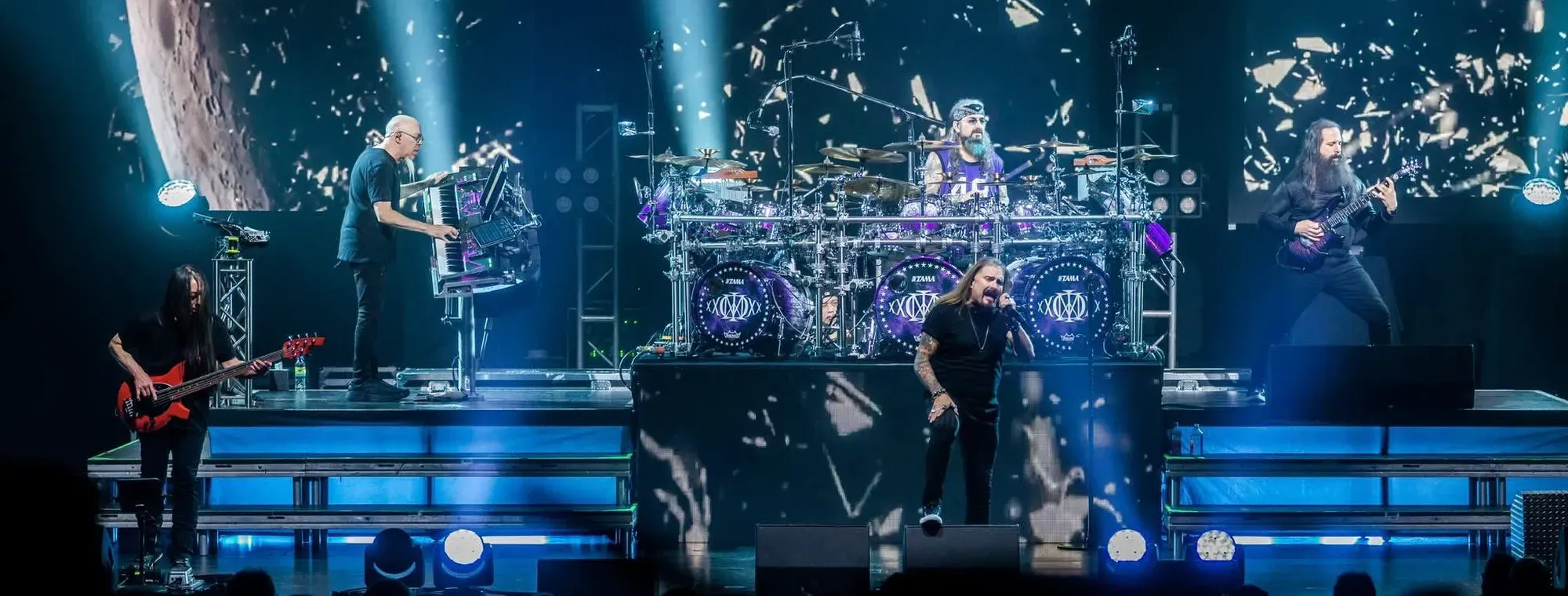
Originally called Majesty, Dream Theater can trace its origins all the way back to the mid-80s when three Long Island residents – John Petrucci (guitars), John Myung (bass) and Mike Portnoy – were studying together at Berklee College Of Music in Boston. Rock solid and united in purpose from the off, it came as a hell of a shock to the system when Portnoy announced his departure from the band in 2010, his erstwhile bandmates seemingly unwilling to let him take time out (if the rumours are to be believed). So, when it was announced in October 2023 that Portnoy had finally returned to the fold and that a new album was in the works, the ramifications were seismic.
“I can look at it from a lot of different angles,” Jordan ventures, “I guess the one I’m thinking of first is the personal angle of it. Mike was very much responsible for bringing me into the group, but he got to a place in his life where he felt that he really wanted to go off and do other things... the rest, well, the history books tell the story! [laughs] But everybody had something else in mind at that point, and we decided to move on and keep going forwards. We held the drummer auditions and we hired Mike Mangini who’s a great drummer, one of the best drummers in the world, and he filled in and did a great job for many years. But there was always this thing in the background where it felt like something was kind of missing... in my head I felt it and I think the fans felt it too. After a while I think it became like, ‘Okay, let’s get back to business here, let’s just make it happen.’”
“It definitely wasn’t just something that happened all of a sudden,” he adds after some thought, “we were happy, we were very productive... we won a Grammy. Everything was going well, but it was in our minds too that this could happen at some point. And of course, there were a lot of factors that were making it a slow process, one being we were very successful and doing fine. Another was that everybody had different dynamics between them, and there were personal things, issues if you like, that took a little time to get through until it got to the point where everybody was like, ‘Okay, let’s breathe, let’s look at this clearly, let’s see where we’re at...’ and that was on all sides. And then finally it’s like, ‘Okay, it’s time, let’s make it happen!’”
For Mike Mangini there’s no doubt that the return of Mike Portnoy would be disappointing on some level, but with hindsight it seems like it was always an inevitability at some point down the road. The ultimate return of Mike Portnoy however, whilst initial meetings were cautious, soon clicked back into gear when rehearsals started in earnest.
“From the moment that he sat down with the drums in the other room here, we started work,” confirms Jordan. “We just got right into it, we were right back; it was as if no time had passed at all. It was like one of those things, you know, he’s a friend here... it was crazy. You get another perspective of time, he just sits back down after thirteen years and we are back to work and we’re doing it. And all the ways that we used to work came back immediately, which we all welcomed, because that’s what we missed. You could say that we enjoyed whatever albums from the Mangini period, but they were all done a little bit differently because let’s face it, Mike Portnoy is a big personality! [laughs] Besides playing the drums he’s got a lot to say about things and everything that he wants to bring are things that we want to welcome. He was very cool and cautious about it, he wasn’t just throwing himself in, he was like, ‘Is it cool if...?’ [laughs] And we were like, ‘Yes, just bring it on; be who you are, just let us have your full power back in the organisation again’. And that all wrapped around to doing things like creating set lists and all the things that he enjoys and he’s good at.”
Before we move on to new album Parasomina, as longstanding fans of the band will know, Dream Theater, and in particular Mike Portnoy, are well-known for their extracurricular activities away from the band (Rudess, Portnoy and Petrucci were all involved with Liquid Tension Experiment for example). Indeed, there’s a school of thought which says that overindulgence may have led to Portnoy’s original exit back in 2010. With “the band back together” as it were, I wondered aloud if that would continue?
“Personally speaking, I come from a classical background,” Jordan says, “playing piano is kind of my home base, and I like a lot of different styles of music. My whole life is music really; I don’t have any other real hobbies. Music is everything I do, both professionally and also just to enjoy and release myself. I’m playing guitar these days as well, so it’s important to me to have other outlets so I can express myself in all the various ways that I want to. I just did my last solo album recently, Permission To Fly, and that was a great experience. I got to do a lot of the things that I love to do that maybe I don’t get to do in this environment. So I think that has to continue, just because it’s who I am. How much the other guys want to do their own thing, that’s up to them, but the freedom is there to do it when we’re off the road and we’re not recording. And actually beyond that, I’m also a technologist and I’m very involved with a lot of these companies that are on the cutting edge of audio technology and expressive instrument technology. So a lot of those things really are a big part of my world too.”
With Mike Portnoy firmly back in the band and a renewed sense of energy and enthusiasm, they started the journey that would eventually lead to the breath-taking Parasomnia. A few selected pointers were released along the way to show what progress they’d made – tantalising video clips for ‘Night Terror’, ‘A Broken Man’ and ‘Midnight Messiah’ – once again affirming the band as standard-bearers for the scene they helped shape in their own image. Sixteen studio albums in however and you have to wonder how they keep it all sounding so fresh and vibrant.
“There’s no shortage of musical and creative ideas here,” laughs Jordan, “that is not a Dream Theater problem. The main thing that we do when we come together is work on structuring all the ideas we have, putting them together in a cohesive, interesting way. Some bands have trouble coming up with the elements, the ideas, the musical parts, that’s not our issue... our issue is settling on which ideas we want to take forward at that point. John Petrucci had brought the whole ‘Parasomnia’ concept into the group and said, ‘Hey, I’ve got this idea, I think it would be a meaty kind of idea for us to rip on’. And we were like, ‘Yeah, that’s cool... parasomnia, bad dreams, crazy, weird, night time things’. Mike didn’t know about that when we first did it because that idea was like a while back, but when he came back, being who he is, into movies and stuff, he was like, ‘Wow, I like that’ and he jumped into that wholeheartedly! [laughs] We were off and running!”
“Then we all went into the studio and just started throwing out all these musical ideas,” he smiles as he continues to explain the process, “and a lot of them started to feed into the thematic idea of the album. And for Mike, it’s more about the fact we could have repeated themes and different themes... we could put this little titbit here or there, which was awesome. For me it meant I could play an accordion sound here and then later do a little piece with a violin there, or have some weird spacey thing going on! [laughs] Recording at our own place means we’re not on the clock, there’s no time pressure, so we’ll take our time and get it right. When I did my keyboard tracks I was here for almost a month or so, just kind of like laying it all down. There was a lot to do: I wanted to make sure all the orchestral parts were right... the Rock keyboard sounds, the organs, the pianos, the old Minimoog stuff. I’d go into different head spaces with all that, whether I’m the orchestral guy one day or I’m doing the choirs, I’m at the piano or I’m dusting off the Minimoog, and I love all of that.”
The art of getting together to create and record, partly due to expediency and cost it must be said, seems to be getting increasingly lost these days as more and more bands work remotely then “phone” in their contributions. Thankfully, the luxury of having their own place the purpose built DTHQ – means the band can take as much time as they need to kick ideas around and change them as they see fit. And, to be honest, that shows in the quality of the finished product.
“Primarily we like to write together, we really value that whole thing about being in the room together and working out the albums that way,” suggests Jordan. “We have toyed with the idea of working separately at home before, but it’s something we’ve never done. So the way that works is we’ll come here in the morning or the afternoon, whenever we start, and John Petrucci for example will get us started off with a nice little riff that he’s got floating around his head. The wheels start turning and that inspires me and all of a sudden I’ve got chords, or maybe the next section and I just throw it out there. And if everybody likes it we’ll work on that, if they don’t think it fits there we’ll write it down and maybe revisit it later in the song to put it somewhere else. With these guys, there are a lot of very strong and specific talents, like one guy is really good at structure, we really thrive on that. Even though the songs might get really complicated, it’s still up on a board and it’s all kind of figured out... there’s a method to the madness, you know?” [laughs]
“I’m the guy who’s got like a million chords,” he enthuses, “and I can just play stuff you’ve never heard all day. So I feed those into the machine, and sometimes I get a sideways glance saying this might be a little wacky; like, ‘What is that, some Gentle Giant stuff?’ or something like that which doesn’t quite compute or whatever. But now that Mike Portnoy’s back, I think more stuff that I play computes, at least for some of us, because he has very wide musical tastes. Sometimes I would come in here and write something really proggy, very Jordan-like, in the morning and I’d present it to the guys. And sometimes they would say, ‘Wow, that’s really cool, we’ll use that’, or I’ll get a look that says ‘Don’t get that at all, what is that?’ [laughs] But that’s cool; you throw stuff out there and see what works for everybody.”
That enduring sprit of collaboration, of camaraderie if you like, is undoubtedly why Dream Theater has endured for so long and is the main reason why they’re still considered to be the best at what they do.
“Yeah, there are a lot of reasons,” Jordan nods in agreement. “The other one maybe that’s really worth pointing out is it’s like a timing thing. John, Mike and John, the guys who started it way back, they had this mix of styles in their heads, you know, the Metallica, the Yes, the Rush... and they were like, ‘This is what we like to do and this is what we’re going to do’, and they put it out there. It was very timely and it hit. They were lucky enough to have the business support to get their ideas out there so that everybody could hear it. There might have been other people doing something similar, but maybe they didn’t have the same energy behind their work to have it really connect. But not only were they really good, they did have a record company that could put ‘Pull Me Under’ out everywhere in the world and have it make an impact. And then through the years, things like bringing me in with my kind of musicality and ideas to help to propel the whole thing and do my part, almost be like a balance in the middle of this seesaw of energy, you know, to keep this... there’s certain things that need to happen to keep a group together. Everybody can’t have their own extremely powerful thinking, ‘We gotta go this way’; I’ve always come from that middle son mentality, in every way. So I think that I came in and have functioned in a way to balance the energy of whatever’s going on around me.”
Once again produced by guitarist John Petrucci, the sound on Parasomnia is rich and powerful, yet maintains the kind of sonic clarity that allows you to hear everything perfectly. It’s a process that seems to work for them, and even back in the days before Mike Portnoy left, production was handled “in-house”. Indeed, you have to go all the way back to 1997’s Kevin Shirley produced Falling Into Infinity to find them working with an outside producer.
“I think when I joined the group the guys had gotten to the point where they’d decided they wanted to produce themselves,” Jordan recalls, “and you know, it’s worked out very well. John and Mike worked together and they were great producers; and now John... when Mike left, he took over that role and he’s amazing at that. I think one of the things that’s really important for a producer is that you want to bring out the best of all the musicians involved. You’ve got your vision, a vision of what this band is, and then you want to make sure that each person contributes their best effort towards that vision, so I think that John does a great job of that. It would be unfair to not point out that bringing Mike Portnoy back... look at this album, he had a lot to do with this, the conceptual kind of bringing together of everything. But everybody’s got their role, everybody does their thing, and that’s just what it is.”
“I think the reality is that we got the core band back together again and you can feel it, you see it, it’s obvious,” he states. “That’s not to take away from the other music that we’ve written, I think there’s some great music, I’m proud of all of it. If you ask me what my favourite record is, it’s very difficult to answer... it’s not necessarily just one era or the other because we really put our hearts and minds into everything we do. But there’s something about this one that when you hear it, it’s just... part of it is Mike Portnoy’s energy behind the drums, that’s a big part of it. When you have the drummer in the band, everybody, no matter who they are or what level they’re at, they have their own energy, and you really feel it when you listen to a band... ‘What’s the drummer like?’ It’s a big part of it and that’s a major element this time. I feel like there’s been so much energy around us this time and that that’s the real difference. It’s the tour, our album, a lot of eyes are on it, there’s a lot of excitement. It’s kind of this collective energy of everybody around the world putting themselves behind what we’re doing which lifts it up in a way that is very unique and really, in the arc of our career, it’s very noticeable.”
“I was talking to somebody the other day at one of these AI companies I work with,” he expands with enthusiasm. “A very smart person because we’re talking about the difference between creating music with AI or seeing a live performer. This is a guy that works for one of these companies and he was saying something I didn’t even think of, but when he said it, I was like, ‘Oh yeah ‘. He said that a lot of what he loves about the human being performance is the story... there’s always a story. If you go to see a Dream Theater concert, there are five guys on stage, there’s a real history with each person there. So even if we play and we play something wrong, or things get messed up, that might be as enjoyable as if we did it right, because there’s something human, there’s an element there that cannot be replaced by anything else. I’m saying that as somebody who loves technology and is not afraid of AI; I dig it and it’s cool, but there’s a definite difference. You could go to a concert and then a robot could sit and play the piano, it could be incredibly beautiful, it could be amazing, but there’s no story. Maybe the story is how the engineers over in China will put the robot together and all the training, and there might be a good story there, but if I go and I play the concert, people come to see it. They’ll feel my personal energy, but even maybe more than that, there’s a story... ‘Who is this guy? Where’s he come from? What’s his background? What has he done? What’s he offering?’ And that I think makes it a unique thing to follow.”
It’s interesting to get the perspective of someone who actually embraces the positives of AI rather than shying away from it, yet at the same time is accepting and aware of its limitations.
“You’re gonna be able to replicate all kinds of styles and all kinds of music to the point where you could even maybe fool somebody,” says Jordan. “I could make something now on my computer and prompt it and it’ll sound like Dream Theater. And somebody might not even know that it’s not really Dream Theater, but it doesn’t really matter because when you come to see Dream Theater, you’re coming to see the guys. You’ve put all this energy into it, maybe spent a lot of time listening to the albums and you’ve been to concerts, and there’s a connection with the people involved. It’s not about... I know we’re getting into a whole other place but AI can create amazing music, mind blowing music, but it’s not going to give you the same thing. If you come to see a Dream Theater concert or you put on a Dream Theater album, you’re listening to these people that you have this personal connection with, and that’s totally different.”
Having witnessed the majesty (excuse the insider pun) of Dream Theater on many occasions over the years, one of the things that never ceases to amaze is the fluidity of their set and the level of technical ability it takes to ensure those changes are seamless from show to show. Now, there’s a whole new album’s worth of classics in the making to factor into the process,
“We’ve played ‘Night Terror’,” clarifies Jordan, “but I think that’s the only new one we’ve played so far. Our shows have been three hour shows on this tour, so we all agreed before we headed into this that we weren’t going to be changing that up too much because there’s a lot of music to learn and to pull off, and to have our crew do all the things they need to do. Now that we’re about to go on the US tour you’ll start to see us feeling more comfortable with all that material, so we can throw in some other things here and there. In welcoming Mike back we wanted to ease into it and rethink the way we do things. I don’t think we’ll be changing things up like mad every night, we kind of got into this headspace over the years where we cared a lot more and put a lot of value in the smoothness of our production. We don’t want the lighting guy to be scrambling around wondering, ‘Oh, is this where the blackout is?’ or things like that... I think of it almost like a Broadway show. This new show is amazing; we’ve got lasers and all these videos and production elements, so a lot of it has to be somewhat locked down to come off the way we want it to.”
Compared to a lot of his contemporaries who’s stage set up sees them surrounded by a myriad of different keyboards, Jordan’s is much simpler. Yet, the sounds he can get out of it are nothing less than phenomenal.
“I’ve always had a different kind of approach to that for a number of reasons,” he concedes. “One is that I got to a point in my keyboard technical life where I started to work with the companies that make these things in the first place. Most keyboard players bought a keyboard because they knew it had a good string sound, and then they found out from a friend that this one had a good electric piano sound, so they bought that one too. And then they’re reaching over and playing this one for that, and this one for that and all this stuff, but when I got really into this business on the technical side, there were a lot these keyboards that could do things that most people never even realised. And I was lucky enough to have had something to do with all that development as well, so what I chose was to be able to dig into these things, to be able to really know how to use them and to maximise them because I like that. I also like the idea of not having to lift up my hands after every musical phrase and jump to another keyboard. I know that’s showy, when you go to see someone with ten keyboards they can look really cool... I was a fan of Rick Wake man too! [laughs] But I wanted to maybe value them, what I felt was the musical element, which was not lifting up my hands but continuing to play and switch sounds, so that’s what I’ve been doing for years.”
“That kind of approach, and luckily, I think with a little bit of my help, keyboards have gotten more and more powerful,” he further adds. “These days with my Korg KRONOS, I can have like 300 switches in a night and have sounds all over the keyboard... choirs, orchestras, weird effects, pianos, organs... all of it, and it all sounds great. So I’ve watched it come together step by step. Years ago, for example, I had a Korg OASYS keyboard, let’s say before the KRONOS, but when you switched sounds it cut off just for a split second. So if I had reverbs and things like that, they’d be gone and I would depend on the cymbals to cover that up, but now it’s totally seamless. So we’re at a great point, and have been there for a little while now, with keyboard technology where I can do this... I feel this totally works now, it’s great!” [laughs]
“And then as far as the show business part of it goes,” he continues with genuine enthusiasm, “years ago I said, ‘You know what, I don’t want to stand still, I want to be flexible’. So I worked with this guy and we built a stand where I could be moving around, just doing it in a 360° kind of way, tilting... all that kind of stuff. So I feel like I’m able to play at my one, eighty-eight note keyboard and still put on a show in terms of being mobile and not standing in one place. And for this last tour I hooked up with some guys from another company and we built an LED strip that goes around my whole frame on my keyboard. So I can now have all these visuals happening when I’m playing that respond to my touch. I’m totally into the entertainment part of it; I just didn’t want to do it with multiple keyboards.”
After sixteen studio albums and more than three decades at the very top of their game, it still seems like the band are as enthused as ever, perhaps even more so now that Mike Portnoy’s back behind that ever impressive drum kit.
“As I said, there’s still no shortage of ideas when we write and we still enjoy each other’s company and playing music together,” Jordan affirms. “So I think as long as we’re enjoying it, that means that we want to do it and we’re going to continue doing it. If we didn’t really feel it, if we weren’t really passionate about it, if we didn’t like each other and it wasn’t fun to play music together and to learn things from each other and vibe, then it would stop. But it continues, you know, we get a kick out of it, this is what we do. One of the ways to look at it is that we’re progressive musicians so we like to torture ourselves with hard riffs... it keeps us on our toes! [laughs] I don’t know why we do it, this self-torture or whatever, but John will come up with some ridiculous thing on the guitar and then show me and say, ‘Okay, it’d be great if you played a harmony’. And I’m like, ‘Okay, let me figure it out’, and I’ll do that and come up with some interesting way to tape something around what he did. It’s like this growth thing; it doesn’t really get boring... that I think is what keeps us going.”