

Originally published in Linea Rock YT channel · March 2016
Jordan Rudess interview
InterviewJordan Rudess13 min read
Barbara Caserta: So we are here to talk about The Astonishing, which is a wonderful album which had the unanimous favor of the fans and media. You wrote the record actually almost in its entirety with your buddy John Petrucci. Did you work on the music first or the concept story came?
Jordan Rudess: The first thing that happened is John Petrucci, my buddy, presented me with a synopsis of the story to look at. He had been working on it for quite a while, but he’d been waiting to present it because he felt like he wanted to present something really, really special. So he finally handed it to me at the end of the last world tour, and I sat down and I read it and I started to feel like, “Wow, this is really an amazing story.” I like it so much!” It just made me feel something. So I could totally start to hear some music in my mind. And as soon as I got home from the tour, I sat down at my piano and I started to write all these ideas and send them to John. We started almost a musical dialogue, sending each other ideas back and forth, which led to the next phase – which is very serious in-the-studio writing.
BC: The record sounds more melodic than the recent ones. Is this your fault?
JR: Not entirely, no. Everybody blames me for all the parts that are really sweet, but it’s not true! Actually, some of even the sweetest melodies in The Astonishing come from John Petrucci, which he had in his mind since he first started to conceive the story about two and a half years ago. So if you love the sweet melodies, you can blame me. But if you don’t – please don’t – because I didn’t write those other ones, I wrote other ones!
BC: There’s a very strong affinity between you and Petrucci artistically and also from a human point of view. Was that immediate since the beginning? And what makes it so special, since you work with a lot of different artists in the past and also in the recent years?
JR: That’s a very interesting question, and it makes me think of a lot of things. For one, when I was brought into the band, I was brought in because John Petrucci really needed to have a writing partner. He was basically doing it by himself, for the most part – writing music. So when they found me, he was really excited about having somebody who could come in and work with him instrumentally and figure out all the things that needed to be done. Certain things, John Petrucci of course, is a total master at, and other things, it’s nice for him to have a keyboard player that has a different perspective and a different approach to harmony and melody and all those things. So I was brought in for that. When I came in, my job was as a composer as much as it was as a keyboardist. But up until recently, many years later, our relationship didn’t kind of mature to the point where we could sit down together and do a project like this. When John conceived of the story, one of the first things he thought of is, “Wow, it would be really cool if Jordan and I could sit down just together alone, without anybody else there, and just write this music.” In doing that, it felt like it solidified a relationship that’s been maturing through the course of years. I would say that it’s always been a really great, symbiotic kind of relationship, but over the last years – especially doing this project – we reached another level where we kind of came together, personally, musically, and enjoyed working on this album. It was really cool.
BC: Can we define The Astonishing the most ambitious work of your entire career that floats, Dream Theater and also everything else you’ve done?
JR: Yeah, it was pretty huge. It was a very, very large undertaking, so I think we could pretty much safely say that. Because it was so many factors. It was not only John writing this amazing story, but also all the music – it’s two hours and 15 minutes of music or something like that – that make up this thing. It was like composing music to a film score, really, or musical. So yes, it’s definitely either the largest or among the largest projects I’ve ever done.
BC: You choose very special venues this time for this Dream Theater tour – more intimate, which includes theaters. How is the show conceived and how is it different than anything you’ve done before?
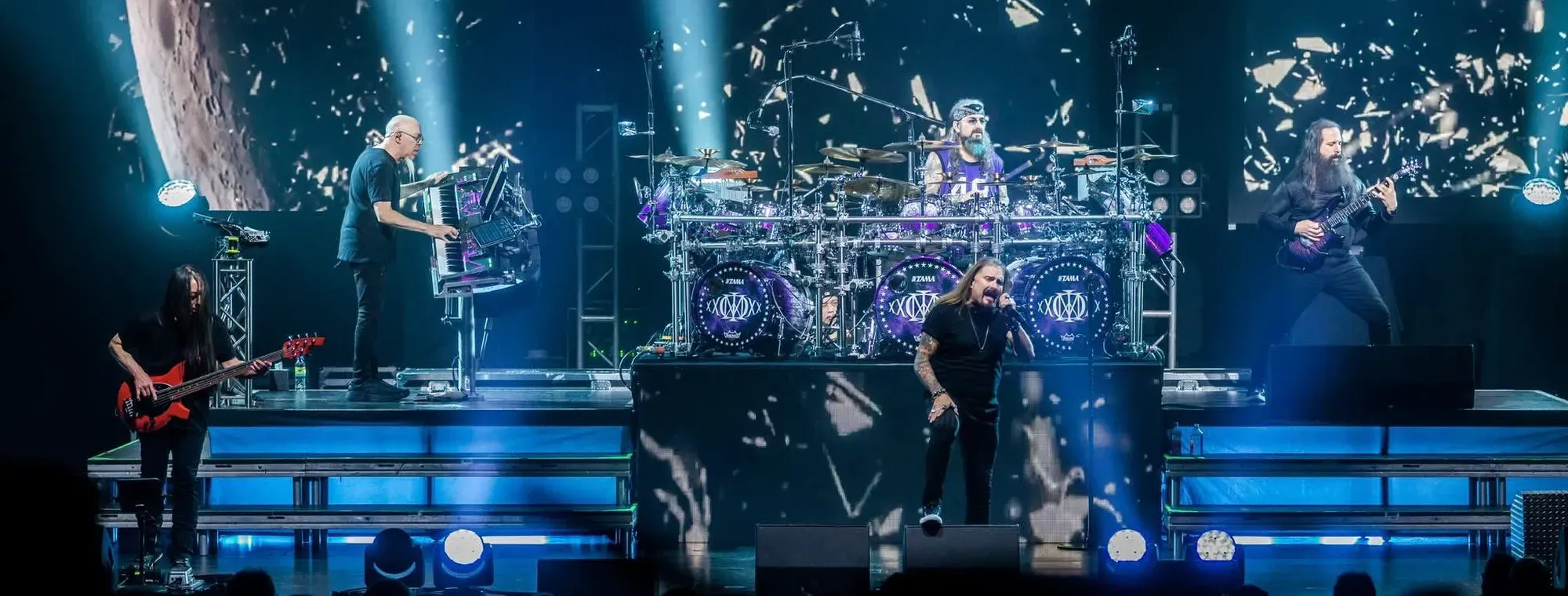
JR: When we wrote the music and put together this album – this experience – we realized early on that we wanted to present it in a live format. It’s one of the reasons it’s the length that it is. We wanted to make it something that was substantial and could be a presentation and could be a whole show. And we also wanted to present it differently than anything we’ve done before. We wanted to do it in smaller theaters where people could sit down and really enjoy the experience and have a different kind of Dream Theater experience. We also invested in having a really beautiful video show during the concert. We usually have great lights, and the lights and the video in this experience are really beyond anything we’ve ever done before. So I think it’s probably, in many ways, the highest level – you can even say the best – presentation we’ve ever given. And we’re allowing the audience around the world to sit down and absorb it. I’ll say something very briefly about that, which is that usually, in our concerts, especially in Europe, the audience is standing. So we have been adjusting to the fact that there’s more energy going out than necessarily coming back, ‘cause when you’re seated, it’s kind of mellow; you’re just relaxing. But it’s OK, because we also realized that people are absorbing this, they are enjoying it. You can see at the end of the show when they finally stand up and give us some energy back that it’s having a really big effect, which is very rewarding. So it’s extremely different for us doing this show. It was maybe a brave album to do, ‘cause it’s so different. And the tour is also very different. We’re just playing The Astonishing; it’s not like there’s anything else happening. So, all in all, it’s been a very different, exciting, nice experience.
BC: And all the shows are going to be the same since you have a strict concept to follow?
JR: Absolutely. It’s a very prepared, very planned experience from beginning to end, so in that sense they’re the same.
BC: So no setlist changes?
JR: No, definitely not.
BC: David Campbell worked on like 450 albums in his career, from Bon Jovi, Def Leppard, Anastacia, Phil Collins, Ricky Martin, everybody. How did you approach him and why him?
JR: We knew early on that we wanted to do this album in a different way, and because of the concept of the album – the whole dynamic between the machines and the natural music and where’s the story is all about that, a difference in this machine take over and the people having a rebellion against that – we wanted all the Dream Theater music to be very natural, organic, and acoustic, while we wanted the electronic part to be really just all my synthesizers to create this NOMAC sound. So we decided that we wanted to have an orchestra and choir, instead of necessarily having like the keyboard patches do those types of sounds, and of course, we wanted to get somebody really great, so we did some research. We looked at some different names, and the first name that really came up and that we were aware of, as well, was David Campbell, especially because he had just worked on a Muse project not long before, and it was very much enough in our awareness. So we had our manager reach out to him, thinking that there’s no way, this guy’s too busy. If you look at his resume, it’s not gonna happen, but let’s at least ask. Anyway, he came back and he said, “Oh, that sounds like a great project, it sounds really cool, I’d like to do it.” Wow! OK! Working with him was really an excellent experience because he’s not only a super nice guy – very low-key – but he’s also a top-notch musician and was able to not orchestrate the music so beautifully, but he was also able to make all the logistical planning about who would record, when, and where, and how.
BC: I know you’re working on a computer game that will be based on The Astonishing, is that correct? And are you considering also to make maybe a movie out of it?
JR: There’s all kinds of possibilities that are out there right now. At the moment, we have a book, it’s already been started, and we also have this game that a company up in Norway, called Turbo Tape, is doing. I think it’ll be ready in the somewhat near future. And because the story is so detailed, it alone lends itself very well to like a movie. There’s nothing to report right now about that, but I think we’re wide open to that. If The Astonishing would turn into a musical and be eventually on Broadway, I think that would be fantastic. We’re totally into that, open to it, ready to work on that.
BC: So you’re gonna be very busy in the [next] few years with The Astonishing.
JR: It’ll take some time to do all the things, yes.
BC: And you also developed this GeoShred app for iPad and smartphones. What is it really exactly about, and how did you get the idea? Also, I know that you started with classical music, but you passed to synthesizers as well, so you can combine and take the best of both worlds – the modern world and also the classical world. So is this all a connected design, in a sense, from your point of view?
JR: Well, I’ve been involved with electronic instruments ever since I made the change from being classically focused as a younger person to hearing Keith Emerson – who sadly is no longer with us, a few days ago – hearing that and kind of changing my whole approach and realizing that the keyboards can have a lot of power, and start using all these different sounds. My passion for the sonic world, and for experiencing and creating sounds, was always so great. I’ve never been a quote-unquote technical person, but I somehow got wrapped up in the technology because it enables me to do all these amazing things with music. So that journey has kind of led me into interesting places – having worked with companies like Korg, Kurzweil, and doing things with Roland, and in these days being a consultant for ROLI, the makers of an instrument called the Seaboard, and having my own company, Wizdom Music and also consulting for a company called CME, which makes this really cool instrument called the Xkey, which is a very great mobile keyboard. With Wizdom Music, my latest project or instrument, I should say, is called GeoShred. It’s, in many ways, the best thing that I’ve ever put out there as far as a musical instrument from my company for the world, because it’s an instrument for the iPad. It is an app, but I call it an instrument for the iPad, because it really is, in my humble opinion, one of the only true musical instruments that you can run on an iPad. There’s a lot of very creative, great things you can do with your iPad, but to actually call something a real instrument, that’s another level. So I worked with the guys at Stanford University of California on this project, and we put together this instrument that is based on the technology called physical modeling. Physical modeling is a very interesting technology where they mathematically go in and figure out what makes an instrument tick – how does it really work – and it creates a very organic, natural sound. So on GeoShred, you can do these incredible things with feedback, kind of like a guitar. It’s based on a physically modeled guitar, so you get a lot of cool guitar tones, but you can also take it and bend it and do other things as well. So it’s a whole new sonic world that we’re offering. It just came out like maybe three or four months ago – it’s relatively new.
BC: The reviews have been positive – mostly from young people, or from everybody?
JR: Well, it’s very, very cool technology. The physical modeling is amazing, and I’m working with some of the people that were involved in physical modeling since the beginning. Isabella, who’s the scientist behind the whole thing, a professor at Stanford who’s name is Julius Smith – he’s like the guru of physical modeling. He’s one of my partners in the project, and we have a great time just making these cool instruments for the world to check out.
BC: Prog rock has been defined as the evolution of classical music. Is it exactly like that from your point of view, from your experience?
JR: I think progressive rock was a definite evolution. The big evolution happened in the ’70s with bands like Genesis, Yes, Emerson, Lake & Palmer, and all that, where they kind of opened this wonderful door to the possibilities of including classical, harmonic and rhythmic ideas within a rock kind of foundation. So nowadays, with bands like my band Dream Theater, we kind of carry that torch. We continue to infuse these more advanced musical ideas like harmony and melody and rhythm on a rock structure; but at the same time, like in my world, I add the element of technology to it and I'm very open to where technology is going to lead us musically. So progressive rock, in a sense, is like an opening and a continuation of classical.
BC: Last question – you mentioned before Keith Emerson, who just passed away. And you also mention him as one of your main influences. Do you have any sweet memory about him? Did you ever meet him, and do you remember the first time that you heard [his] music – something you want to share with us?
JR: I met Keith Emerson a number of times over the years, and probably the first handful of times that I met him and said hello to him, he had no idea who I was. He never remembered me. And it was sad because he was my keyboard hero. But finally, after meeting him numerous times – I had done an album that was an Emerson, Lake & Palmer tribute album – and I met him this one time, and I went up to him and said, “Hi, my name is Jordan Rudess. Nice to see you.” “Oh, I know you,” he says. “I didn’t like that album at all – that Emerson, Lake & Palmer tribute – I thought it was really not very good. But what you did was great.” I said, “Oh wow, thanks!” And then I met him, like, a couple of years later again, and I had done my own version of ‘Tarkus’ on my album called The Road Home, where I did cover some of my favorite progressive music. And his girlfriend at the time said that they loved it, and that she would dance around the house to it. And he wrote a beautiful kind of commentary about my work – on my version of ‘Tarkus’ – so he really loved it. And we had finally, after years, become very friendly. I was at his birthday party, and he would come to my shows. So we’re still kind of like experiencing this extreme loss – and not only a friend of mine, but also somebody who had such a huge influence on my life path. It’s really, really sad, actually.
BC: I guess your next few months or years will be absorbed by The Astonishing project. But will you have time also for some solo stuff? How can you combine this huge amount of work?
JR: The last break I had in my work, I did a solo album called The Unforgotten Path, which is a piano album I did at home on my nine-foot Steinway grand. I played some songs that I’d been playing for years that I never recorded – some cover songs, but also some original songs – so that was really fun. And then I also found some time, somehow, to do a new album, or almost complete a new album, with Tony Levin and Marco Minnemann. So that’s going to be expected in the fall. I have a little bit more work to do on that when I find some time in between tours, I should say. And then I have plans, when Dream Theater’s done touring, to do something really cool in a rock vein that would be new as well.
BC: You can never relax.
JR: I relax with music – that’s the thing. If I want to relax, I do something like The Unforgotten Path – very calm and mellow and nice.
BC: OK, thanks for your time, Jordan. Enjoy the tour and hope to see you soon.
JR: Awesome, thank you.