

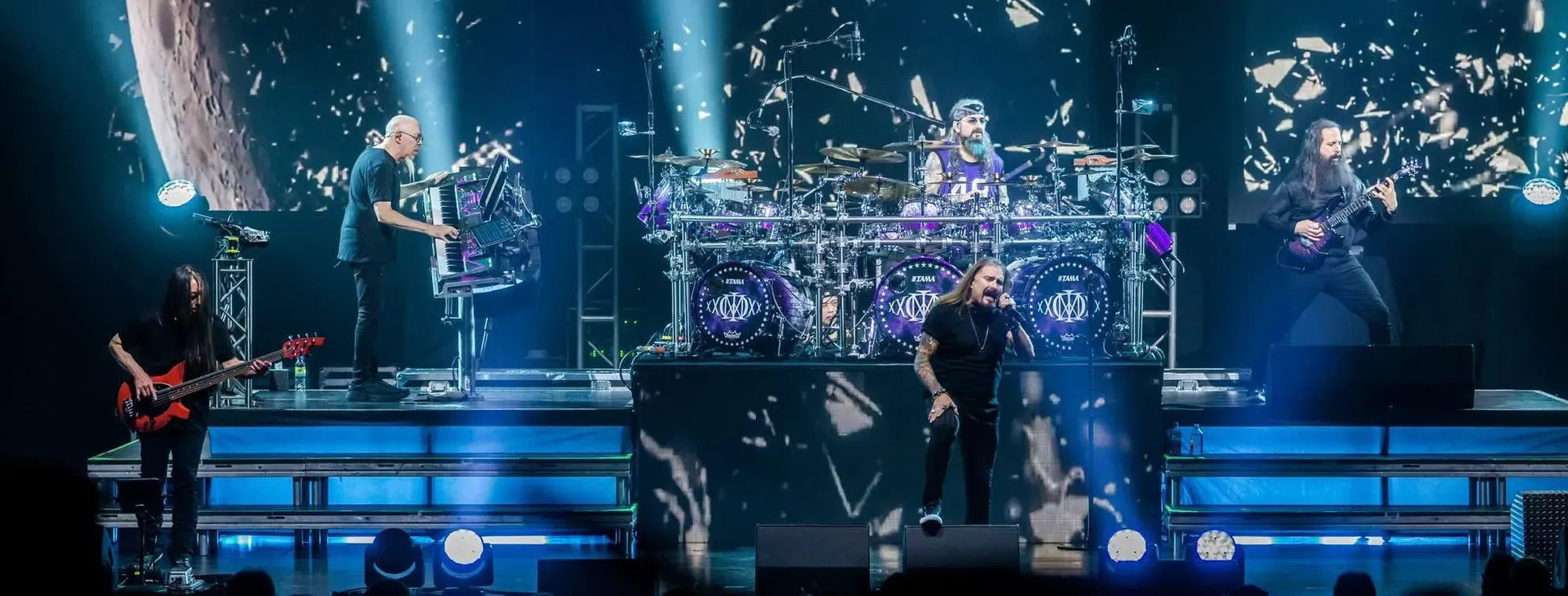
Originally published in Progression magazine · June 2012
Keeping the Dream Alive
InterviewJordan Rudess7 min read
Jordan Rudess Discusses Dream Theater’s Immediate Past and Future, Including Plans for a New Album in 2013
By John Collinge, Progression Editor
Keyboardist Jordan Rudess knows about being the new guy in an established band, earning props with the legendary Dixie Dregs before succeeding Derek Sherinian in 1999 to become a Dream Theater mainstay. So he understands better than most what newcomer Mike Mangini has endured in the shadow of former mate and drum icon, Mike Portnoy.
For 25 years, Portnoy was the unofficial face of Dream Theater – with media, management, and through a self-styled stage presence as the man in charge. From the group’s perspective, his departure in 2010 shook things up on many levels for better and for worse, but mostly better. Which, says Rudess, had no bearing on the title of Dream Theater’s first post-Portnoy album, 2011’s A Dramatic Turn of Events. “No, the title has nothing to do with the day-to-day stuff with us or Portnoy or anything like that. As [guitarist] John Petrucci said recently in an interview, that wouldn’t be the forum for discussing such things,” he says. “The ‘dramatic turn of events’ refers to lyrical content, which is all about change. Spiritual change and physical change, through things like war and religion. That’s what the title encompasses and what all the songs are about lyrically.”
For Rudess, Mangini, Petrucci, singer James LaBrie and bassist John Myung, Dream Theater is in reboot mode, enjoying its unforeseen change of course.
Progression: Since release of your last album and with a year of touring about to end, has your perspective on Mike Portnoy’s exit and Mike Mangini’s hiring changed at all?
Rudess: “Not really; there’s no mystery to any of what transpired. After [Portnoy] quit the band, we went through a process of healing. It was very emotionally intense for us. I think we all felt different personally, but it was an intense thing for the band because we didn’t know what we were going to do or how we were going to do it. Luckily, everybody wanted to go on, everybody felt like it was an important thing for us to keep Dream Theater going and make the moves to make it right. So that’s when we decided to have auditions [for a new drummer], how we decided to do the documentary that we did and how we ended up finding Mike Mangini, who is just an incredible drummer and a great guy. He ended up leaving his position at Berklee to come and play with us. It wasn’t until we were pretty solid down our path that we heard from [Portnoy] that he wanted to talk about coming back into the band. This was some time after we had already gone full speed ahead with [Mangini]. By then Mike had already left Berklee and we were down the path, so it just wasn’t possible.”
Progression: You’ve had to approach certain things differently because of the non-music roles fulfilled by Portnoy...
Rudess: “Yes, he was dealing with a lot of things in this band. It was a situation where in order to move forward we had to first understand what things Mike was doing and then figure out how we were going to make it all work. It became a very democratic process because everyone had to come forward and be heard. The goal hasn’t changed, which was to move on effectively and positively and make the best music we could in a way that felt good and was cool for the fans.
“Here we are nearly two years later, having created an album and already been on tour. I would say that things have gone incredibly well from a very difficult, emotional beginning in losing someone like a Portnoy, to what we’ve gained and what we’ve accomplished.”
Progression: How concerned were you and the others about fan reaction to carrying on without Portnoy?
Rudess: “There were different levels of that. In all honesty, we wanted to make a great album so everyone could say, ‘Well, they might not have Portnoy but they still can really do their thing.’ We knew internally, especially Petrucci and I, there was no question of our being capable. Nothing was going to change when it came to writing the riffs and harmonies. We resolved just to continue doing what we do. That’s not to take away from Mike Portnoy’s involvement. He was very involved in the producing, the decision-making and helping direct where things went. But in terms of just playing the notes and coming up with riffs and chords – that’s something John and I were doing since day one. That part was not a concern, we could write Dream Theater music.
“One of the concerns regarding fans is that people are not necessarily clear on the reality of who does what. So there were a lot of people walking around thinking Mike Portnoy was the band’s main composer. Mike Portnoy is one of the most talented people I know, but he was not the main composer in Dream Theater – let’s be real. He was very, very involved. Certain realities we were concerned about people getting over so they just could enjoy it and we could move on with strength and positivity.”
Progression: What stood out from Mangini’s audition?
Rudess: “It’s an interesting thing Mangini did: When I talk to anyone who’s looking for a job, I use him as an example. Mike came in not only nailing it musically and playing his ass off, he also was able to present himself with a sense of personal strength. He came in saying, ‘look, guys, everything in my life has come to this point and it makes total sense for me. I’m in sync with this. I feel like I can do a great job here, this is where I belong at this point – let’s do this!’ He came forward to us with such desire to do the job and make it happen, it was undeniable. It was especially undeniable because the man is such a brilliant drummer. If he couldn’t deliver the goods after claiming it was a perfect fit, that would be different. But because he could and was committed from the moment we met to doing the right thing and doing it well, that’s why he has the position.”
Progression: Was your final decision an easy one?
Rudess: “No, it was a little tough. There were some really great players. Everybody we brought in was a great drummer. But when it came down to a final vote, I think Mangini’s intensity, positivity and just believing this was right made the difference.”
Progression: What role might Mangini have in making new music with you?
Rudess: “Now that we’ve been on the road hanging out together, we’ve come to understand what an amazing musician Mike is. We can learn so much from him, and just the inspiration he provides for the rest of us is really cool. Rhythmically, I see him as someone who can offer us a lot. It’s hard to say at this point what will happen with our next recording, how we’re going to work it. But I can tell he will be an asset we’re going to feed off.
“I haven’t even gotten into where his head is at compositionally. The reason we didn’t tap his compositional skills for this last album is we’d been writing Dream Theater music for a long time and didn’t feel a need to change things up. Our thinking was, ‘let’s just show everybody that Dream Theater can go on properly and effectively.’ The approach with Mike was to let him learn the music, come in and play his ass off and tour with us, then we’ll revisit more possibilities the next time.”
Progression: What more can you share about how things changed for the band in the process of making your last album?
Rudess: “When we were writing the music [Mangini] wasn’t there, it was just the four of us doing our thing. It was really pretty cool, a nice balance. [Petrucci] produced the album and he was really great at helping bring the best out in everybody.
“One of the things we’d been talking about in terms of moving forward was how can we make this the best Dream Theater ever by maximizing everyone’s role individually. For instance, ‘What can we do with the keyboards? What can we do to really make use of Jordan? Where is his talent?’ John felt like that’s truly where we should be going and we all thought that was great. It was the same for everyone and all the instruments.”
Progression: And stylistically?
Rudess: “I believe the band was able to take a look at ourselves and rethink who is Dream Theater -- what kind of music we really want to make and how we want to present ourselves. In that sense, I think it’s a band where now we’re playing music that we all feel supportive of. Did we change it up stylistically/musically? I don’t know. Maybe not so much of that. But of all the different things Dream Theater does – and of course, Dream Theater is a fusion of many different styles – I think we’ve chosen to emphasize a more melodic, more harmonic orientation. We’ve removed elements that we don’t feel as good about, the angrier metal-style things that weren’t vibing with us. We had a chance to review that and came to the conclusion, ‘Hey guys, we’re not into this! So why are we doing it?’ I think where we are now is this cool, unified commonality, musically and spiritually. We’re having fun and doing what we want to do. The music is a reflection of who we truly are and what we really want to present.”