

Originally published in Rafa Basa.com · March 2008
Dream Theater – Jordan Rudess from Venezuela.
By J. José Jiménez · March 19, 2008, 1:32pm
InterviewTranslatedJordan Rudess10 min read
Translated from the original language with DeepL, so the wording may differ from what was actually said.
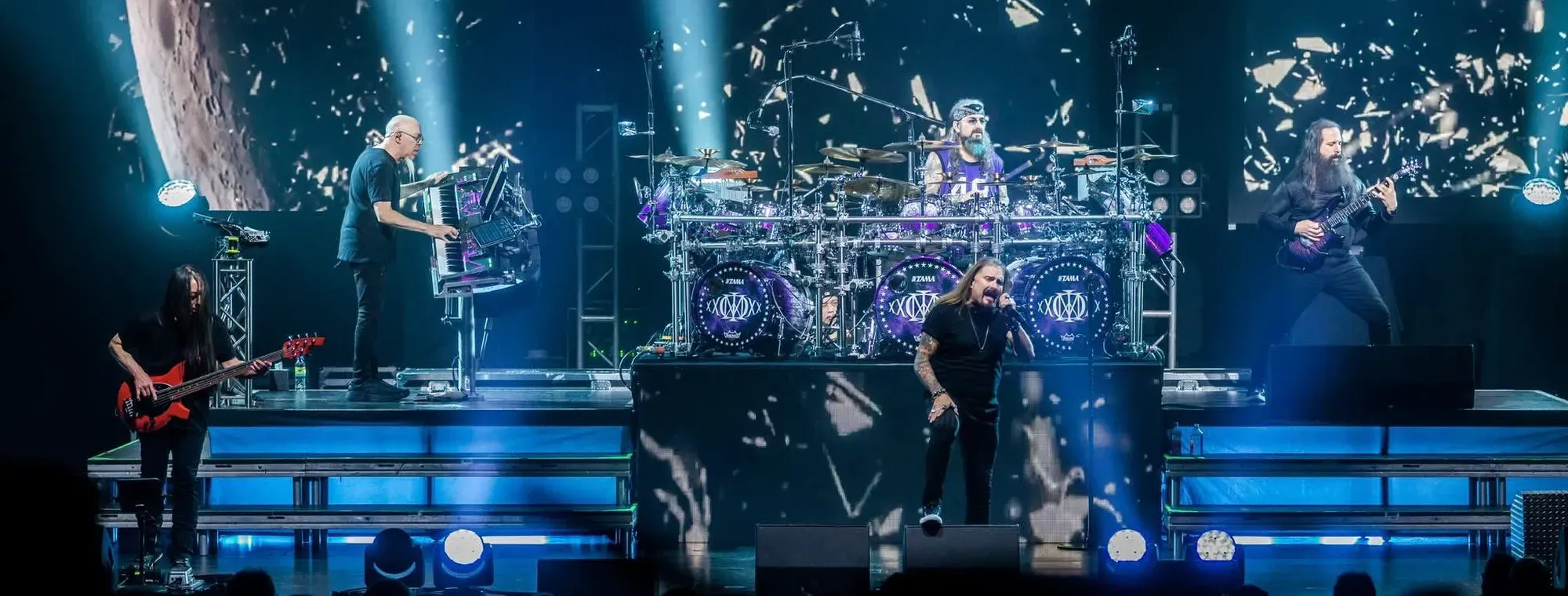
We spoke with Dream Theater keyboardist Jordan Rudess, taking advantage of the release of the double compilation Greatest Hit (...and 21 Other Pretty Cool Songs), who was in Venezuela, moments before leaving for the concert that the band was going to perform. We only had 10 minutes to ask him a small part of the questions prepared by our editor J. José Jiménez.
José Jiménez: First of all, it is clear that Dream Theater are not a group of hit singles, nor flagship songs, or at least I have never considered them that way. What is the reason for releasing a compilation like this Greatest Hit (...and 21 Other Pretty Cool Songs)? I suppose that the title comes from the song ‘Pull Me Under’, correct?
Jordan Rudess: Well, we already have an important musical catalog and it was an idea that Mike had for a long time, and something that for example John Petrucci also wanted to do. What happened is that Mike got the rest of us involved to make new mixes of some songs, and we took advantage to include some B-sides as well as some of the best known songs of the band but in a format that nobody had heard until now in any case. In the end something interesting has come out of the collaboration between the company and the band itself, but also including something new because otherwise it wouldn’t have made sense to do it.
JJ: The two discs of which the work consists are distributed in two sides, paying homage to vinyl records. They are “The Dark Side”, where the most metal and/or hardcore songs are collected, and “The Light Side”, where we find the most melodic and slower songs, including some of Dream Theater’s most legendary ballads. Obviously, each one of your fans would make a totally different compilation but, taking into account this distribution, how did it occur to you of doing it this way?
JR: Mike has been in charge of this, I haven’t been very involved in the compilation, to be honest, but the idea was to select the songs more or less with the distribution you have mentioned, and to give something extra for the fans to make the compilation more attractive.
JJ: In general, from the albums represented the majority chosen are singles, the songs of which you have recorded videoclips... and in the end two or three songs from most of Dream Theater’s albums have been selected. The only two albums that are not represented are When Dream and Day Unite and the most recent Systematic Chaos. What is the reason?
JR: I don’t know exactly because they are part of Dream Theater’s catalog but I guess it has to do with rights issues or the length of the compilation.
JJ: It is logical that Images and Words, Metropolis part II and Six Degrees of Inner Turbulence are the most represented albums in the compilation, because they are three of the most popular and successful albums of the band. Anyway, in the opinion of the band, or rather yours in this case, which albums do you think have worked best for the fans and which are the band’s favorites?
JR: All the albums we have done have a high level of popular songs but of course you always think that all the songs could have been more successful, especially the songs that are closer to each member, you know. Anyway, all the Dream Theater albums have a great balance between quality and variety of songs. There are more commercial ones like ‘Pull Me Under’ or more complex ones like ‘A Change of Seasons’ but in the end all the albums are good and have different audiences, but we are very satisfied with all of them. [Ed: I think he didn’t understand the question very well but there you have the answer he gave us...]
JJ: A very important aspect in the life of Dream Theater is its fans, as in any other band, but in yours they take on a really important role... and also your audience is increasing in a spectacular way year after year. Until now, such a level of fanaticism was only typical of bands like Kiss or Iron Maiden, although in different connotations, of course. What do you think about all this “fever” that is constantly around the band?
JR: Thank you... [laughs]
JJ: ...I still find it a strange phenomenon, in the best sense, because DT is not exactly a commercial or hit singles band, nor do you usually appear on general radio or TV.
JR: You are right because, although we don’t stop touring, composing and recording continuously... at the same time DT’s audiences around the world are increasing. We have never tried to do this, get on the radio or whatever because our nature has always been just to make good music. I guess we’ve been lucky or the fans reward us for being hard workers, but it’s true that our fan base keeps growing all over the world and we are very satisfied and grateful for that.
JJ: The last question of the interview is about you in particular and I was browsing your website www.jordanrudess.com, and I have to say that it is one of the most complete websites I have seen from a musician. You have even set up a virtual conservatory, where you can take private lessons, and not only piano. Tell us about it.
JR: For me one of the most important tasks of my career is to be able to teach music, the subject of education in general. Sharing my knowledge and skills, and helping as much as possible professional musicians to improve, but also teaching young people and/or anyone who wants to learn about music. I think it’s logical that if Dream Theater has the qualification of high quality musicians and therefore many people follow us or are interested in learning our style, skills or whatever, we are able to try to show them how little or much we know, plus, why not, solve doubts about the band’s own music, how to play certain things.... In any case, I cannot dedicate as much time to this as I would like or I cannot teach like a teacher or normal person, due to my occupations as a professional musician, and that is why it seemed like a good idea to do it through the web. In principle most of the material that can be found is about keyboard, but there is also information and courses about guitar, bass and other instruments that I have been learning over the years.
JJ: Finally, I would like you to dedicate a few words to all the fans who are going to read this on our website. Let me tell you that in our forum Dream Theater is one of the bands that create more expectation before the news of a new album or any news related to you.
JR: Well, sorry for the shortness of the interview but I have to go to pick up my luggage and I’m in a bit of a hurry. Thanks and see you soon, take care.
Original text
Dream Theater – Jordan Rudess desde Venezuela.
19 marzo, 2008, 1:32pm
Hablamos con el teclista de Dream Theater Jordan Rudess, aprovechando la edición del doble recopilatorio “Greatest Hit (...and 21 other pretty cool songs?)”, quien se encontraba en Venezuela, momentos antes de salir disparado para el concierto que iba a realizar la banda. Solo tuvimos 10 minutos para realizarle una pequeña parte de las preguntas preparadas por nuestro redactor J. José Jiménez.
– En primer lugar, está claro que Dream Theater no son un grupo de hits singles, ni temas bandera, o al menos nunca los he considerado así. ¿Cuál es la causa de editar un recopilatorio como este “Greatest Hit (...and 21 other pretty cool songs?)”... Supongo que el título vendrá dado por la canción “Pull me Under”, ¿es así?
Jordan.- Bueno, tenemos ya un importante catálogo musical y era una idea que tenía Mike desde hace tiempo, y algo que por ejemplo John Petrucci también quería hacer. Lo que ocurrió es que Mike nos involucró al resto para hacer nuevas mezclas de algunos temas, y ya aprovechar para incluir algunas caras B’s además de varios de los temas más conocidos de la banda pero en formato que nadie había escuchado hasta ahora en alguno de los casos. Al final ha salido algo interesante de la colaboración entre la compañía y la propia banda, pero además incluyendo algo nuevo porque si no no hubiera tenido sentido hacerlo.
– Los dos discos de los que consta el trabajo están distribuidos en dos caras, homenajeando a las de los vinilos. Son “The Dark Side”, donde se recogen los temas más metaleros y/o cañeros, y “The Light Side”, donde encontramos los cortes más melódicos y lentos, incluyendo algunas de las baladas más míticas de Dream Theater. Evidentemente, cada uno de vuestros fans haríamos un recopilatorio totalmente distinto pero, teniendo en cuenta esta distribución, ¿cómo se os ocurrió hacerlo de esta manera?
Jordan.- Mike se ha encargado de esto, yo no he he estado muy involucrado en el tema del recopilatorio, la verdad, pero vamos, el tema era seleccionar las canciones más o menos con la distribución que tú has comentado, y aportar algo extra para los fans y así hacer el recopilatorio más atractivo.
– En general, de los álbumes representados se han escogido mayoritariamente los singles, los temas de los que habéis grabado videoclips... y al final han resultados dos o tres temas de la mayoría de discos de Dream Theater. Los dos únicos discos que no vienen representados son “When Dream and Day Unite” y el más reciente “Systematic Chaos”. ¿Cuál es la razón?
Jordan.- No lo sé exactamente porque forman parte del catálogo de Dream Theater pero supongo que tendrá que ver con temas de derechos o de duración del recopilatorio.
– Es lógico que “Images and words”, “Metropolis part II” y “Six degrees of turbulences” sean los discos más representados en el recopilatorio, por aquello de que son tres de los más populares y exitosos de la banda. De todos modos, en opinión de la formación, o más bien tuya en sí en este caso, ¿qué discos crees que han funcionado mejor para los fans y cuáles son los favoritos de la banda?
Jordan.- Todos los discos que hemos hecho tienen un nivel alto de temas populares pero está claro que siempre piensas que todas las canciones podían haber tenido algo más de éxito, especialmente las canciones que están más cercanas a cada miembro, ya sabes. De todos modos, todos los discos de Dream Theater tienen un gran balance entre calidad y variedad de las canciones. Las hay más comerciales como “Pull me under” u otras más complejas como “A change of seasons” pero al final todos los discos son buenos y tienen a su vez diferente público, pero nosotros estamos muy satisfechos de todos. (Creo que no entendió muy bien la pregunta pero ahí tenéis la respuesta que nos dio...)
– Un aspecto muy importante en la vida de Dream Theater son sus fans, como en cualquier otra banda, pero en la vuestra éstos cobran un protagonismo realmente importante... y además vuestra audiencia se incrementa de manera espectacular año tras año. Tal nivel de fanatismo sólo era propio hasta ahora de bandas como Kiss o Iron Maiden, aunque en connotaciones diferentes, por supuesto. ¿Qué opináis de toda esta “fiebre” que hay constantemente alrededor de la banda?
Jordan.- Gracias (risas)...
– ...Me sigue pareciendo un fenómeno extraño, dicho en el mejor sentido, porque DT no es precisamente una banda comercial o de hit singles , ni salís habitualmente en la radio o televisión generalista.
Jordan.- Estás en lo cierto porque, aunque no paramos de girar, componer y grabar continuamente... a la vez van aumentando las audiencias de DT en todo el mundo. Nosotros nunca hemos tratado de conseguir esto, salir en la radio o lo que sea porque nuestra naturaleza siempre ha sido sólo la de hacer buena música. Supongo que hemos sido afortunados o que los fans nos premian por ser duros trabajadores, pero es cierto que sigue creciendo nuestra base de fans en todo el mundo y nosotros estamos muy satisfechos y agradecidos por ello.
– La última pregunta de la entrevista es sobre tí en concreto y es que estuve navegando por tu página web www.jordanrudess.com, y he de decir que es una de las webs más completas que he visto de un músico. Incluso has montado un conservatorio virtual, en el que se pueden tomar clases particulares, y no sólo de piano. Háblanos sobre ella.
Jordan.- Es que para mí una de las labores más importantes de mi carrera es el ser capaz de enseñar música, el tema de la educación en general. Compartir mis conocimientos y habilidades, y ayudar en la medida de lo posible a los músicos profesionales a mejorar, pero también enseñar a la gente joven y/o todo aquel que quiera aprender sobre música. Creo que es lógico que si Dream Theater tenemos la calificación de músicos de alta calidad y por ello mucha gente nos siga o esté interesada en aprender nuestro estilo, capacidades o lo que sea, seamos capaces de intentar mostrarles lo poco o mucho que sabemos, además de, ¿porqué no?, resolver dudas sobre la propia música de la banda, cómo tocar ciertas cosas... De todas formas, no le puedo dedicar a esto tanto tiempo como me gustaría o no puedo enseñar como un profesor o persona normal, por mis ocupaciones como músico profesional, y por eso me pareció buena idea el hacerlo a través de la web. En principio la mayoría de material que se puede encontrar es sobre teclado, pero también hay información y cursos sobre guitarra, bajo y otros instrumentos que he ido aprendiendo con los años.
– Por último, me gustaría que dedicaras unas palabras a todos los fans que vayan a leer esto en nuestra web. Decirte que en nuestro foro Dream Theater es uno de los grupos que más expectación crean ante las noticias de un nuevo disco o cualquier novedad relacionada con vosotros.
Jordan.- Bueno, perdona por lo breve de la entrevista pero tengo que irme a recoger mi equipaje y tengo un poco de prisa. Gracias y nos vemos pronto, cuidaros.
J. José Jiménez