
Originally published in Keyboardmag.com · October 2000
Jordan Rudess: Realizing New Dreams
By Brandon Vaughn
InterviewJordan Rudess20 min read
When most people think of progressive rock keyboard players, images of a person surrounded by synths come to mind. Often the player is viewed as eccentric, with a passion for vintage sounds and over-the-top keyboard setups.
Jordan Rudess is of a different breed – a person who likes to set new standards in an area of music most thought dead until the arrival of Dream Theater. Instead of playing numerous keyboards, Jordan prefers to use one synth for an entire show and stretch the possibilities for that instrument. He also likes to create his own sounds, and has been known to spend most of his free time at a keyboard programming original patches.
Jordan won the Best New Talent award (and came in second to Keith Emerson in the Overall Best Keyboardist category) in Keyboard's 1994 Reader Poll. He's been very busy ever since, working with numerous bands from the Dixie Dregs to the Paul Winter Consort. His music can also be heard onstage with International Magician of the Year winner Jeff McBride. More recently, Jordan formed a two piece "power duo" called The Rudess-Morgenstein Project with drummer Rod Morgenstein after playing with him in the Dregs. In 1998, Jordan joined with Dream Theater's John Petrucci and Mike Portnoy (along with Tony Levin on bass) to record Liquid Tension Experiment. Soon after, Jordan became an official member of Dream Theater, following Derek Sherinian's departure. Jordan played on what many DT fans consider to be the best album in the band's history: Metropolis 2: Scenes from a Memory.
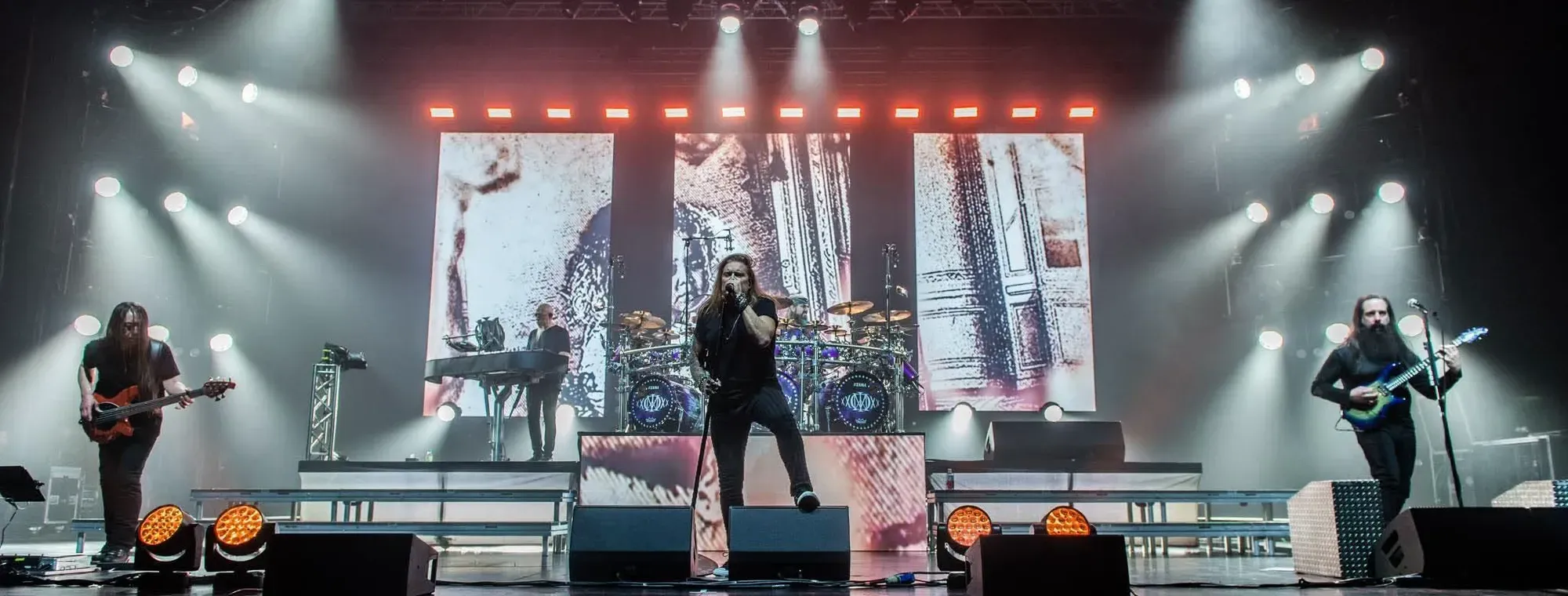
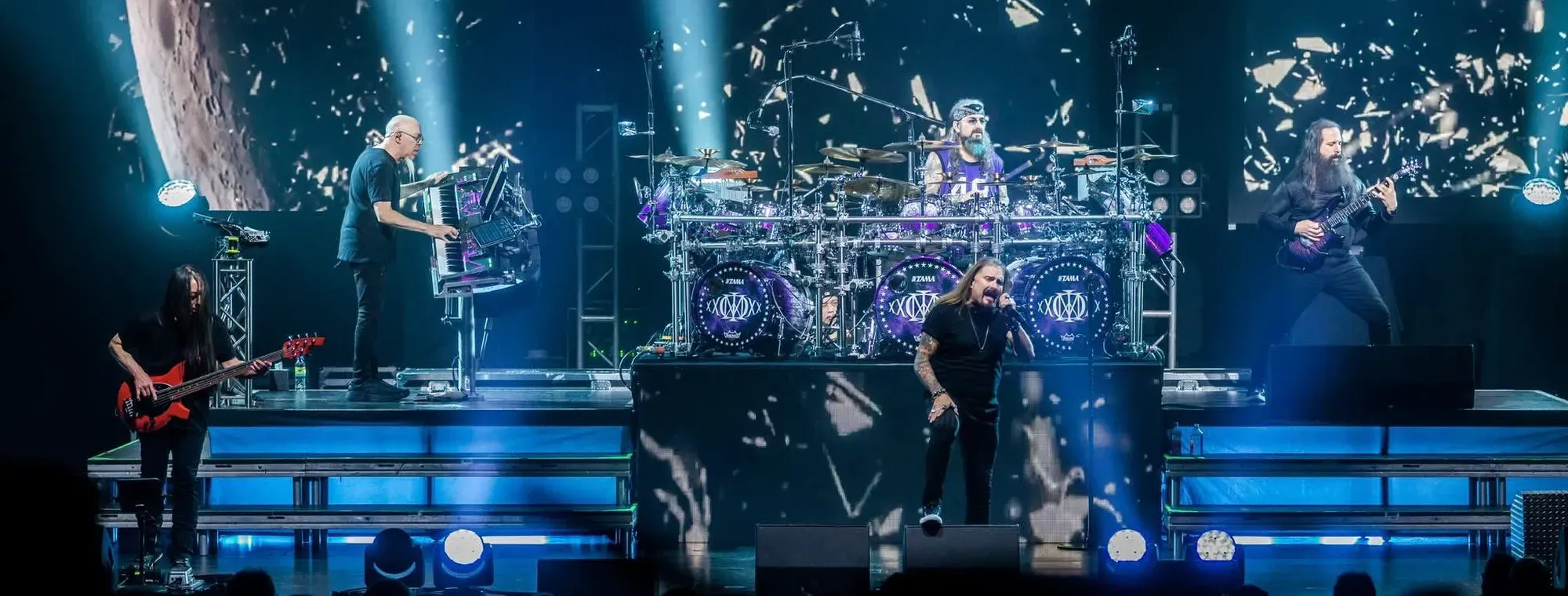
We recently caught up with Jordan before Dream Theater's performance at the House of Blues in Orlando. After showing us his streamlined onstage setup – which centers around a Kurzweil K2600 – we sat down to talk shop.
Are the keyboard sounds on Metropolis 2 your own custom creations?
I manipulate most of the sounds I use, in some way or another, even if it's just a little bit. When someone creates a factory sound, they didn't make that sound for the specific piece I'm using it with. I know enough about synthesizers at this point that I'll make it work for what I need. So if the attack isn't necessarily what I want it to be, I'll change the attack. Maybe I'll need to adjust the release. Or the filter may be a little bit too bright. I might go in and change the keyboard tracking of the filter, or the amplitude. For example, string sounds typically are very bright at the top. If I don't want that, I'll correct it. I'm always manipulating my sounds like that. I also do a lot of layering – putting various timbres together to create something interesting. And sometimes there's sound creation from scratch as well. For instance, in the Rudess-Morgenstein project, at the beginning of the song called "Masada," there's a sound that starts off hauntingly playing pitches, and then it opens up and expands. That whole sound is a rainstick sample that I took and put through a whole bunch of processing. One of the keys to that effect is a bandpass filter which narrowed the harmonic content of the rainstick until it sounded like a definite pitch. After that I assigned some physical controllers to it so I could change the width and the frequency of the sample in real time. So as I'm playing, I'm manipulating the frequency in such a way that it sounds like it's morphing between a pitched instrument and the actual rainstick. On Scenes from a Memory, all the sound effects – the hypnotist at the beginning, the clock, the murder scene – all that material I processed and manipulated on the Kurzweil. I started with existing sound effects CDs, as well as creating my own samples and manipulating them to create the desired effect.
Do you play these sound effects from your keyboard onstage?
For some of it, yeah. Originally I had all the sounds programmed to be triggered from the keyboard. Now we're presenting movies within the concert, so some of the sound effects are on the soundtrack of the movie.
What are your favorite songs and sounds from the new album?
I have favorites that I like in different ways. As a whole song, harmonically, I like "Finally Free." I think it expands Dream Theater into new harmonic structures, and I enjoy being a part of that. I put it out there, and everyone liked it. James started singing a melody and then the band brought it to its present form. Live, I like "Spirit Carries On." That one is mostly John Petrucci's tune, and it has a lot of magic to it. I love the way it's orchestrated. I got to write for and conduct a gospel choir for that. I think one of the most exciting parts of the record, as far as sheer instrumental wild progressive stuff, is "Dancing with Eternity." It's a true adventure. I really enjoy "Fatal Tragedy" where John is playing a lead, I play a lead, and then we come together. That whole section is incredible.
You didn't sing on this album, mostly because you wanted to concentrate on keyboards, correct?
Well, it's a big job getting into an organization like this. It was a challenge for me because, even though I can totally relate to where everyone is at musically, I also come from other musical backgrounds they can't relate to as much. So coming into it, and having to deal with the fact that I was going to be interjecting a lot of personal musical ideas that weren't necessarily accepted, was hard. But of course, the end result is that a lot of things I wrote are on the album, but I also had to put a lot of things aside. That whole process of learning what was acceptable and what was not and how this musical organization works was enough for me to deal with without pushing to sing or write lyrics. You've also got to consider that I'm coming from a two-piece group with Rod Morgenstein. In that group, I was doing everything, which was incredible for me and great fun. But now I'm in a big group with many people who are all capable of doing a lot of different things. I found out quickly that it was a cool idea to sit back and let others come up with ideas and lyrics.
I was impressed by the different sound you got in your solo in "Beyond This Life." The first solo has you playing a bluesy line.
The main solo sound I use is one that I've spent a while developing and tweaking to have it end up where it is today. It's a large intricate combination of different waveforms. Common waves like saw and sine but also oboe, flute, and guitar are all mixed together to get the secret recipe! There is a version of it in the Kurzweil 2600 factory sound set.
And then there's the dissonant horn section. Very interesting.
Mike had a vision for making that part very Zappa-like. He played me a Zappa CD over the phone, and it inspired me along these lines. My homework was to go write something that was very weavy, in a Zappa-like nature, yet melodic. And then I had to connect that to a crazed unison ending with John P., where I harmonize with the brassy/xylophone type sound.
Who was the instigator behind that mad unison part?
That part J.P. and I wrote together. I initially instigated it and wrote the beginning, then we got together in the middle of it and finished it up. But I wrote the whole keyboard part up to the unison part. John and I sat down in the Beartracks Studios living room and went nuts for about half an hour and came up with the final unison.
Before that is a bell-like interlude that reminds me of Emerson.
That sound is actually a very complex layer. It uses some Take 6 voices, with a little bit of brass and bell to it. I add an extra horn sound to it later in the solo.
Do you use the Kurzweil piano sample exclusively?
Yes. I use all of the piano ROM programs. I tend to use more of the bright sounds, specifically I used Bright Concert Grand, because it cuts through in a band environment. With it brightened up even a bit more, it works really well.
Some of Dream Theater's songs are so complex. Do you have any secrets to remembering complex arrangements onstage?
I have a big system that I use. I don't know how the other guys remember it at all, though. I guess just from constantly playing the songs for so many years. With my own music, like with the Rudess-Morgenstein Project, you can hear that it has a lot of changes in it. Dream Theater also has a lot of turns. I only use the one keyboard. On the keyboard, I typically will have a patch – or specifically on the Kurzweil I use Setups. For example, I might play a string part for the verse then go into the chorus that needs a piano part. Everything has a different name. I'll call my Setups up incrementally with my foot pedal and they will all have names that give me information about the section. For example, I might call one patch "chorus 2x" or "verse F# Gm C#." Ideally I would like for Kurzweil or whichever companies I work with in the future to make a keyboard that would give me the opportunity to input and display more information onscreen. How about auto-scrolling music notation? Why not? My job is more complex than anyone else in the band on a certain level because I'm controlling a lot of the sound effects and so many orchestrations. It's not like I have 15 different guitar sounds and I can switch between them. I have about 200 different sounds to take me through the night, and they're all sequential. So if I have, for instance, the opening sound effect on D1 of the keyboard, I can call that patch "D1." And that's cool. But it would be nice to display any extra information that I want. It also would be smart and helpful to have a graphic display on the actual controllers and on the keyboard itself for each patch. There are a lot of things I'm looking for the keyboard world to develop that would make performance a lot easier.
With all of the different time signatures that Dream Theater plays in, is their a conscious effort on your part to count out parts in your head, or does it become a riff that you remember through constant practice?
On some things I am definitely counting. We have some things that will alternate between 5 and 6. Something like that you have to memorize. On one song we play a riff with one note, but the time signature keeps changing. Unless I'm counting it out, I won't know where the hell we are. It's not so much a feel. But on the other hand, when I was doing the stuff with Rod, the pieces ended up being totally feel.
What is your usual routine before going onstage?
I like to warm up. Sometimes, instead of playing the keyboard, I'll just get my hands in some hot water, and keep them there to soak. I can be just as warmed up if my hands are just plain warm as if I sit down and do lots of warm-up exercises. For instance, if I practice for an hour and then go into a cold room and walk onstage, I'm screwed because my hands are cold. It's a physical thing. But if I can put my hands in some warm water for a while, and hopefully not walk into that cold room, it's probably just as good as any other way of warming up.
ONLINE EXCLUSIVE: EXTENDED INTERVIEW
Background
Do you see more of your influence as coming from a classical or rock foundation? Or a combination of both?
Definitely my classical roots form the complete foundation for my style. It has been the major catalyst for the way I think about music and technique, and really laid the groundwork for everything I do.
Do you have any aspirations to record a classical album?
I don't feel the necessity to record a full classical album of other composers music, although I do enjoy playing the standard classical repertoire and actually contributed a recording that I did of Chopins Revolutionary Etude for a Magna Carta release entitled Steinway to Heaven. For me, the important things I have gained from classical training are finger technique, exposure to different kinds of music, and compositional skills. My strongest desire is to expand the state of where music is at today. I think that my traditional classical background and my interest in using synthesizers as full performance instruments, along with a desire to create new timbres are the keys to my contribution for the future of music.
Do you have any nonmusical goals you hope to accomplish?
Just recently I've immersed myself in controlling graphics from my keyboards. When you see the show tonight, you will see what I've been doing with my Mac powerbook and my keyboard. I've been generating the graphics for the show using an amazing program by UI Software called Videodelic, and linking it up with my MIDI technology. For the audience, it creates a graphic world that is tied in with the music. This is something I've been interested in for quite a while. And I've been telling the synthesizer companies that I have been working for to look into ways of incorporating the world of graphics into the world of sound. I spend a lot of time making sounds. And in doing this, I always think along the lines of images. I don't see any reason why they can't be combined into the same creative tool. Presently, I'm using my computer to do this, which is fine. The MAC is incredible. But one day soon it will all be one conceptual motion materialized by the same instrument. That is my goal.
What are the musical projects you see for yourself in the near future?
You know, it's funny. Lately I've been giving a lot of thought to the projects I'd like to do. I am so satisfied playing in Dream Theater, but of course the band is not the end-all for me musically. There are still a lot of different kinds of projects that I want to do. I would like to write something that is very progressive but very acoustic for a chamber group: piano, violin, cello, That sort of thing. Or maybe a concerto with a Synthesizer and orchestra or Synthesizer, Guitar and Orchestra. Maybe John Petrucci and I can do some amazing concerto with an orchestra. I definitely plan on doing another Rudess-Morgenstein project as soon as my schedule allows. That duo is a great musical outlet for me since I get to use the keyboard as a complete live performance instrument.
If you could play with anyone, past or present, alive or dead, who would it be?
I think it would be fun to jam with Hendrix. That would be cool. I wonder what Steve Vai's schedule is like?
Did you work for Korg in the past?
I started out with them as a clinician. Going out to music stores and showing off the M1 series instrument. I was also doing a lot of sound programming for them and factory demos. Then I took a break from the manufacturer side of the business so I could focus on the recording of my "Listen" album. When I was ready to reconnect with a manufacturer I went to Kurzweil. I started out as a clinician for them and in more recent years had become an artist endorser of Kurzweil instruments.
Have you considered putting out a CD-ROM with your own custom samples and programs? Maybe make some of your Scenes from a Memory or Liquid Tension Experiment sounds available?
That would be a difficult to release commercially because I use a lot of other people's sampled elements along with my own within the sounds that I create for these projects. So I couldn't put that onto a CD-ROM and call it my own. Yes, It is my patch, but it very often includes someone else's commercially released sample.
What are your favorite sample libraries?
There is great material out there. Spectrasonics is my first choice. My friend Eric Persing is to be given major credit for creating some of the best sonic material available in my opinion.
Like Distorted Reality?
I love that. I've used that a lot. Both DR#1 and #2 are amazing discs.
What are some things you would like to see improved within keyboard technology?
I'd like to see bigger screens with more information. I want to be able to see more of what is going on, maybe even scrolling music notation. Another thing is that sliders and knobs change values, but generally don't give you any visual indication. It would be nice to go to a patch and see what position those sliders were in and get that visual information. Many of today's instruments generally sound great. So my interest is more in the performance and control factor as well the sound shaping potential.
On Technique And Constructing Solos
How do you work out your solos? Do you come up with a line that matches the chords?
Well everyone does their solos differently. In the case of my particular synth solos, I'll usually stay home and set aside a couple of hours and just go nuts I'll keep running through the song and trying different things. At that point, I don't really write anything out because I just try to unleash the madman in me and go for the magic! I get into it, really working up a sweat, until I find what I like. It can take a couple of hours to get there.
So you hear it more in your head than you do analyze the chord structure and find appropriate modes?
I don't do the chord structure at all. I'm just playing, letting my hands follow my imagination. The only time I ever think theoretically about such things is when I'm working to advance my style. The way I learn is If someone says, "Oh, if you use a melodic minor over this you'll get a cool sound." If it sounds good, then I will try it in different keys to get my hands used to it. In the past if I discovered that Emerson played lots of 4ths and sus chords I would theoretically figure what all that is about and find every position of it on the keyboard and get really comfortable with it. Same with flat 9 or 13 chords. I would learn the theory first, and then put it into immediate practice. I think everyone should do that. But after the work is done, then it's time to be purely musical.
You have such a great fluid motion in lead and arpeggios. Are there any tips you can give in developing this? Is it just a matter of wood-shedding?
No, not necessarily. Fortunately and unfortunately it is in the approach. Unfortunately because it is hard to explain fast, and it is a shame that people have to practice a lot and do it in a way that will never get them from point A to point B. Most of the problem is that people don't realize that to master physical matters of playing, you want to exercise the least amount of energy. In other words, I often see keyboard players with their wrist and elbows moving all around. If that is what he is doing to get the part done, you know he is working too hard for results. He might get it done, but it is not the best way to play. He won't be able to do his best job. A great example of the ultimate approach apart from the keyboard world, is watching John Petrucci play the guitar. He plays the most outrageous things, yet his hands look like a little spider gliding across the guitar. I like to think of myself working along the same lines. If I'm playing a Cmaj7 arpeggio, I don't want to turn my thumb under in such an exaggerated manner that my elbow goes up in the air. You don't have to turn your whole arm. When you are moving up like in an arpeggio, your arm has to move anyway. When it is fast, your arm is going to move naturally. This is a different approach than what I see most keyboardists doing. This is why we need another video, so I can show it! (laughs).
If someone were to strive to be a progressive keyboard player, would you recommend that they get trained classically, or do it on their own with existing materials?
This would depend on where you are positioned in life. If someone was in classical music school right now, like a 16 year old kid, and he gets turned onto my playing, I would have them start taking apart some of my riffs and learn them. I would also encourage them to learn how to do synthesis. And of course, they should listen to a lot of different kinds of music. Study some other instruments, not in terms of playing them, but in terms of what they are doing. A lot of what I do in my career is based on the knowledge of what a drummer is going to play, or even the feel of a drummer. When I'm working out a tune at home, even if it is something Dream Theater is going to play, I have good concept of what kind of beat would go behind something, therefore knowing a little more securely if it would work in a certain way. So that would be my advice for a classical person. In the classical world, you are not usually looking at how to shape timbres, unless you are studying orchestration. With the synthesizer, there was so much to learn because of the ability to change the harmonic structure of sounds.
Let's say that I am one of your students at a beginning or intermediate level. What kind of practice regimen would I be under?
A good approach would be first on physical technique. There are a variety of exercises which I would probably recommend depending on your level. I would also go over the concept of exercising too. A lot of guys might play Hannon from morning to night, and never get anywhere because what is happening is that their fingers are never get strong. Whereas, if you play in Phillip's style, you are focusing on independence of the fingers by holding a chord and lifting up different fingers. That is so different from going all day just playing scales or arpeggios. So a lot of time would be spent in doing that. Then I would have you look at different kinds of chords and melodic shapes. I used to have a teacher who would give me a different assignment every week, such as "This week we are going to look at major 7ths or half-steps. I want you to write a piece that focuses on that." or "This week we are going to look at Rick Wakeman's style. Now Chick Corea, I want you to write a piece dealing with that." I actually wrote a piece for each style. That was the best education!
Do you have a strict practice regimen now?
No, unfortunately not now. I would say that when I do sit down, I have a very good idea of what I need to do. But life on the road can make it hard to be consistent.
Is there any thing that you wood-shed on?
I have certain exercises that I always do.
Are you more into song-building rather than technique at your level?
Well, I'm definitely still into both. One thing I like to do is sit down and improvise on piano in a flowing style, or in a very progressive style. I find that this is a great release for me to reconnect my musicality with my physicality, which is so crucial. But beyond that, a lot of time, I will just sit down and do my own technical exercises. At this point, I don't sit down and play anyone else's exercises. If I do, I do variations of scales in rhythms of sevens, fives, threes, while always changing the strong accents. For me one of the most focusing exercises to do is to play a straight chromatic scale where you don't start on the same note, but on different notes and keep it together.
Is the metronome an essential part of learning for you?
Well, the metronome is essential, but more so, I really believe the secret to anyone's practice success is rhythm and accenting. So even if the metronome is not on, you should be able to tap and count while you're practicing. There should be some sense in knowing exactly where the beat is falling. Too many guys play just randomly. Ask them, "Tap your foot while your doing that." and they won't be able to. If you are playing scales in threes, then tap your foot to it, or sing along with it. There needs to be a way to connect your physical body to your mind. If you just move your fingers freely without securing your rhythmic sense, nothing will happen. You can practice all day, and nothing will happen. But if you tap and or count while playing, and then you decide to play something in threes or sevens, or whatever there can be a better musical connection being made.
On Writing Music
How do you go about writing songs in Dream Theater. Mike Portnoy mentioned in his video about how you will name segments of music and piece them together. Can you describe that?
The seeds for the song come from a variety of sources. For the ideas I bring in, I actually have a lot of them in my sequencer. I'll be working at home before the session starts, and I'll put a bunch of ideas in the sequencer that I can present. These ideas will usually be around 8 or 16 bars at a time. For this latest album, the group had been playing around with a some ideas for a Metropolis 2 piece written a couple of years prior. They had tapes of that, and we went through it picking out the pieces we thought were really cool. So we had little starting points that we could use. Then after that, we would get together and play through the parts and look for the next section. We basically try to hook into some collaborative inspiration. When we get something we like, we'll label it something, like the "Marillion part" or the "cartoon part." After we have all these sections, then we put them together. We'll write them down on a piece of paper and see how it looks. Usually at that point, Mike (Portnoy) is very instrumental; he has a real head for seeing the bigger picture of these crazy pieces. We start putting them down and trying different arrangements, seeing how they feel, and changing them from there.
Misc.
It seems with every Dream Theater album, there's more emphasis on background vocals. And with this album, you conducted a choir. Was there a conscious effort on this album to introduce more backing vocals? Did you sing on this album?
No, I didn't do any backgrounds. I could have certainly, because I do sing. But I didn't. I don't know if any of the guys had any conscious effort to do more vocals. I know they did have a strong feeling about including the choir.