

Originally published in Sea of Tranquility YT channel · March 2022
Mike Portnoy interview (excerpts)
InterviewMike Portnoy17 min read
Pete Pardo: Welcome to day 31 of albums that are 30 years old in 2022. We’ve been looking back on our favorite albums from 1992 all month long, and as you can probably guess by my guest here on Zoom, Mr. Mike Portnoy, my favorite album here on day 31 [is] Images and Words from Dream Theater.
Mike Portnoy: Wow! Thank you! Number one, that’s quite an honor; I appreciate that. As you’ve covered, there was a lot of great stuff that year: Vulgar Display of Power, Faith No More, Alice In Chains’ Dirt. But yeah, we stuck out like a sore thumb back then. [laughs] Back in ‘92, we came out with this album, and we were a square peg in a round hole, but somehow it worked, it clicked. I guess maybe because we were different from what was popular at that time, maybe that’s what helped it stand out. I don’t know, but it’s an album that changed my life. I wouldn’t be here talking to you if that album hadn’t clicked the way it had and done as well as it did.
PP: That’s the important thing. Not only did it change your life and everybody else in the band, I think it changed the lives of a lot of us, because this marked a new style of music that borrowed from some things of the past but really spearheaded a whole generation of bands to follow and albums and music to follow that we still feel today. Not only in your former band and what they’re putting out, but the music you’ve created, all the other bands that came in your wake. It’s hard to deny the importance of this album. This album was a little bit of a period of growing up for you guys: adding a new singer and new producer, new record label, getting played on the radio. ‘Pull Me Under’ was a big breakthrough for you guys. Can you take us back to the time in the studio making this album; did you have any idea that this was going to be a deal breaker and a game changer for not only yourselves but for so many people?
MP: We were just happy to be given a second chance, or even a third chance because James was our third singer at that point. We had done the first period with Chris Collins, the Majesty era. Then we went through the whole When Dream and Day Unite experience in ‘88 and ‘89 with Charlie Dominici, and that was just nothing but false promises and false starts. We were excited to be making a first record, but then it went nowhere. We never toured for When Dream and Day Unite, we didn’t do any videos. It just never panned out, and that album just fell on its face and we disappeared for years. Between ‘89 and ‘92 when this came out, we spent a year looking for a new singer, then we had to spend a lot of time going through all the legal red tape to get ourselves out of the Mechanic deal and then signed to Atco.
So we weren’t looking at the bigger picture that this is gonna change the world and change our lives and open up the whole progressive metal genre. We weren’t thinking in terms of broad strokes – then here we are talking about it 30 years later – we were just happy to be making another record and given another chance. And to be honest, even starting the period of this record, we were still uncertain. We didn’t know it was going to take off the way it did because there was a lot of waiting. We made this record in summer and fall of ‘91, and making it was difficult; working with David Prater was a difficult process that’s been spoken about and documented elsewhere. So we had to swallow our pride to get that record done, and once we finished the record and delivered it, we sat on it for eight months. It wasn’t even released until eight months later in summer of ‘92, and then even once it came out, we didn’t start touring until I think September, October of ‘92. So we were still gun shy from the When Dream and Day Unite experience. We were just happy to finally have a new album, new singer, and we were just proud of the music.
The music we wrote for this album – ‘Metropolis,’ ‘Learning to Live,’ ‘Take the Time,’ ‘Under a Glass Moon,’ ‘Pull Me Under,’ even ‘A Change of Seasons’ was supposed to have been on this album – we wrote all that music in ‘89, ‘90 and ‘91, and that’s what kept us going. We were so proud of this music, we were so excited to have a new singer in the band. My lyrics to the first verse to ‘Take the Time’ was all about that period: ‘We need a new voice, a new law, a new way, take the time, re-evaluate.’ That’s where our heads were at. When it finally came out and we finally hit the road and then it was all over MTV and all over the radio, it was like, “Wow! Seven years of perseverance is finally paying off!” All those false starts, all the bad luck we had had for those first seven years, finally there was the light at the end of the tunnel. And we were up and running, and from there the rest is history. That began the next 30 years trajectory for all of us.
Like you said, it really opened up the genre again. It kind of breathed new life into the prog genre, which was very dead in ‘91 and ‘92. The whole grunge scene had taken over. It wasn’t just grunge, but there was also bands like Jane’s Addiction and the Chili Peppers and Smashing Pumpkins. So it wasn’t just Seattle, there was all this other stuff, and we were so tremendously out of step with that that it was amazing that this took off the way it did, and we kind of created a monster because now this genre is blossoming in each and every direction. But if Images and Words hadn’t succeeded, I don’t know if the genre would have moved forward the way it did, because prog was a dirty word at that point, and our commercial success on a mainstream level really opened up all those doors.
PP: That’s a really good point. I know for me personally as a big hard rock and metal fan starting in the late ‘70s and all throughout the ‘80s, the beginning of the ‘90s, a lot of things that were happening in popular music were a real turn off for me. I really fought hard against grunge and alternative and hip-hop and all the nü metal –
MP: I loved all that by the way, I have no problem with any of that stuff.
PP: I’ve gone back and found some love for some of that stuff all these years later, but at the time I really fought hard against it. So that is kind of what turned me on to bands like yourselves, as well as Spock’s Beard and the Flower Kings and echolyn and all these other bands that kind of started to come up from the underground in prog. But what I loved about you guys is you had that heavy metal mentality, that love for Rush and Fates Warning and Queensrÿche, Rainbow, but you injected these great pop hooks and this ridiculous prog instrumentation which I love from bands like Yes and Genesis and King Crimson. So for me, you guys were the savior, because all of a sudden there was something new for me to get excited about, and I no longer lamented the fact that a lot of my heavy metal heroes were trying to do grunge or disappearing into the underground or what have you. So I latched on to this album like it was nobody’s business. Even though I had been introduced to the debut, which I really liked, this was on another level. This is almost like your official debut and your kind of coming out party and then everything else that came afterwards obviously. It’s so funny because I remember specifically at the time thinking of all these people who were into Dream Theater, and then within like two-three years or even less, people are like, “Did you hear that latest Dream Theater clone?” and there were a lot of great bands, but everybody was like, “This is what we want to do.” It’s almost like you gave everybody the OK to do something like this.
MP: Well I must give credit where credit’s due. I think this album and its commercial success opened up a lot of doors, but we didn’t invent this genre. Like you mentioned, Fates Warning was doing it before us and Queensrÿche; even Iron Maiden and Metallica in the late ‘80s were dabbling in more proggier stuff, longer songs. But by ‘91, ‘92, even a lot of those bands – like Queensrÿche – was getting streamlined a little bit, and Fates Warning was as well, but Fates Warning never really had a major label behind them. We were just doing what we naturally loved as fans like you said. We loved heavy stuff, I loved what Metallica and Slayer and Anthrax and Megadeth were doing, as well as the classics like Sabbath, Priest and Maiden and all that. And we were throwing that into a giant melting pot with the prog stuff too, because bands like Genesis and Marillion and Yes were at this point just doing streamline, basic stuff. Even Rush got rid of all the complex stuff at this point. So we were just doing what we loved as music fans and threw it into a melting pot, and this is what came out. But certainly there were a lot of bands before us tinkering with it, but luckily the success of this album really helped.
And I think if this album hadn’t succeeded and it was like When Dream and Day Unite, I don’t know if the genre would have ever grown the way it did. I think it was because once the major labels, or even the smaller labels like Magna Carta or InsideOut at the time, once they saw that there was a market for this and how well Images and Words did, that’s when all these bands came out of the woodwork. And thank God, because from there it flourished and flourished and branched out into so many sub-prog genres.
And you also mentioned the melodic side; I think it’s important, because everybody always talks about the prog and the metal, but really there were three sides to us: there was the prog, there was the metal, and then there was the melodic and catchy songs. Songs like ‘Another Day’ and ‘Surrounded,’ and even the chorus from ‘Pull Me Under’ had a hook. We love bands like Journey and U2 just as much as anything else, so we wanted to have that edge as well. We didn’t want it to be full on wankery or full-on bombast; we wanted to have a side too with songs like ‘Another Day’ and ‘Surrounded,’ ‘Wait For Sleep,’ where there was a melodic edge to the band as well. It was those three aspects I think that really made up Images and Words and all of the albums that followed.
PP: You mentioned ‘A Change of Seasons’ before and how that song was also created around the same time. I know probably it’s career suicide with your second album to release a double album; was there ever thought of including that in this album at all?
MP: Up until the first day in the studio, ‘A Change of Seasons’ was supposed to have been on the album. It was supposed to be an have been a nine-song album, and it would have been around 75 minutes. All the pre-production we had done for this album with David Prater and with Atco Records included ‘A Change of Seasons’ on this album. The day we entered BearTracks to start recording, we get a call from Derek Oliver at the label saying they’re not allowing us to put ‘A Change of Seasons’ on the album, and we were devastated. We were heartbroken. Like, “What a way to start the session!” It was such a downer. And for me it was such an important song; it was my lyrics. I didn’t write lyrics to the other stuff on the album because this was my big baby. And to have that big 20-minute epic cut, which was so personal to me, it was particularly heartbreaking for me, but the whole band was really bummed out about it. But in retrospect, as much as it hurt at the time, I think in retrospect the label was right. No albums back then were 75 minutes long, so it would have been just too much. It would have been overload for quote-unquote a brand new band. It was essentially almost like a debut album for a lot of people and that could have been suicidal. It could have been just too much to swallow, so in retrospect, as hard as it was at the time, I think it was the right move by the label. And we ended up being able to record it a few years later on its own as an EP. So it worked out in the end, but at the time it was it was a tough pill to swallow.
PP: When you first went out on tour to support this album and the couple of tours after it, how hard was it not to dip too much into this album, and did you guys ever get to a point years later where you purposefully tried to stay away from Images and Words just a little bit and really explore more of the rest of the catalog?
MP: We never could really get away from this album; it was too important. And not only is it important, it’s good, the material is great. These are classic songs. How could you not play ‘Pull Me Under’ or ‘Take the Time’ or ‘Learning to Live’ or ‘Metropolis,’ ‘Under a Glass Moon?’ It’s a classic album and those songs still stand the test of time today 30 years later. So yeah, this material was always represented in the set. And later on I would write different set lists for every show, but there always had to be Images and Words tunes. But that first tour, we pretty much were playing the whole album, and it was more important for us to do some tracks from the first album because we didn’t want to forget about that. So the first Images and Words tour was pretty much all of these tunes as well as like ‘A Fortune in Lies’ or ‘Ytse Jam,’ maybe a couple songs from the first album sprinkled in.
The whole first Images tour, I remember opening with ‘Metropolis’ every night, because originally I wanted ‘Metropolis’ to open side one and ‘Pull Me Under’ was gonna open side two. It was another battle with the label; they really wanted to open side one with ‘Pull Me Under,’ and once again I think they were right with that decision. All these years later, I came to grips with this album sequence, but we always opened the live show with ‘Metropolis,’ which was great on that tour. Just coming out of the gates, everybody on that first tour, it was their first time seeing us live. The first time in Philly, first time in Detroit, first time in Chicago, first time in LA, first time in Germany, in England; it was really the big unveiling. And then to come out every night with ‘Metropolis’... There was always that look in the audience. At first, people were like, “OK, let’s see if they could play this stuff,” and then halfway through the middle of ‘Metropolis,’ people are just like, “Whoa!”
We started in a van, the Images and Words tour, the first three months were in a van, before radio was playing it, before MTV was playing it. Then about two or three months in when radio and MTV got behind it, it was like boom! Suddenly all the shows were sold out, we moved up to a bus and started going to Europe and all these other places. It took a little while to get the ball rolling. People that weren’t there at the time don’t remember it took many months for it to come out, many months for it to click. But once it did it kind of changed everything from that point on.
PP: One of the great things I’ve always loved about Dream Theater, especially going to see them live – and I’m really mainly talking about when you were in the band – is you could go see Dream Theater two, three, four, five times on a tour, and you would get a totally different set list every single night. My wife sometimes kids me; she’s like, “You want to see Dream Theater again?” and I’m like, “Well, there’s a reason why.” Not only do I love the band but because you’re getting a totally different show. It’s like going to see a Grateful Dead show. You’re going to get a difference every single night.
MP: That was my ammo. [laughs]
PP: Absolutely, and I was going to applaud you for that because that’s what made every single concert an event.
MP: I think once we got to the point where we had four or five albums, six albums and all that material to work with, that was just my MO. Pretty much 2000 to 2010 – that era – I slaved every night on my computer writing a different setlist for every single show. Reviewing whatever we played in Poughkeepsie the last time, or whatever we played in New Haven the last time, making sure it’s different each and every time. But it was a lot of work. I understand why the band doesn’t do it now without me. I would have to give a master list of 50 songs at the beginning of each tour, not only to the band members, but to the
17:54
light guy, and the video guy, and each and every day everything would have to be reprogrammed. It was a labor of love for me and I knew the fans appreciated it, but it was a lot of work!
PP: You have always done everything you do for the fans because you are a fan, and that’s why you are always like one of us, and that’s the reason why so many folks love Mike Portnoy.
MP: Thank you.
-----
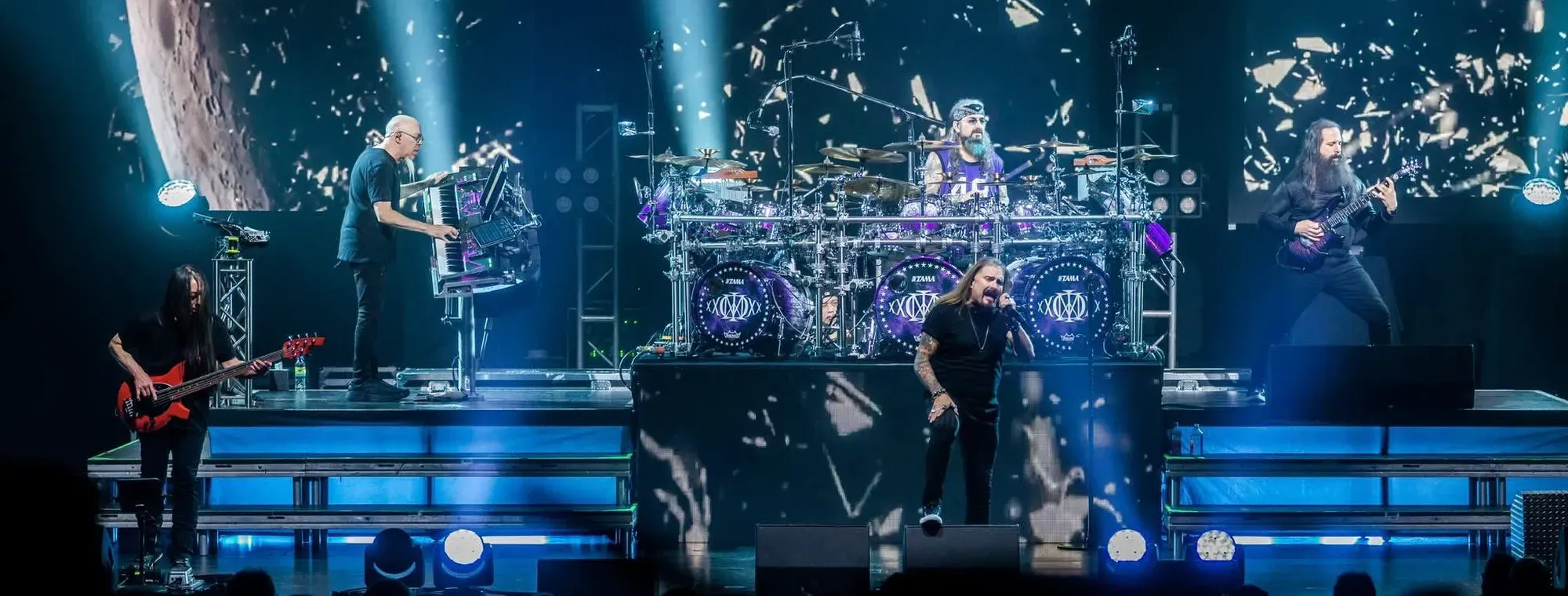
PP: Before we let Mike go, I have to ask him this question: so literally days before I saw a Dream Theater in New Jersey recently, you were in the audience at the New York City show. I gotta ask you what was that like for you?
MP: It was actually an amazing experience to be honest. I’ve dreamt about that moment. I’ve had dreams about it, like, “Oh my God, wouldn’t it be weird to see Dream Theater?” I kind of feared it for many years and many tours. I didn’t know if I was ready for it. I wasn’t sure how it would feel to be watching my old band without me, but I gotta tell you it was a great, great evening. It was maybe weird for a few moments when the show started, but after that, I really enjoyed it. It wasn’t as uncomfortable as I had feared it might be, and it was really cool. I guess once James actually pointed me out from the stage and brought attention to me, that kind of made it a little weird because I was trying to hide; I was trying to be inconspicuous and then once he pointed me out it’s like, “Oh no, here we go.” But it was a cool experience and I’m at such a good place with all those guys now.
It feels so good to be able to go see them and not feel weird, and to be able to hang out with them and be friends with them again. I mean that’s what it’s all about. When Dream Theater began, myself and John Petrucci and John Myung were 18 years old, we were teenagers still in college, so it’s more than just the music that the fans know; there is so much personal history. That was 36 years now, so that’s never going to go away. There was some rough patches after I left the band for a little while, and all the drama on the internet, but luckily all that has melted away, and now I’m in such a great place with all of them now, and it feels so good to be able to have that.
All of our families are friends, and my daughter and John Petrucci’s daughter share an apartment together. My wife and John’s wife and John Myung’s wife play together; they played in Meanstreak back in the day, and now they’re playing together again.
PP: So those connections are always gonna be there.
MP: They’re always there, but being able to finally break the ice and go see them without me... It took a while to be able to have the balls and the comfort to do it, but it finally happened and I’m really glad it did.
PP: I think I probably can speak for most folks who follow you and the band that when we heard that news and saw the pictures, it made all of us feel really good. What happened back a dozen years ago happened, and I think everything worked out in the end, because quite frankly a lot of the music we’ve gotten from you we wouldn’t have, and the world would be a worse place for it. I wake up every day thinking we got Sons Of Apollo, we got Neal Morse Band, we got Winery Dogs and all the other things that you’ve done, and that speaks volumes. The world works in mysterious ways and sometimes things are just meant to be, right?
MP: That’s true. Things happen for a reason and everybody’s happy now. And I still get to work with John and Jordan; we did LTE3 last year. I played on John’s solo album. So it’s really the best of both worlds now. It just sometimes takes a little while to get there, but I’m glad we finally got there.