
Originally published in Igor Miranda YT channel · July 2022
James LaBrie interview
InterviewJames LaBrie13 min read
Igor Miranda: How you doing, James?
James LaBrie: I’m doing great, yeah – just running around like a chicken with my head cut off.
IM: On the road – but not on the road right now, right?
JL: No, no, no. But we will be soon enough. Well, I shouldn’t say soon – maybe, what, six weeks from now? We’re going to Indonesia and then Tokyo, just headlining two big festival shows.
IM: We’re going to talk about the upcoming tour here in South America, with two concerts – one in São Paulo and one at the Rock in Rio festival. But before that, you guys were back on tour last February, and since then you [performed] more than 60 concerts, I guess. What was it like finally returning to the stage two years after the beginning of the pandemic?
JL: Our first show was February 2nd in Phoenix, Arizona. It was crazy because we’d gotten away from it. To be exact, it was three weeks shy of two years since we had played on stage. Exactly three weeks. It was crazy. So it was kind of weird – it kind of felt to each and every one of us like we were starting all over again. Like you got those butterflies, and you’ve been away from something that you love to do, but you haven’t done it for so long that you’re really having to wrap your head around getting back into that game, getting back into that zone. But once we were on stage and we were like one or two songs into it, it all felt like home again. It all felt amazing. And it was, like I said many times on tour, you don’t realize how much you miss something until you get back into it. So yeah, it was great to get back out there.
IM: Considering you guys have such a technical approach to your performance, what were the main challenges of returning to the stage after so long?
JL: I don’t know. To be honest with you, we’ve done this for so long that as long as each and every one of us feel good about where we’re coming from individually, then I think collectively it just comes together. It’s what it’s always been. It’s that unspoken communication with one another, and you just fall into that groove that each and every one of us is feeling, and that’s what creates that union – that cohesiveness – to be able to perform and have a good time and put on a great show for our fans. So it’s just a matter of all of us individually being up for it and feeling good about it, both physically and mentally, and I guess even emotionally to a certain extent. And then everything else kind of falls into place.
IM: About the South American tour, you guys are coming back with a different show now, promoting the new album A View From The Top Of The World. So what can fans expect from those concerts in terms of setlist, stage production, and all related stuff?
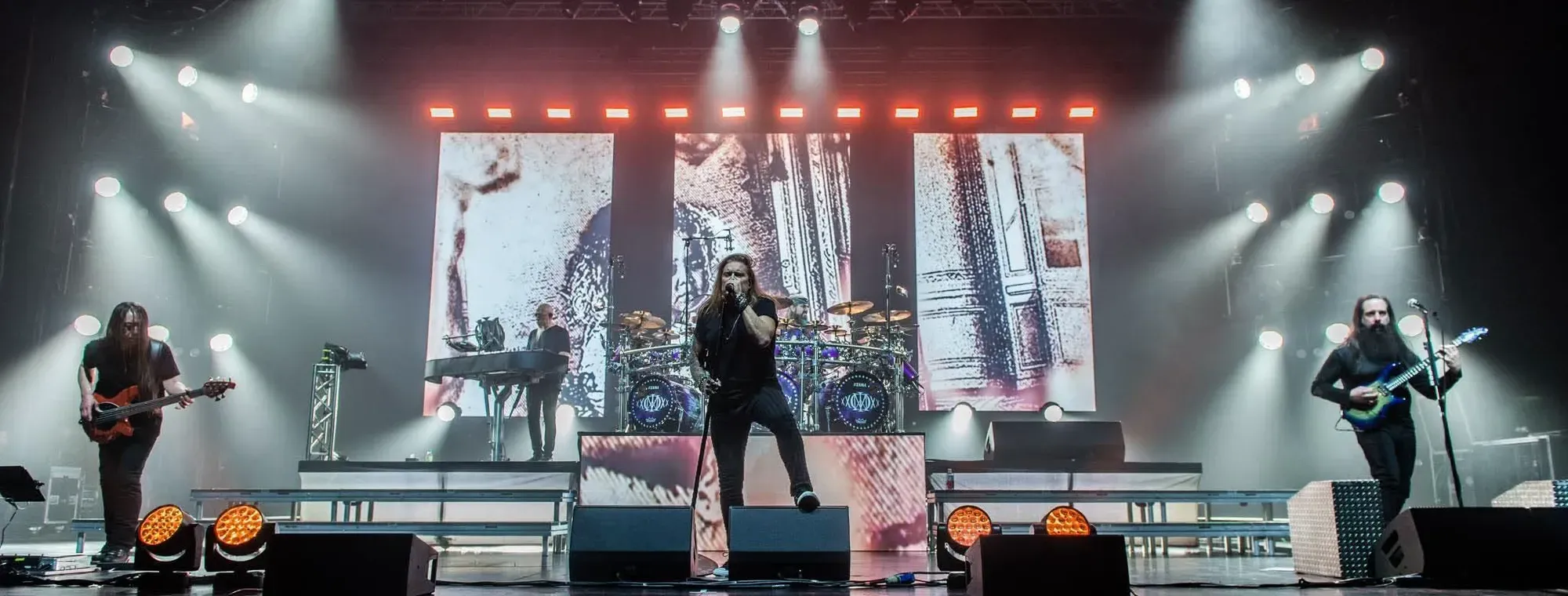
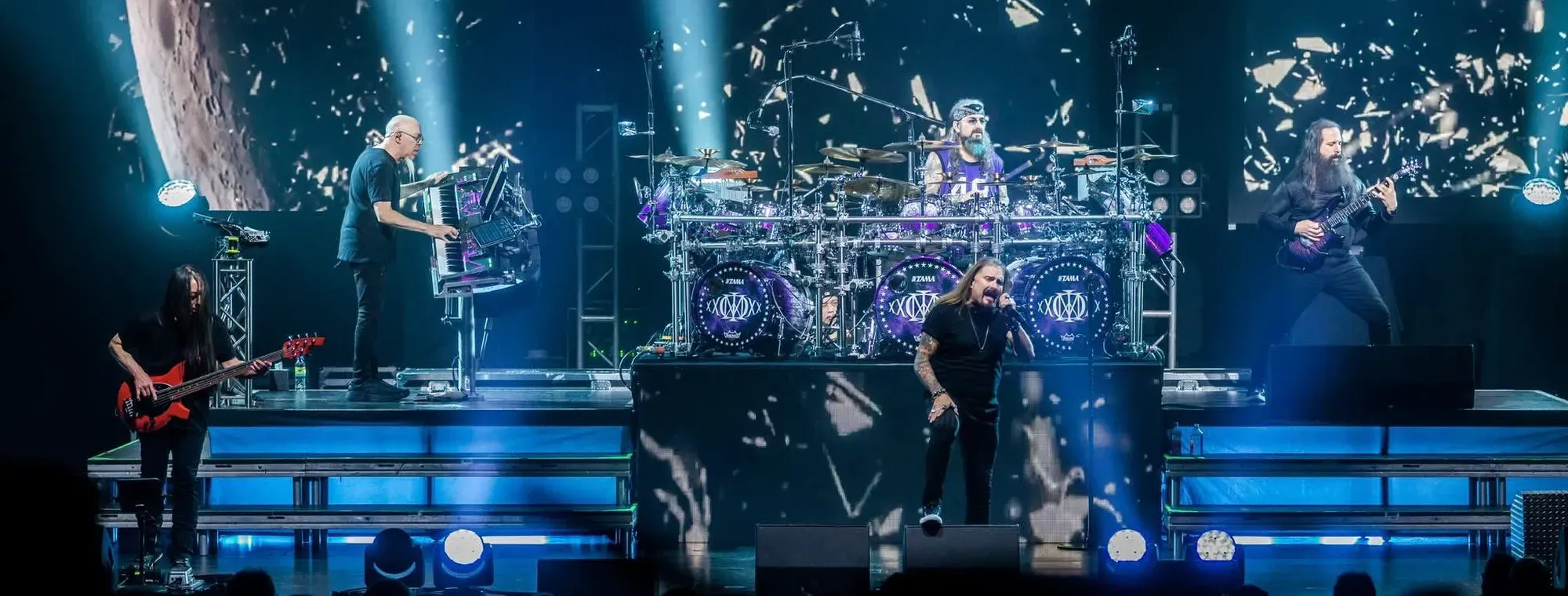
JL: Well, I mean, as far as the setlist, we’re always trying to create a vast display of who and what Dream Theater is musically – from albums from way back to the newest album that we’re out in support of. I think beyond that, production has always been extremely important to Dream Theater. So we want to create within the lighting design and the visuals that are being projected on screen [something] multi-dimensional. It’s not just the music, it’s something that is visually stimulating and something that you can walk away from, and it leaves an indelible mark in your memory. Once again, that’s exactly what we’re doing here on this tour, and that’s what we plan on doing when we go through South America. I think our fans throughout that continent have always been unbelievable. They’ve really been dedicated. We know that when we go down there, it’s going to be a great experience – not only for the band, but we’re going to make it a great experience for our fans, and I think that’s what it all comes to – it’s that collective feeling of celebration.
IM: Many fans in Brazil were discussing the setlist, because you guys have been playing many different songs – not only from the new album but from other records, songs that maybe were overlooked in other tours, like “The Ministry Of Lost Souls,” “6:00,” “The Count Of Tuscany”... How did you guys develop the current setlist? What was the idea behind it?
JL: Nothing's really changed there. We all put what we would call our A-list setlist together. So individually we put what songs we would like to see, and then we [figure out] what's the common denominator here, what songs keep showing themselves from each guy's list. And then we discuss the songs themselves and what we feel that we're going after. You gotta remember, we're trying to make it so that the fans are walking away going, “Oh man, it was so cool that they played that song again!” or “Oh awesome, they went back to playing something from Octavarium” or Systematic Chaos or Black Clouds or whatever it might be. Even getting back – “Oh, they’re playing something from Awake! Right on! Cool.” It has to be something that we feel confident about, that we are like, “Okay, we’re giving them a bang for their buck.” As far as how long has it been for some of these fans since they've seen us – and even for the fans that saw us on the last tour, we need to give them something too that they can walk away from and say, “Wow, that was so cool. I haven’t heard those songs in a while.” It’s not an easy task, trust me, because the longer you’re doing this, the more albums you put out, and the more songs you have to choose from. So it gets to a point like, “Oh my God, okay, so where are we going to go with this?” Because you can’t really satisfy each and every fan 100%. There’s gonna be somebody that’s like, “I can’t believe they played that song!” or “I can’t believe that they played that song instead of this song!” It gets into that, right? And it’s like, “Okay, well, come on, guys and girls – we’re trying to do what we feel best represents who and what we are today. And what we’re trying to give you is everything that we think is a good collection and overall feel for what we represent musically.”
IM: Yes, absolutely. And here in Brazil, as I mentioned before, you guys are going to play a solo concert in São Paulo and a festival concert in Rock in Rio. What are the main differences between playing for your own audience and playing a bigger festival like Rock in Rio, with TV broadcast, wider audience, and stuff like that?
JL: You have to think when you're on a big festival and there are several bands, there’s fans that are out there that don’t necessarily know who you are and might have heard about you. “Oh yeah, yeah, I heard about this band Dream Theater, but I haven’t really listened to their music,” and then they hear it for the first time in a live setting or a live environment. That’s something that you have to take into consideration and put your best foot forward. So you’re always thinking, “Okay, so if we played this song and that song and this song at the festival, for someone that’s never heard us, they’re more than likely going to walk away and go, ‘Wow, that was really cool, I want to listen to more.’” And so they go online and they listen to more of what we have to offer through the various albums. So that’s what you’re going after – you want to give a really powerful first impression. And hopefully that’s something that translates extremely well to each and every one out there that hasn’t really become familiar with the band. So that’s your goal. I mean, when you’re playing your own shows, everyone’s there because they are fans. Not to say that there aren’t some people that came with a friend or girlfriend or wife or husband or whatever, brother, sister – for the first time to see the band – and, “Hey man, no, you seriously gotta come out and see these guys.” And then they come and they’re like, “Holy s*** man, I didn’t even know what to expect, but wow, okay, I’m hooked, I’m a fan, and I’m going to look into this a bit further.” Not to mention, when you’re playing your own shows, you have more time to play with, right? With festivals, everybody’s kind of under time constraints. Where we are now in most festivals, we’re still playing at least a 75-minute set to an hour and a half, right, where some bands are on there for like 30 minutes, it feels like a blink to them, where it’s just on and off in a heartbeat. So I think that’s the other thing that we can say, is that with every festival – and then when we’re headlining festivals – we don’t have to worry too much about time constraints, although we’re not playing a full opus-like set like we do on our own. I mean, that’s a little too much for any festival really.
IM: In Rock in Rio you guys are going to play after Iron Maiden, who are the headliners. It’s nothing new to us, because in 2019 they did the same – they played after Scorpions, even though they were the headliners. But it’s happening again, and I have to ask you, is there any particular reason for that?
JL: Just because we like wake up very, very late in the day. [laughs] There’s no particular reason for it. I mean, it remains true that Iron Maiden is the headliner, but Dream Theater is going on after. And like you said, it’s the same thing that happened with the Scorpions. So it’s just a matter of the promoters have it this way, and they’re like, “Okay, so no, you guys are scheduled at this time in the day, and you guys are going to go on at this time,” and that’s the way it is. If it’s anything more involved than that, it might be this band prefers going on at this time of the night, and this band prefers going on at this time of the night. But I haven’t had that conversation, and I’m pretty damn sure the other guys in the band haven’t had that conversation where it’s like, “No, we want to go on after Iron Maiden.” And Iron Maiden might have had a say in this, because being the headliner, you can have a say in pretty much what you want. You can say, “No, this is our preferred time slot. We want to go on at this time,” and/or “We don’t care, just put us on and make it known that we’re the headliner,” and that’s it. So as to the particulars, I’m not 100% sure. But we’ve been in this position before where we’re headlining, and we’re on before the last band. So it doesn’t matter, as long as people understand that, okay, that’s the headliner, and that was the second band on the bill. So we’re the second band on the bill, but we still happen to be going on after.
IM: Now a little trivia about your band in Brazil – until now, you guys have played 35 concerts here, and the first time was 25 years ago in 1997. It’s good to notice that you guys came back so many times after that and got to play in bigger places. We can say that the band is still growing here in Brazil, which is amazing. What can you say about this relationship with our country?
JL: Oh my God, how much time do we have? There are so many things to say. You know more than I do as far as how many shows we’ve played. I never counted it up, but you’re saying it was 35. But here’s how it is – it’s like you said, we went down in 1997 for our first time ever, and even at that, when we first landed in Brazil and played throughout, it was unbelievable, the experience. We had such a great time and we had never been down to the continent of South America before, so we didn’t really know what to expect. We had heard from our peers in the industry, “Oh man, wait until you get down there. It’s amazing. They love music of all sorts, and they’re gonna completely embrace you guys wholeheartedly.” And we were like, “Wow, that’s great, can’t wait.” When we got down, we were blown away. We were like, “Wow, this really is incredible.” I think, if anything, we’ve continued to cultivate our relationship with our fans throughout, not only Brazil, but throughout South America. We’ve been to so many countries down there – some of them we haven’t gotten back to in so many years, and it’s unfortunate. Like, we haven’t been in Colombia since – oh my God, I think it’s at least 10 years. Same with Peru. It’s really unfortunate. But that being said, with Brazil, it’s just been something that we have continued to grow. Like you said, it keeps getting bigger and better each time we come down, which is incredible, seeing that we’ve been coming there for 25 years. So the main thing for us is that we continue to embrace and appreciate that relationship that we have with our Brazilian fans, and never take it for granted. And that when we do go down there to play these shows, that we make it – like I said to you before – it has to leave an indelible mark. It has to be so that you walk away from the show and you go, “Wow, man, that was amazing. I can’t wait until Dream Theater comes back down here again.” And that’s really something that I think each and every artist or band wants to create. They want to create that elongated relationship with their fans around the world, no matter where it is that you’re playing.
IM: It’s a shame we have to end this conversation, but I have a quick last question for you. Talking about the new album A View From The Top Of The World – it was released last October and reached the Top 10 in more than 10 countries’ charts. You guys also won your first Grammy with ‘The Alien’. What can you say about this album – about the reception, about the acceptance, and now about performing these new songs live on tour?
JL: Well, I mean, first, to release your 15th album and to get that kind of reaction and reception worldwide, it’s a true testament that our fans still care worldwide about the new music. There are so many bands out there that they release a new album, and the fans are like, “Yeah, whatever. Just, when you come on tour, I want to see and hear those songs from that era and that’s it.” I think it’s unfortunate, because most bands want to be recognized for their latest collaborations or their latest creations musically. So it’s got to be frustrating. With that being said, for us to be able to be releasing our 15th studio album – it gets that kind of reception, and that people are anxiously waiting and can’t wait until they hear certain songs from that album live – that’s amazing. It’s just like, you’re saying, “Wow, okay, this guy’s like asking for ‘Answering The Call’ – this guy’s asking for,” whatever it might be. It’s something that really does stand for our band, and for any band. It proves we’re standing the test of time, because what we’re doing currently is still relevant to our fans, and that means a lot. As far as winning the Grammy, that was incredible. I mean, the third time’s a charm, right? And we were up against some great bands there, like Mastodon and Deftones and Rob Zombie. These bands too, as far as I’m concerned, they deserve that type of recognition as well. But it was amazing to have that, it’s another feather in our cap. We’re very appreciative. And to think that a band like Dream Theater got recognized in the Grammy academy – that we actually won a Grammy – that’s amazing. It just shows that music can be very eclectic and diverse and have crazy time signatures and still be accepted. [laughs] Beyond that, it’s just great to be able to play these songs live, and the new songs are going over amazingly. It’s incredible how everyone is reacting to any of the songs that we’re playing from A View From The Top Of The World. So like I said, to recognize that it’s still relevant – that what we’re doing, our latest efforts and our latest creations – that’s amazing. That’s an amazing feeling, and that’s a big, big nod of still showing that, “Hey, we’re not done listening to anything that you have new to put out. We still wanna hear something from you that we can really, really grasp on to and resonate with.” And I think that’s great.
IM: I think that’s it, James. Thank you so much for your time. Looking forward to seeing you guys here in Brazil.
JL: Same – can’t wait. We’ll see you then.