

Originally published in Tape Op.com · November 2020
Rich Chycki interview (excerpts)
Interview3 min read
You do a lot of tracking and mixing.
I wear all hats. I do track. I do quite a bit of mixing, and I do production. It varies, from project to project. I recorded and co-produced vocals for a new Dream Theater album a couple of months ago. I mixed Rush’s Hemispheres in surround for their 40th anniversary box set release. My involvement really varies from project to project. I have my separate bag of tricks, and I pull them out depending on what the project needs of me.
In terms of bands you’re working with, like Dream Theater and Rush, you seem to be getting work in a certain genre.
In the case of Dream Theater, I had a bunch of Rush history and the lead vocalist [James LaBrie] is a longtime friend, so it’s a pretty natural relationship that formed. For me, good music and good sound transcend any specific genre, and I enjoy working in many different genres of music. But once there’s a level of success in a particular genre, calls for more work are often focused in the same area. Having said that, I’ve done work with Pink, Seal, and many non-progressive bands and artists, and I enjoy working with all of them. I’ve been really fortunate with all the artists I’ve spent time with.
I first heard of you through the Keram Malicki-Sanchez album, Come to Life. He worked with Ryan Brown on drums. Then you had the best of the best with Neil Peart. How do you approach tracking and mixing with drums?
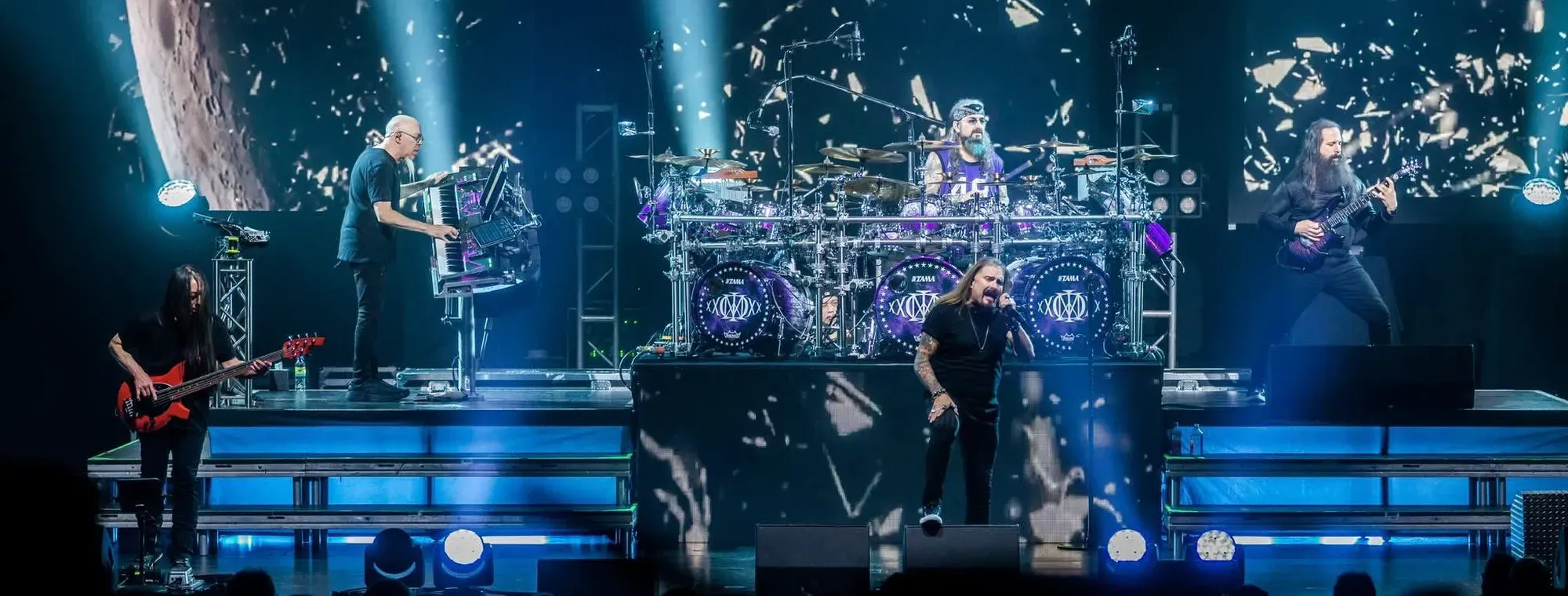
Well, for Keram’s project, Al [Alex] Lifeson brought me in to mix a couple of tracks. That in itself is not quite the same as working with Rush or Dream Theater, where I’m tracking the drums and then mixing them. If I’m tracking and mixing, I’ll do what I’d call pre-mixing as I’m working through a session. I’ll do all my tom rides and EQs, grouping, and routing, some tracking compression, plus mutes for unused tracks, and so on. When I’m tracking, I pay particular attention to phase, given the amount of mics I have set up around a kit. Both Neil Peart and Mike Mangini [Dream Theater] have 30 plus mics set up around their respective drum kits. They’re not all in use all the time in a mix, but with the main core mics – the kick, snare, overheads, and room – checking phase is critical. I distance all overhead mics equally from the snare drum so that the snare is stable in the center field of the stereo image. From a mixing point of view, sometimes I have to make adjustments [in order to] achieve that strong stereo image. From an overall perspective, I try to keep everything as clean as possible. It’s attention to detail, because that detail is cumulative across all of the tracks. Dream Theater’s The Astonishing topped out at 577 tracks on the largest song, so keeping everything clean and organized is really important when you get into that many tracks.
If there’s anything improvised, you’re ready to capture it and it’s a bonus, right?
Always be ready for everything! I always record, especially these days with no tape. Record everything. Improvisations, anything. There might be something where the guitarist plays a figure that doesn’t work in a particular song, but it inspires the creation of a whole new song! I recall exporting a guitar track out of a Dream Theater song into a new blank session, and in a day a whole new song was born. I capture everything.
Why does Dream Theater have you do vocal tracking? What is your approach to it?
I was in a band called Winter Rose with James [LaBrie, Dream Theater vocalist] back in the late ‘80s. We’ve been friends for 30 years and work together very well. A large part of being able to work through intricate vocal work is trust. Trust frees an artist to try different things in a judgement-free environment. Quite honestly, we waste a lot of time laughing at bad jokes. With respect to vocal setup, my studio is all Dante [digital audio networking], so James has control of his cue mix remotely. For the last album, Distance Over Time, we used a Mojave [Audio] MA-1000 mic into a Manley [Labs] Force preamp and then into an Inward Connections TSL-3 compressor straight to Pro Tools.