

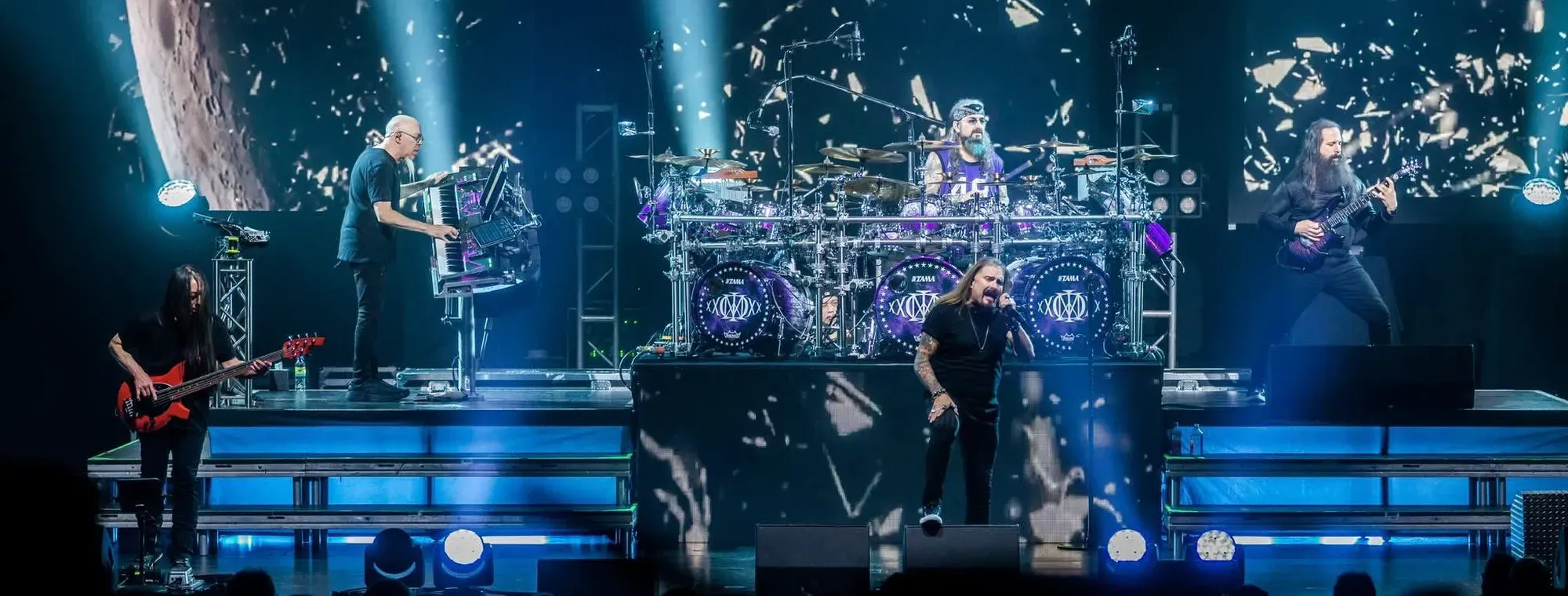
Originally published in Striking a Chord · October 2020
John Myung interview (excerpts)
InterviewJohn Myung8 min read
You guys – Dream Theater – are obviously known for your musicianship. What drove you to reach this high level of musicianship?
It's just something that happens, you know? It's been over 30 years in progress, and it's just been a serendipitous journey, musical journey – got no complaints, very happy with where we are. Every year brings new challenges and surprises, and this year is no different for sure. I just feel very fortunate to be a part of the whole thing.
Going back to the early days, you could've gone in lots of directions, but you chose this path of very demanding musicianship. Were you pulling in that direction early on?
Definitely. I mean, our influences were bands like Rush, Yes, Iron Maiden, Black Sabbath... We found all those bands to be really interesting in the way they composed their songs. It wasn't necessarily repetitive in any way; it was very creative rhythmically and melodically and it was the prog era that brought me to want to be a musician.
Once you set your sights on the prog space, did that entail lots of practice?
Yeah, it entailed lots of just getting in tune with the albums that we thought were great, you know, playing along to Rush albums, Iron Maiden albums, and then getting together and rehearsing songs as a group, as a band. And one thing led to another, and eventually we created a band while at Berklee College of Music, and that eventually became Dream Theater.
When I look at a band like Dream Theater, any member of the band must have a crazy work ethic. Does that ring true to you?
Yeah, we take what we do seriously; even prior to when we actually got our first record deal, we would rehearse Monday through Friday from like six o'clock at night to midnight, whenever we could. Basements of the stores, someone's apartment – we would find a way to do it. That started up at Berklee, we were doing that Monday through Friday. Each guy could sign out of the room for like two hours, so we would all get in line and sign out the same room, and yeah, we were just set up at six o'clock at night and just be there 'til midnight playing whatever, jamming, writing stuff. It was pretty busy between that and the classes during the day and all the stuff that we had to get done – there wasn't a minute that we were doing nothing, that was for sure.
How old were you when you started playing the bass?
I made a switch at around 16. I was a classical violinist from five to 15, and then one thing led to another and I picked up a bass and fell in love with it and wanted to understand music more. That's when it really started taking hold, at around 15 or 16.
Where did you first meet John Petrucci?
It was probably in high school – junior high school. We were both into music, he played guitar – he played in a different band – you know, just one thing led into another. We were friends and then it just got to the point it was just like, 'Well if we got together, that would be the ultimate situation, the ultimate band.' And that eventually did happen. We were playing in the same group prior to moving to music college.
What was that band called in high school?
It was a band called Centurion at the time, and then his bass player left, so I guess that's kind of where we were at. When we started working together, it started changing, so I don't even know if prior to Berklee if we ever really officially called ourselves anything. We were just really good friends and we'd get together and jam on musical ideas together and write stuff – but that's a really interesting question because I don't know if we ever considered ourselves part of any one band. I guess if anything it would've been the band that he was in, Centurion. It wasn't until we got into Berklee, it wasn't until that period that we started thinking of the band name. And the original name during that period was Majesty; after a while, eventually, it changed to Dream Theater and it's been that way ever since.
Did you and John Petrucci jointly decide to go to Berklee College of Music?
Yeah, it was no question that we wanted to continue with music, it seemed like a logical place to go. We have heard of so many other musicians that we admired – Al Di Meola being one – that had gone and visited the school, and it just seemed like a really good idea at the time. So luckily, we did.
Was the goal partly to actually maybe find a drummer, start the band at the school?
That's a good question. It was just a very free moment; it was just, 'Alright, let's go there and learn' – because we kind of had the base of the band back in Long Island with Kevin Moore, who played keyboards. He went to a different college of music, it was very free-flowing then; it wasn't things set in stone. I guess when we have gone to the level where we're off and running. We're going to college, that was just the next stepping stone where it was like, 'OK, let's see what we can learn here and see where it takes us.' But the natural thing was finding a drummer that we can really gel with.
Besides coming out with a world-class band, what else did you get out of the school?
It's an amazing melting pot of musicians where you're very immersed in a situation, people that are very into punk music, jazz, funk bass, classical, you know, it was a real melting pot of musical cultures, and I thought that was the greatest thing about it – the people that we met and got to see. We just really didn't want to do anything other than play and be a band, and we saw the school as sort of, 'Well, that will just deter us from doing what we thought was more important.' It was a definite change that we weren't expecting, but that became the logical thing to do – if that made sense.
At this time, a lot of bands were a bit more on the glam side of things. But were there other bands more in line with what you guys are doing? Where did you think you would fit in genre-wise at the time?
I don't think we were worried about fitting in. We were just creating music that we hoped would become popular or will find its listeners, you know? Just based on the demos we would do and the feedback that we would get, it was all pretty positive, and it inspired us to grow and to keep doing it because we felt that there was something about it that was inspiring. It was something that we hoped that would happen over time, which it did.
I've noticed lyrics are written by different members of the band. Does the person who is writing the lyrics also write the melody?
No, usually when a song is finished John, Jordan [Rudess, keyboards] and James [LaBrie, vocals] will construct what they think is the best guide melody that is working with the song. And then the challenge lyrically is – depending on the song you're working on, the lyrics will have a basic guide track. The only thing that's really holding it back from just saying, 'OK, here's a bunch of words, hopefully, it will work out' is that a lot of times they'll come up with words or something that is written on paper, some sort of concept – to make it work melodically is the biggest challenge. You have to bring out the dictionary, Thesaurus, we'll start blowing up all these, 'What's a good word for this melody? How many syllables...?' So a lot of the times it's good to kind of just work with James because he'll kind of like, 'Well, that's really hard to sing,' or, 'That's easy to sing,' trying to find a word with only three syllables, you know? So that's the biggest challenge with the lyric writing in the songs, finding the right words that work with the melody, and in such a way you don't lose the initial intent or meaning of what you're trying to convey.
Do you have any practicing advice for bass players?
I think the best practice to me – two parts: I still love playing along to records, and then the other type of practicing is where I'm not thinking, I'm just playing, I'm just moving my fingers. There's a time to think, and that's when you're actually focusing on playing along to a record or learning a piece of music – classical music or whatever – and then there's a whole other part where I think it's just good to play and to not think of what you're playing. Just have these sort of exercises or something that you like to do that keeps your hands in shape, but it's just more of a mind-body, spiritual state that you go – it's void of thinking, it's just sort of letting yourself go. So to me that's part of the balance, I think – because sometimes thinking is overrated.
You guys have 14 studio albums. Do you have a favorite?
No. You know what? They're all important to me because they all reflect a certain period of my life, important ones. Like [1990's] 'Images and Words,' that whole period, closest to being my favorite would probably be those records because of what those records did for us, and how pivotal and important they were. And all the memories and experiences that touched that whole period – it was unbelievable, just from going out of a basement of a retail store to like all of a sudden the whole world knows about you. That was a really unbelievable time and how quickly that happened.
Is there a Dream Theater song that is hardest to play, either in the studio or live?
The most challenging stuff would probably be an instrumental bass song. 'Dance of Eternity,' that will always be a challenge to play.