

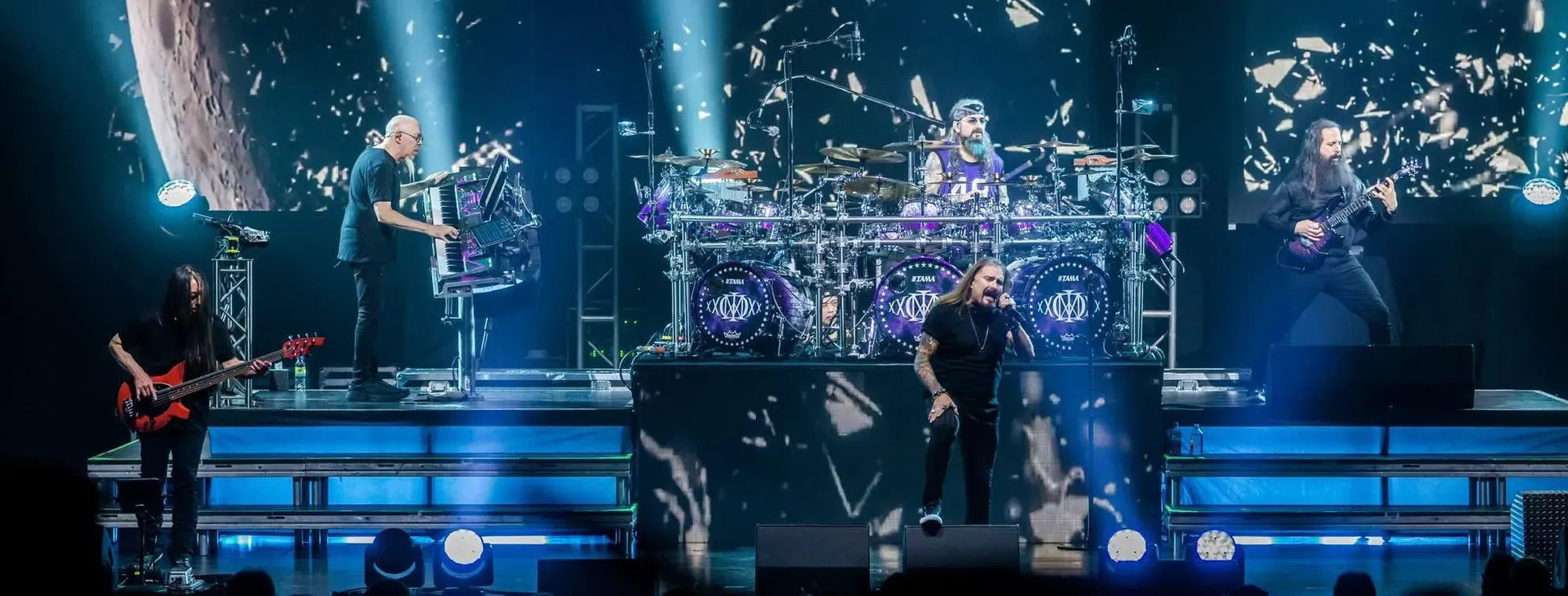
Originally published in Mitch Lafon (Rock Talk) · June 2019
David Prater interview (excerpt)
Interview4 min read
Mitch Lafon: You had a chance to work with Dream Theater on a couple of albums, including A Change Of Seasons and Images And Words. So you do the hard rock stuff with Arcade, and you do the hard rock stuff with Brad Gillis and his guitar wailing, and you do Firehouse, which of course is another... do we want to call them a party band? But I mean it’s just fun music. What was it like working with Dream Theater? Very cerebral, very progressive... How was that as a producer to sort of get into that headspace where it’s not just “here’s a guitar and a drum” but there’s all kinds of stuff going on and there’s all kinds of lyrics that are deeper and it’s just a different sound. What was it like to work, especially on the early days of Dream Theater where you’re sort of helping them create what would become their classic sound?
David Prater: Well my role as one was really completely different than any other record I’d done up to that point, but it wasn’t hard to me because I came from fusion – Mahavishnu Orchestra, Return To Forever, Todd Rundgren’s Utopia, Frank Zappa Live At The Roxy... You know I came from playing different time signatures and drum pyrotechnics. I was a drummer in Santana. So that was really kind of like my mother’s milk, and I knew going into that Mitch, that if I pulled it off was going to be probably my crowning achievement, and so I damn sure better well pay attention and keep my finger on the trigger. I just came in there with a completely different mindset, almost to the point at times I felt like I’d already made the record before I started. It was a unusually creative, but streamlined feeling. I mean I felt so focused on what they were doing. And also I knew that I would never have an opportunity to work with five guys that individually did what they were required to do as well as they did it. I mean it was a super group and there was no way I was going to be denied it at that point. It was like I had the ball [on] three yard line and I was going to get it into the end zone one way or the other. I also felt that I had to make sure that nothing got in the way of being able to finish and bring the record home when I mixed it. So I just couldn’t allow anybody in there – it was just too difficult. Some of the songs were ten, eleven minutes long. Do you know how long it takes to do an 11 minute rough mix? It takes 11 minutes! You may have to do three rough mixes to get an idea of where you’re going. You’re doing it all with recall and doing a whole lot of automation. And this was before computers; this was before MIDI and Pro Tools. I mean there was no digital recording at that point. So we finished at December 11th in 1991. To do that record, it was like making a movie; technologically, it was very advanced for the time, and I couldn’t be prouder of what I was able to do for the guys. You know they had done a record before on Mechanic, and when I listened to it, it doesn’t sound anything like the big potential that those guys had. I felt that they were very fortunate to even have chance, because most people – once they’re orphaned after being on a label and being dropped – that’s it. But they got picked up, and I was very involved I wasn’t gonna let that one slip through the cracks because that was... First of all, I love the music! I love the songs! I mean golly! You listen to Pull Me Under and Metropolis and Under A Glass Moon and also... Wait For Sleep. Now I wanna see somebody pull that off! We rented a 7-foot grand piano and that was expensive, and we had to have it tuned, and I’m like “just MIDI it up!” “No.” He wanted a grand, and he was right and I was wrong! I mean cuz it sounds so elegant and exquisite. When’s the last time you heard a record that had that much sophistication and elegance to it, and was still progressive? I’m proud of what Kevin Moore and James LaBrie were able to... well I called him ‘James LaBrie’ – at that time it was ‘Kevin LaBrie.’ His name was originally Kevin, but there were two Kevin’s in the group so they said “okay now you’re James.” So anyway I worked very, very, very closely with James because there were certain artifacts in his voice that if you weren’t careful, I knew that they would be offensive to some people – certain vowel sounds that he would have a tendency to automatically gravitate towards. And I said, “Man, we need to look at that. I think that could be a problem, and I don’t want you to have that problem if we’re working together.” So I worked with him very closely on annunciation, and if you listen to subsequent records you’ll notice that there hasn’t been anything that he’s sounded like singing in that way, so I worked hard on it. A Change Of Seasons is a whole different animal – that was a different Dream Theater at that point.
MF: It really was. And I don’t want to say my claim to fame with Dream Theater, but my buddy Mitch Joel actually introduced Kevin – or now James – to the band, or helped them when they were searching so there you go.