
Originally published in DrumHeads magazine · February 2019
Mike Mangini: At the Top of the Drumming World
InterviewTranslatedMike Mangini24 min read
Translated from the original language with Google Translate, so the wording may differ from what was actually said.
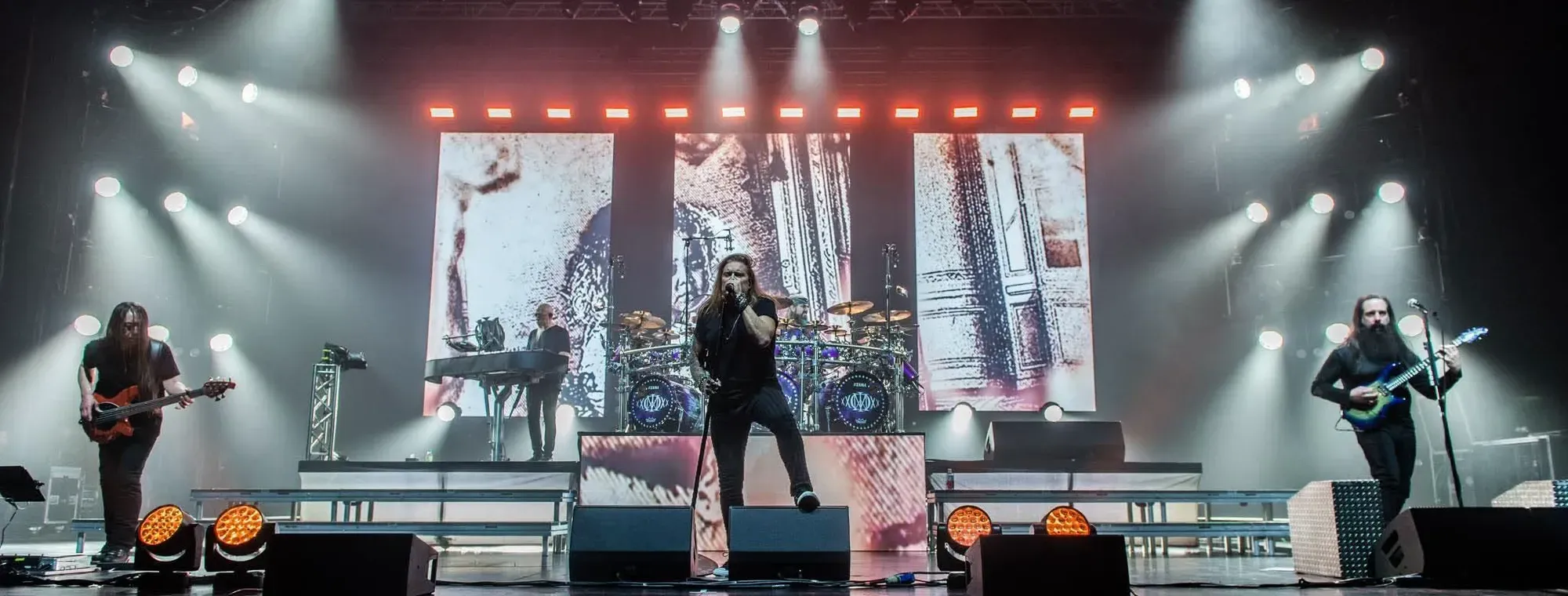
If you want to play drums with Dream Theater, you have to be really good. If you want to stay with Dream Theater long-term, you have to be an exceptional talent. If you want to be involved in songwriting as a drummer with Dream Theater, you have to be a genius. These three statements apply to Mike Mangini, and Mike explained to us in detail why this is the case.
Peter Sausenthaler: Mike, what is your earliest memory involving drums?
Mike Mangini: My earliest memory is of crawling across the floor to my parents’ record collection, pulling out records and looking at the covers and booklets. I might have broken something then, but I don’t remember that. [laughs]
Then I remember taking coffee cans, tuna cans, etc. from the kitchen and arranging them like Ringo Starr’s drum kit.
I was about three years old.
PS: Did you ever dream of becoming a professional drummer or playing with some of the greatest musicians of our time?
MM: Yes! It was always clear to me that I wanted to be a drummer, and I did everything for it. However, I couldn’t have imagined that I would achieve so much, even though I dreamed of it.
PS: For most drummers, being the drummer in Dream Theater means having reached the “Olympus of drumming.” Where do you think your creative and extremely technically demanding playing style has led you?
MM: Interesting question. It has led me to write music that is far less complex than Dream Theater’s. I contributed quite a bit to the current album and realized that I have many ideas that don’t fit the band’s style. So, I remembered a characteristic of the Dream Theater guys: they all started a solo side project at some point. Ultimately, this led me to write songs in a consistent 4/4 time signature. [laughs] On the other hand, I try to play increasingly complex patterns, which seamlessly blend into the Dream Theater sound. For example, ‘Outcry,’ a song that is much more technically challenging than it sounds at first listen. I had to play to a completely different time signature than the one the song’s tempo indicated. That was quite a challenge. The same goes for ‘Pale Blue Dot’ on our new album. That’s another crazy track.
PS: The current Dream Theater album, Distance Over Time, is the fourth full-length album you’ve played drums on. Looking back, which album challenged you the most?
MM: From the moment I joined Dream Theater, I was an equal and full-fledged member of the band. However, Distance Over Time is the first album where I contributed to the songwriting. In that sense, I hadn’t fully expressed myself before. This difference makes the current album the one that challenged me the most.
PS: Distance Over Time is a very typical and yet atypical Dream Theater album. Typical because it bears the band’s unmistakable progressive signature, and atypical because, amidst all the prog parts, there’s also a lot of earthy rock, like in the song ‘Viper King.’ How did that come about?
MM: That’s probably due to my influence. [laughs] ‘Viper King,’ for example: I was heavily inspired by Van Halen, and that’s something the band has never done in all these years, across over 200 songs. But it’s also true that these kinds of songs aren’t clones. We don’t change our style when we play shuffle or boogie. We naturally incorporate the “progressive” elements into these songs, which is evident in the instrumental breaks. In other words, a band that typically plays boogie, shuffle-style music, or something similar, would never include these complex parts, as is typical with Dream Theater. That’s precisely the kind of influence I brought to Distance Over Time.
PS: How do you develop your drum parts for a Dream Theater song? What process do you follow?
MM: It’s a very intuitive process. I rely heavily on visual cues. Take a keyboard, for example. It has 88 keys, and now look at my drum kit. I always try to have the widest possible tonal range available. This allows me to generate a broad spectrum of sounds, from extremely high notes on the rack toms to extremely low notes on the floor tom – to stay with acoustic instruments. So, I listen to my bandmates’ parts, connect what I hear with what I see, and use my drum kit like a keyboard. That’s my approach, and I’ve always worked this way. Even more so on the new album! For Distance Over Time, I also experimented a lot with different microphone placements to get the most out of my kit.
PS: The entire songwriting process for the new album only took 18 days, which is hard to believe...
MM: We were surprised ourselves. We couldn’t believe it was all done in 18 days.
Each of us was focused on the same thing, with the same level of dedication. That unity we had made everything go so quickly. It was a great experience and gave us, as a band, a really happy and satisfied feeling. Plus, it was a learning process for us.
PS: I read that you can not only hear music, but also see it. How does this remarkable ability influence your drumming?
MM: Yes, that’s true. It helps me make decisions and approach different rhythms in a variety of ways. When I write a song, orchestrate it, and can not only hear the notes but also visualize them, I can connect that to my drum kit much more quickly. Musical notation was invented so that musicians could play together without having to invest a huge amount of time in joint rehearsals beforehand. In the past, musicians would get together, look at the sheet music, rehearse together once or twice, and then go on stage. So, if I can listen to music and simultaneously visualize it in my mind, I also make progress more quickly. This very ability has had a significant and lasting impact on my playing.
PS: Does this also apply when you play live?
MM: Yes and no. My musical memory works like a ProTools sequencer with a multi-layer video sequencer. I have all the audio tracks linked to video tracks, and from this “library” I can access each individual file at any time. The visuals are created while playing, and I save them and can easily access them again when I need them.
PS: Let’s go back to 2014. There was the “Along For The Ride – An Evening With Dream Theater Show.” You played to a video installation, where every single note precisely matched a specific frame of the video sequence. How do you approach such a complex concept?
MM: [laughs] Oh yes, that was more difficult than anyone can imagine. I don’t want to sound arrogant, but someone who has never done something like that can’t even begin to imagine what an enormous amount of work it is. The pressure you’re under is enormous. The click track we played to ran continuously at a 36th note tempo. I prepared for it by holding a shot of grappa in each hand to avoid a nervous breakdown. [laughs]
For preparation: I practiced playing to the click track for three months alone. And that’s just the basics. There was no band interaction yet. During those three months, we focused solely on playing in time with the metronome and practicing specific phrases and video sequences. Only then were we ready to even consider rehearsing together. Doing something like that is practically impossible, but we did it anyway.
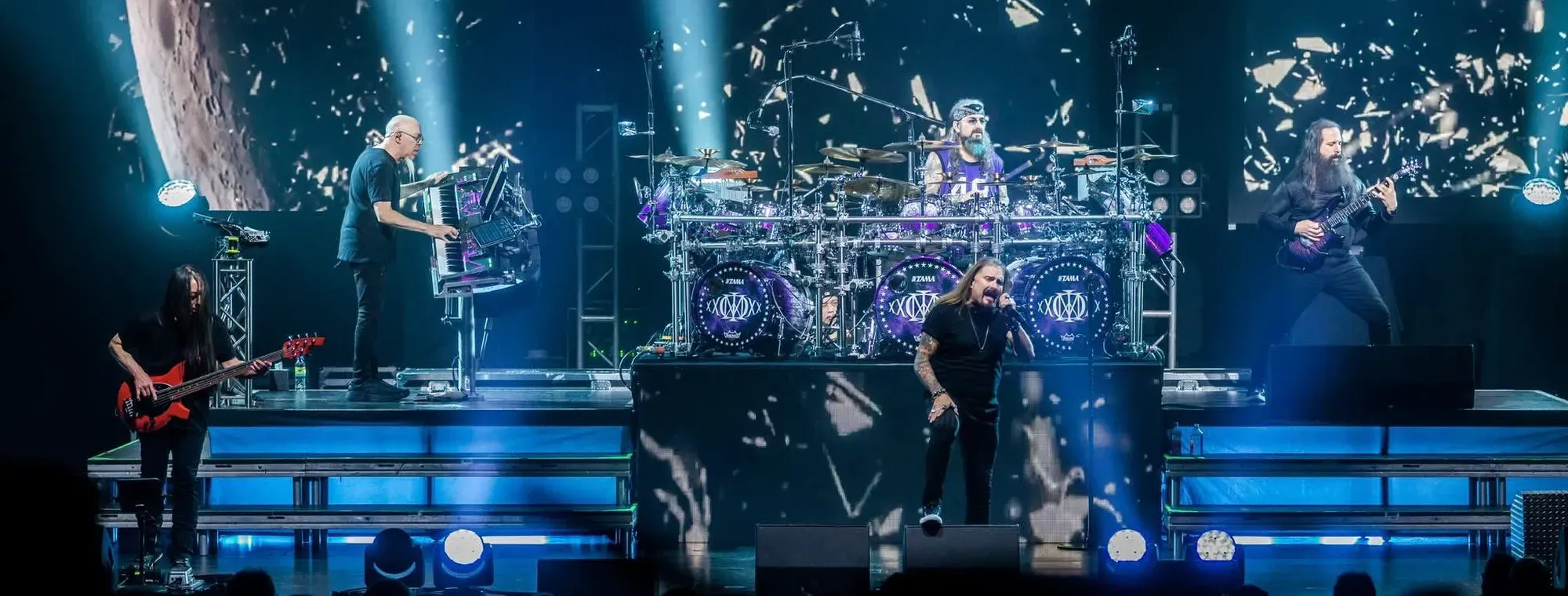
PS: How did your drum kit end up becoming so huge over the years?
MM: I like it when a drum kit is arranged according to octaves. For example, if a violin plays high notes and then goes back down to the lower register, it’s not very helpful if I’m playing a drum for the low note that sounds like someone kicking a little, short-legged dachshund. [laughs] Conversely, I don’t need a timpani sound if something delicate is required, and I just need a short, high-pitched “ping.” The same applies to percussion instruments, although I don’t have many of those on my kit. If I need something that I don’t have, I imitate it with stacked cymbals, if necessary. These are the reasons why my kit is so big.
PS: Do you use this monster setup in the studio as well?
MM: For Dream Theater, mostly yes. Of course, I don’t use six bass drums in the studio. I play one bass drum with a special double bass pedal that my drum technician built for me from two Demon Drive pedals. Otherwise, my studio kit is similar to my tour kit.
Of course, it can be smaller. For the G3 project, which I initiated with John Petrucci, I used a standard four-piece kit – both live and in the studio.
PS: So you can play on smaller kits as well?
MM: Sure, I even really enjoy that. It’s easier; I don’t have to contort myself so much, and there’s less to carry. [laughs]
PS: How long does it take to set up your tour kit?
MM: That depends on who sets it up. I would need weeks. But if my drum tech does it, it takes at most two hours.
PS: Does he hate you for your monster kit?
MM: No, of course not... or maybe he does? [laughs]
Joking aside. Drums – that means fun. [laughs] The whole instrument is pure joy. Of course, there are drummers who like to criticize others for having elaborate drum setups. Let me tell you something: those are precisely the people who put on the biggest smiles when they get to sit behind such a setup and play it. It’s just fun, period!
You shouldn’t judge someone for enjoying maximizing their drum kit. Personally, I enjoy any drum kit, whether it’s a monster kit or a 3-piece jazz kit with two cymbals.
PS: Do you spend a lot of time optimizing your setup?
MM: Actually, I’m constantly doing that. Right now, I’m trying to create more space and get a clearer sound. For that, I moved my cymbals higher up, as high as possible. I have to stretch to reach them, but as I said, that gives me more space, and the cymbal sound is better isolated from the toms when I’m miking them. As an added bonus, I can see the audience better... and I’m also more visible. [laughs]
For this tour, I also completely changed the arrangement of my toms. Everything that was on the left side is now on the right. So I have to relearn all the songs.
PS: All that effort just for a little more space and a clearer sound?
MM: Yes! Another thing is this: when I play open-handed, I hear the sound my right hand makes on the kit in my right ear. But when I play cross-handed, I hear the hi-hat sound of my right hand in my left ear. Another disadvantage for me with cross-handed playing is that it blocks my view of my legs. Since I’m a very visually oriented drummer, that bothers me. So I prefer to relearn. It opens up more possibilities for me.
PS: How did it feel when you found out you were going to be Mike Portnoy’s replacement?
MM: I was thrilled that the decision fell on me. At that time, I wanted a change in my life. You should know that I have a family, and at the time I had a job at Berklee College that allowed me to be home a lot. I needed that change. Not only because I wanted to play in a band again. I was drawn back to the drums. I wanted – no, I had to play again! As a teacher at Berklee College, I was in contact with the drum kit every day, but I missed the physicality, the immediate connection. My wife didn’t know me as a drummer back then, only as a teacher. When she first heard and saw me really playing, she said to me: “You have to play, Mike. People have to see you, the world has to see you. You have to go out and play for people.” She supported me from the very beginning. I’m grateful for that. For a drummer like me, there are only two ways to get a job that can support a family. First: A drummer dies, and they look for a replacement. Second: A drummer quits, and they look for a replacement. That’s the only way to get a job in an established band.
PS: How do you approach such an audition?
MM: I knew how to prepare for such auditions. The Dream Theater thing wasn’t the first time I prepared myself for something like that. As a teenager, I participated in and won many national tryouts. They were for the position of drummer in various orchestras or jazz bands. I know the procedure that a drummer has to go through for something like that. For example, the time signature competition. There, it’s expected that you play cleanly and clearly. If you’re already able to do that, and then also be musical, that’s already a step in the right direction. For me, it’s also important to practice everything slowly, to reduce the tempo and execute each stroke cleanly. Once that’s mastered, you gradually increase the speed back to the original tempo. Another point – and this is perhaps the most important of all – is honesty. Emotional honesty. In the case of the Dream Theater audition, it was like this for me: I knew all the drummers who auditioned for the position. Many of them are good friends, and each of them did something better than the others, because they are all different drummers who play at an extremely high level. For me, all these drummers have been and still are true sources of inspiration. That’s how you take the influences you absorb and translate them into your own playing. Now the personal aspect comes into play. You mustn’t try to imitate any other drummer – no matter how good, tight, and creative they are. The only drummer I had to imitate during that audition was Mike Portnoy, and that was precisely my goal! So, it wasn’t about me trying to compete with the other drummers. Preparation consists of the technical aspect, analyzing the other drummers, and the personal, emotional aspect.
PS: Do you see yourself as Mike Mangini, the drummer of Dream Theater, or Mike Mangini, the drummer?
MM: I will never ultimately be the drummer of Dream Theater, because that’s not what the fans are used to. For decades, they were used to Portnoy, and that’s fine. I wouldn’t judge anyone for being used to Portnoy’s sound on the albums.
In the case of Dream Theater, or Portnoy, that would be like questioning an established belief system. So, I’m not the one they’re used to – I’m different.
But of course, I’m also “trapped” by Portnoy’s playing style, and therefore often have to play things that don’t correspond to my own style. I don’t mind that at all; it’s just part of my job, and I love Mike’s drumming style and his parts. You could say I’m Mike Mangini, the drummer, and the new drummer of Dream Theater.
PS: Are there any musicians you’d like to collaborate with?
MM: As a teenager, most people have posters of their idols on their walls. My life path has led me to the point where I’ve been able to collaborate with or have some kind of personal connection with all of those “poster heroes.” Take Led Zeppelin, for example: Of course, I never played with Led Zeppelin, but I was on the same payroll as Jimmy Page for several shows. For me, that was a dream come true: making music with amazing people, hanging out with them, having conversations – all of that. I’m incredibly grateful for that. But back to your question, who I’d like to play with – definitely Led Zeppelin, but that’s probably the dream of many drummers. [laughs]
PS: Which drummers have had the greatest influence on you?
MM: At the top of the list for me: Ringo Starr. He was the first and therefore my most important influence. Then Bobby Colomby and Bobby Economou from Blood, Sweat & Tears, and Danny Seraphine from Chicago. Of course, also Buddy Rich, John Bonham, and Neil Peart. I know I’ll never be as good as these guys. But – and this is the most important thing – I have fun!
—Peter Sausenthaler
Original text
Mike Mangini Im Drummer-Olymp
Wer bei Dream Theater als Drummer spielen will, muss was auf dem Kasten haben. Wer bei Dream Theater auf Dauer bleiben will, muss ein Ausnahmetalent sein. Wer bei Dream Theater als Drummer mit fürs Songwriting verantwortlich sein will, muss ein Genie sein. Auf Mike Mangini trifft dieser Dreisatz zu, und warum das so ist, hat uns Mike ausführlich erklärt.
Peter Sausenthaler: Mike, was ist deine erste Erinnerung, in der ein Schlagzeug vorkommt?
Mike Mangini: Meine erste Erinnerung ist, wie ich über den Boden krabble, hin zum Schallplattenregal meiner Eltern, Platten rausziehe und mir die Cover und die Booklets anschaue. Dass ich dabei etwas kaputt gemacht habe, kann sein, daran wiederum erinnere ich mich nicht mehr (lacht).
Dann sehe ich mich, wie ich Kaffeebüchsen, Thunfischdosen etc. aus der Küche hole und so aufstelle wie das Drum-Set von Ringo Starr.
Da war ich etwa drei Jahre alt.
PS: Hättest du dir damals träumen lassen, ein Profi-Drummer zu werden oder mit einigen der größten Musiker unserer Zeit zusammenzuspielen?
MM: Ja! Für mich war immer klar, dass ich Drummer werden will und ich habe alles dafür getan. Dass ich jedoch so viel erreichen würde, konnte ich nicht ahnen, auch wenn ich davon geträumt habe.
PS: Drummer bei Dream Theater zu sein, würde für die meisten Schlagzeuger bedeuten, dass sie den „Drum-Olymp“ erklommen haben. Wohin, denkst du, führt dich dein kreatives und technisch extrem anspruchsvolles Spiel?
MM: Spannende Frage. Mich hat das dahin geführt, Musik zu schreiben, die weitaus weniger komplex ist als die von Dream Theater. Für das aktuelle Album habe ich Einiges beigesteuert und dabei erkannt, dass mir viele Ideen kommen, die aber nicht zu der Band passen. Also habe ich mich auf eine Tugend der Dream-Theater-Jungs besonnen, die alle irgendwann einmal ein Solo-Side-Project starteten. Im Endeffekt hat mich das Ganze dazu gebracht, Songs mit einem durchgehenden Vier-Viertel-Takt zu schreiben (lacht).
Auf der anderen Seite versuche ich, immer komplexere Patterns zu spielen, die ungebremst in den Sound von Dream Theater einfließen. Zum Beispiel bei „Outcry“, ein Song, der weitaus technischer ist, als es beim ersten Hören den Anschein macht. Ich musste zu einem komplett anderen Timecode spielen, als der Takt es vorgab. Das hat mich schon ziemlich herausgefordert. Ebenso wie „Pale Blue Dot“ auf unserem neuen Album. Das ist auch so eine verrückte Nummer.
PS: Das aktuelle Dream-Theater-Album Distance Over Time ist der vierte Longplayer, den du eingetrommelt hast. Rückblickend: Welches Album hat dich am meisten gefordert?
MM: Von dem Zeitpunkt an als ich bei Dream Theater eingestiegen bin, war ich ein gleichberechtigtes und vollwertiges Bandmitglied. Distance Over Time ist aber das erste Album, bei dem ich mich ins Songwriting eingebrachte. Insofern habe ich mich zuvor nicht komplett ausgelebt. Dieser Unterschied macht das aktuelle Album, zu dem Album, welches mich am meisten gefordert hat.
PS: Distance Over Time ist ein sehr typisches und gleichzeitig untypisches Dream-Theater-Album. Typisch, weil es die unverkennbar progressive Handschrift der Band trägt, und untypisch, da es zwischen all den Prog-Parts auch viel Erdig-Rockiges, wie zum Beispiel den Song „Viper King“, zu hören gibt. Wie kam es dazu?
MM: Das liegt wohl an meinem Einfluss (lacht). „Viper King“ zum Beispiel: Da habe ich mich stark von Van Halen inspirieren lassen und das ist etwas, was die Band in all den Jahren, in über 200 Songs, nie gemacht hat. Es ist aber auch so, dass solche Songs keine Klone sind. Wir ändern unseren Stil nicht, wenn wir Shuffle oder Boogie spielen. Wir packen natürlich den „Progressive-Anteil“ in solche Lieder mit hinein, das merkt man an den Breaks. Anders gesagt: Eine Band, die normalerweise Boogie, Shuffle-Style oder Ähnliches spielt, würde nie diese komplexen Parts einbauen, wie es bei Dream Theater üblich ist. Genau das ist mein Einfluss, den ich auf Distance Over Time ausgeübt habe.
PS: Wie arbeitest du deine Drum-Parts für einen Dream-Theater-Song heraus? Welcher Prozess steckt dahinter?
MM: Das ist eine überaus intuitive Sache. Ich arbeite viel mit den Augen. Nimm als Beispiel ein Keyboard. Das hat 88 Tasten, und nun schau dir mein Drum-Set an. Ich versuche immer, einen möglichst hohen tonalen Umfang bereit zu halten. So kann ich von extrem hohen Tönen auf den Rocket-Toms bis hin zu äußerst tiefen Tönen auf der Gong-Tom, um bei den akustischen Instrumenten zu bleiben, eine große Bandbreite an Tönen generieren. Ich höre mir also die Parts meiner Bandkollegen an, stelle die Verbindung meines Gehörs zu meinen Augen her und nutze mein Drum-Set wie ein Keyboard. So gehe ich vor, und das habe ich schon immer so gehandhabt. Auf dem neuen Album mehr als je zuvor! Denn bei Distance Over Time habe ich auch viel mit unterschiedlichen Mikrofonpositionierungen experimentiert, um das Maximum an Sound aus meinem Set herauszuholen.
PS: Das komplette Songwriting für das neue Album hat nur 18 Tage in Anspruch genommen, kaum zu glauben...
MM: Das hat uns selbst überrascht. Wir konnten auch nicht fassen, dass in 18 Tagen alles fertig war.
Jeder Einzelne von uns war immer auf ein und dieselbe Sache fixiert und das mit gleich hohem Einsatz. Diese Einheit, die wir dabei gebildet hatten, sorgte dafür, dass alles so schnell ging. Das war eine tolle Erfahrung und gab als Band ein absolut glückliches und zufriedenes Feeling. Obendrein war es auch ein Lernprozess für uns.
PS: Ich habe gelesen, dass du Musik nicht nur hören, sondern auch sehen kannst. Inwieweit beeinflusst diese beachtenswerte Fähigkeit dein Schlagzeugspiel?
MM: Ja, das stimmt. Es hilft mir dabei, Entscheidungen zu treffen und auf unterschiedlichste Weise an verschiedene Rhythmen heranzugehen. Wenn ich einen Song schreibe, ihn orchestriere und dabei die Noten nicht nur höre, sondern auch visualisieren kann, stelle ich die Verbindung zu meinem Drum-Set wesentlich schneller her. Noten wurden erfunden, damit Musiker miteinander spielen können, ohne davor eine Unmenge an Zeit in gemeinsame Proben investieren zu müssen. Früher kamen Musiker zusammen, sahen sich die Noten an, probten ein bis zwei Mal gemeinsam und gingen dann auf die Bühne. Wenn ich also Musik hören und gleichzeitig vor meinem geistigen Auge sehen kann, komme ich ebenfalls schneller voran. Genau diese Fähigkeit hat mein Spiel maßgeblich und nachhaltig beeinflusst.
PS: Greift das auch, wenn du live spielst?
MM: Ja und nein. Mein musikalisches Gedächtnis funktioniert wie ein Pro-Tools-Sequenzer mit einem Multilayer-Video-Sequenzer. Ich habe also sämtliche Tonspuren an Videospuren gekoppelt und aus dieser „Bibliothek“ ist es mir möglich, jede einzelne Datei zu jeder Zeit abzurufen. Die Bilder dazu entstehen beim Spielen und ich speichere sie ab und kann sie einfach wieder abrufen wenn ich sie benötige
PS: Lass uns zurück ins Jahr 2014 gehen. Da gab es die „Along For The Ride – An Evening With Dream Theater Show“. Ihr habt zu einer Videoinstallation gespielt, wobei jede einzelne Note exakt auf ein bestimmtes Frame der Videosequenz passte. Wie arbeitet man sich an ein derart komplexes Konzept heran?
MM: (lacht) Oh ja, das war schwieriger, als sich das irgendwer vorstellen kann. Ich möchte nicht anmaßend klingen, aber jemand, der so etwas noch nie gemacht hat, kann sich nicht im Ansatz vorstellen, was das für einen enormen Arbeitsaufwand bedeutet. Der Druck, der dabei auf einem lastet, ist enorm. Der Click, zu dem wir gespielt haben, lief permanent in einem 36stel Timecode durch. Ich habe mich darauf vorbereitet, indem ich in jeder Hand einen Grappa hielt, um keinen Nervenzusammenbruch zu erleiden (lacht).
Zur Vorbereitung: Drei Monate habe ich allein für das Spielen zum Click geprobt. Und das sind ja nur die Basics dafür. Da fand noch kein Zusammenspiel mit der Band statt. Es ging in den drei Monaten wirklich nur um das Spielen zum Timecode und zu den einzelnen Phrasen sowie Videosequenzen. Erst dann waren wir so weit, überhaupt ans gemeinsame Proben zu denken. So etwas ist nahezu unmöglich, aber wir haben es trotzdem gemacht.
PS: Wie kam es, dass dein Drumset über die Jahre hinweg ein solches Ausmaß annahm?
MM: Ich mag es, wenn ein Drum-Set nach Oktaven aufgebaut ist. Wenn beispielsweise eine Geige in die hohen Tonlagen geht, um dann wieder in die tiefen Tonbereiche zu kommen, ist es wenig hilfreich, wenn ich dabei für den tiefen Ton eine Trommel spiele, die klingt, als würde man einen kleinen Rauhaar-Dackel treten (lacht). Anders herum brauche ich keinen Timpani-Sound, wenn etwas Filigranes gefordert ist und ich einfach nur ein kurzes, hohes „Ping“ benötige. Dasselbe gilt für Perkussion-Instrumente, wenngleich ich davon nicht viele am Set habe. Was mir da fehlt, imitiere ich mit gestackten Cymbals, sofern das vonnöten ist. Das sind die Gründe, warum mein Set so groß ist.
PS: Nutzt du dieses Monster-Set-Up auch im Studio?
MM: Für Dream Theater weitgehend ja. Natürlich verwende ich im Studio keine sechs Bass-Drums. Ich spiele eine Bass-Drum mit einem Special-Doublebass-Pedal, das mir mein Drum-Tec aus zwei Demon-Drive-Pedalen gebaut hat. Ansonsten ist mein Studio-Set dem Tour-Set ähnlich.
Es geht natürlich auch kleiner. Für das G3-Projekt, das ich zusammen mit John Petrucci initiiert habe, hatte ich ein normales Four-Piece-Standard-Set – sowohl live als auch im Studio.
PS: Du kannst also auch auf kleinen Sets spielen?
MM: Klar, das tue ich sogar extrem gern. Es ist einfacher, ich muss mich nicht so verrenken und weniger schleppen (lacht).
PS: Wie lange dauert es, bis dein Tour-Set aufgebaut ist?
MM: Das kommt darauf an, wer es aufbaut. Ich brauche Wochen dafür. Wenn allerdings mein Drumtec das erledigt, dauert es im schlimmsten Fall zwei Stunden.
PS: Hasst er dich für dein Monster-Set?
MM: Nein, natürlich nicht ... oder vielleicht doch (lacht)?
Spaß beiseite. Schlagzeug – das bedeutet Spaß (lacht). Das ganze Instrument ist pure Freude. Es gibt natürlich Drummer, die andere wegen ihres umfangreichen Set-Ups gerne kritisieren. Ich sag dir was: Das sind genau die Leute, die das breiteste Lächeln aufsetzen, wenn sie hinter solch einem Set sitzen und es spielen dürfen. Das macht einfach Spaß und Punkt!
Man sollte doch nicht jemanden dafür verurteilen, dass er seinen Spaß am Drum-Set-Maximieren hat. Mir persönlich bereitet jedes Drum-Set Freude, egal, ob nun ein Monster-Kit oder ein 3-Piece-Jazz-Set mit zwei Becken.
PS: Investierst du viel Zeit, um dein Set zu optimieren?
MM: Eigentlich mache ich das ständig. Momentan versuche ich, mehr Raum zu schaffen und einen klareren Ton zu bekommen. Dafür habe ich meine Becken nach oben verlagert, und das, soweit es nur geht. Ich muss mich zwar strecken, um an die Becken ranzukommen, aber das verschafft mir wie gesagt mehr Platz, und der Becken-Sound ist beim Mikrofonieren etwas mehr von den Toms isoliert. Als Zusatzeffekt kann ich das Publikum besser sehen ... und ich bin natürlich auch besser sichtbar (lacht).
Für diese Tour habe ich auch die Anordnung meiner Toms grundlegend geändert. Alles, was zuvor auf der linken Seite war, ist nun rechts. Daher muss ich alle Lieder neu lernen.
PS: Der ganze Aufwand nur für ein bisschen mehr Platz und einen klareren Sound?
MM: Ja! Was noch hinzukommt, ist Folgendes: Wenn ich open-handed spiele, habe ich den Ton, den meine rechte Hand am Set erzeugt auch am rechten Ohr. Spiele ich aber über Kreuz, habe ich den Hi-Hat-Sound der rechten Hand am linken Ohr. Ein weiterer Nachteil für mich beim Überkreuz-Spielen ist, dass ich mir den Blick auf meine Beine verbaue. Da ich ja ein sehr visuell geprägter Drummer bin, stört mich das. Also lerne ich lieber um. Damit eröffnen sich mir mehr Möglichkeiten.
PS: Wie hat es sich angefühlt, als du erfahren hast, der Nachfolger von Mike Portony zu sein?
MM: Ich war begeistert, dass die Entscheidung auf mich gefallen ist. Zu diesem Zeitpunkt wünschte ich mir eine Veränderung in meinem Leben. Man muss dazu wissen, dass ich eine Familie habe und ich hatte damals einen Job am Berkeley-College, der mir erlaubte, viel daheim zu sein. Ich brauchte die Veränderung. Nicht allein deswegen, weil ich wieder in einer Band spielen wollte. Mich zog es wieder an das Schlagzeug. Ich wollte – nein, ich musste wieder spielen! Als Lehrer am Berkeley-College war ich zwar Tag für Tag in Berührung mit dem Drum-Set, aber mir fehlte das Physische, die unmittelbare Nähe. Meine Frau kannte mich damals nicht als Drummer, sondern nur als Lehrer. Als sie mich dann das erste Mal richtig spielen hörte und sah, sagte sie zu mir: Du musst spielen, Mike. Man muss dich sehen, die Welt muss dich sehen. Du musst raus und für die Menschen spielen. Sie hat mich von Anfang an unterstützt. Dafür bin ich ihr dankbar. Es gibt für einen Schlagzeuger wie mich nur zwei Möglichkeiten, an einen Job zu kommen, der eine Familie ernährt. Erstens: Ein Drummer stirbt und es wird nach Ersatz gesucht. Zweitens: Ein Schlagzeuger hört auf und es wird nach Ersatz gesucht. Nur so kommt man an einen Job in einer etablierten Band.
PS: Wie geht man an solch eine Audition heran?
MM: Wie man sich auf solche Auditions vorbereitet, wusste ich. Das mit Dream Theater war ja nicht das erste Mal, dass ich mich für so etwas fit mache. Als Jugendlicher habe ich bei vielen National Try Outs teilgenommen und gewonnen. Da ging es um den Posten als Drummer in verschiedenen Orchestern oder Jazz-Bands. Ich kenne das Prozedere, welches man als Schlagzeuger für so etwas durchlaufen muss. Zum Beispiel die Time-Signature-Competition. Dort wird erwartet, dass man sauber und klar spielt. Wenn man da schon in der Lage ist, obendrein noch musikalisch zu sein, ist das bereits ein Schritt in die richtige Richtung.
Wichtig ist für mich auch, dass man alles langsam einstudiert, Geschwindigkeit rausnimmt und Schlag für Schlag sauber umsetzt. Wenn das sitzt, arbeitet man sich wieder hoch bis zur ursprünglichen Geschwindigkeit.
Ein weiterer Punkt – und das ist vielleicht der wichtigste von allen – ist die Ehrlichkeit. Emotionale Ehrlichkeit. Im Falle der Dream-Theater-Audition war das für mich so: Ich kannte alle Drummer, die sich um den Posten beworben haben. Viele davon sind auch gute Freunde und jeder von ihnen hat irgendetwas besser gemacht als alle anderen, weil es eben alle verschiedene Drummer sind, die auf einem extrem hohen Niveau spielen. Für mich waren und sind all diese Schlagzeuger wahre Inspirationsquellen. So nimmt man die Einflüsse, die auf einen einwirken, und setzt sie am Instrument um. Nun kommt der persönliche Aspekt ins Spiel. Man darf nicht versuchen, irgendeinen Drummer – auch wenn er noch so gut, tight und kreativ war – zu imitieren. Den einzigen Drummer, den es bei dieser Audition zu imitieren galt, war Mike Portnoy, und genau das war mein Ziel! Mir ging es also nicht darum, mich mit den anderen Drummern zu messen. Die Vorbereitung besteht aus dem spieltechnischen Aspekt, dem Analysieren der anderen Drummer und dem persönlich-emotionalen Aspekt.
PS: Siehst du dich selbst als Mike Mangini, den Drummer von Dream Theater, oder Mike Mangini, den Drummer?
MM: Ich werde nie in letzter Konsequenz der Drummer von Dream Theater sein, denn das ist nicht das, was die Fans gewohnt sind. Jahrzehnte waren sie Portnoy gewohnt und das ist auch gut so. Ich würde niemanden dafür verurteilen, dass er Portnoys Sound auf den Alben gewohnt ist.
Im Falle von Dream Theater beziehungsweise Portnoy wäre das, als würde man ein etabliertes Glaubenssystem in Frage stellen. Ich bin also nicht der, den sie gewohnt sind – ich bin ein anderer.
Aber ich bin natürlich auch in Portnoys Art zu spielen „gefangen“ und muss deshalb oft Dinge spielen, die nicht meinem eigenen Stil entsprechen. Ich habe nichts dagegen, dass es so ist, das ist einfach ein Teil meines Jobs und ich liebe Mikes Sound und seine Parts.
Man kann sagen, ich bin Mike Mangini, der Drummer und der neue Drummer von Dream Theater.
PS: Gibt es Musiker, mit denen du gerne einmal zusammenarbeiten würdest?
MM: Als Jugendlicher hat man seine Stars im meisten Fall irgendwo als Poster im Zimmer hängen. Mein Lebensweg führte mich dahin, dass ich mit all diesen „Posterpersönlichkeiten“ in irgendeiner Art und Weise zusammenarbeite oder sonst eine persönliche Verbindung mit ihnen herstellen kann. Led Zeppelin zum Beispiel: Natürlich habe ich nie mit Led Zeppelin gespielt, aber ich stand für etliche Shows auf derselben Gehaltsliste wie Jimmy Page. Für mich wurde durch so etwas ein Traum wahr: Mit tollen Menschen Musik machen, mit ihnen abhängen, Gespräche führen, all das. Dafür bin ich extrem dankbar. Aber zurück zu deiner Frage, mit wem ich gerne mal spielen würde – ganz klar Led Zeppelin, aber das dürfte wohl der große Traum vieler Drummer sein (lacht).
PS: Welche Drummer haben dich maßgeblich beeinflusst?
MM: Ganz vorne für mich: Ringo Starr. Er war der erste und damit auch mein wichtigster Einfluss. Dann Bobby Colomby und Bobby Economou von Blood, Sweat And Tears, Daniel Seraphine von Chicago. Auf jeden Fall auch Buddy Rich, John Bonham und Neil Peart. Ich weiß, dass ich nie so gut sein werde wie diese Jungs. Aber – und das ist das Wichtigste – ich habe Spaß!
—Peter Sausenthaler