

Originally published in Ultimate Guitar.com · February 2018
John Petrucci Reveals Most Important Discovery in His Development as Guitar Player
InterviewJohn Petrucci11 min read
Posted Feb 05, 2018 09:03 PM
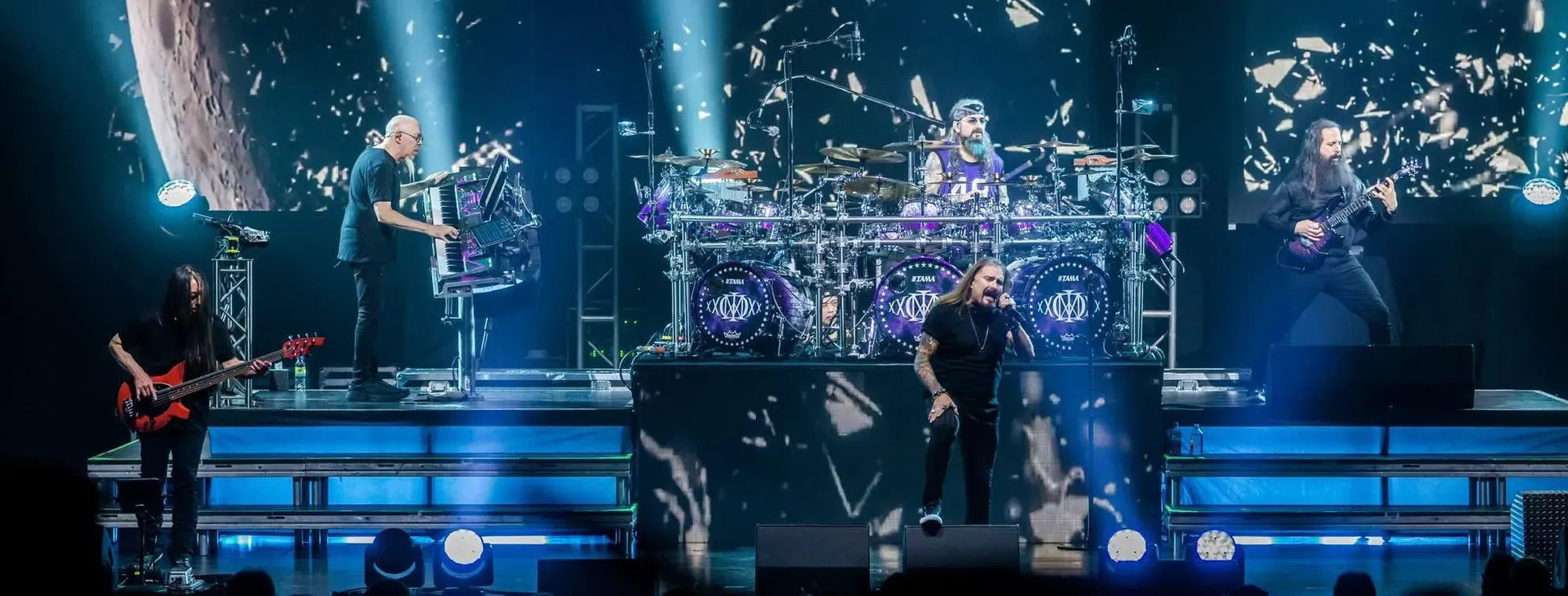
Dream Theater guitar god John Petrucci singled out what he sees as the most critical discovery during his development as a guitar player, telling UG interviewer Steven Rosen:
I discovered the metronome. As I started becoming better, friends of mine or their older brothers would say, ‘Man, you gotta listen to the Dregs and Al DiMeola and Return to Forever. Let me show you this Allan Holdsworth thing.’ I started to get all this information thrown at me and it was really a challenge because I wasn’t taking lessons or anything so it was really a challenge to try to develop my ear to figure out these things.
That’s when you discovered the metronome?
Yeah, and how to use that to actually learn how to play something and develop your technique in a way where within a day or a couple of hours you can actually play something you couldn’t play two hours earlier. That was really groundbreaking for me. Once I discovered that, it started to really, really come together. I remember trying to play Steve Morse runs and licks and not being able to do that and going, ‘How do you do that? How do you get from here to there?’ There was a high school music teacher, the band teacher. I wasn’t in band but I knew the teacher and I used to use his music room to practice and he heard me practicing and he said, ‘Oh, let me show you this metronome.’ I remember trying to play something from ‘The Introduction,’ Steve’s first solo album, and couldn’t do it. I used the metronome and within a couple hours I could do it and it was like, ‘This is a freakin’ miracle.’ Then I’ve used that ever since of course.
What kind of practice routine did you have when you were younger? Did you spend a lot of hours playing guitar?
Absolutely. That’s all I need through the middle school and high school years. There were tons and tons of musicians in the neighborhood that went to the school so there were lots of bands. I used the opportunity to go and jam with all different players. One day I’d jam with my buddies who were into the Dead and we’d just sit there and play Hendrix and the Dead and we’d jam on songs and I’d work on my chops. Then I’d play with guys who were more into metal and work on that sound and then I had my own band.
Did you practice on your own when you weren’t playing with bands?
Once the bug bit me, I would spend every hour of the day and practice for six hours a day no matter what. I was completely addicted and consumed by it. It’s all I wanted to do. When I graduated high school, I wanted to pursue a career so I went to the Berklee College of Music in Boston because that was the place guys I looked up to like Steve Vai and Al DiMeola went. I thought, ‘That must be the place to go to because those guys went there.’
Other guitar players like Marc Rizzo and Robb Flynn have used those same words like addicted and consumed when describing their early passion for the guitar.
Yeah, exactly. I would take it to school and if I had a study hall period, I’d go into the music room and just practice. It was completely insane.
The other part of your practice routine as you mentioned was playing with other musicians?
Yeah, everything is a learning process and contributes to your experience as a developing professional. You might not be thinking of it then when you’re young but all the situations where you figure things out with gear and pedals and how to hear things when you can’t really hear yourself and what to expect when you walk onstage and things that are thrown at you if you’re playing at a party, these are all experiences that help you become a better musician and ultimately professional.
Those are probably parts of the early learning curve that players don’t normally think about.
You have these experiences under your belt and you can communicate with people, sit in on sessions, play with different guys and you become a good listener and a better musician. So yeah, all that stuff is really, really important. It’s not just sitting in your room and working on the craft. That’s one part of it but the other part of it is the more interactive part.
You talk about figuring out gear and pedals and developing your own sound, which is a key part of developing as a guitarist. Right?
Yeah, it is and that’s developed over time for sure. You start to learn more and more what kind of sound you’re going for as a guitar player and you gravitate towards things that make sense to you sonically. Sometimes they’re discoveries and sometimes somebody will turn you onto something.
Where did you first seriously start developing your sound?
For me amp-wise, I was turned onto Boogies really, really early and I just feel in love with that sound. Ever since I heard ‘Master of Puppets’ come out and even before that, I fell in love with that sound. Fortunately, it’s something I gravitated towards early but again all those experiences of recording, interacting with other musicians, playing at and attending trade shows, touring, they are all little pieces of the puzzle.
There are lots of pieces to that puzzle.
Part of that are your influences. If you’re a big fan of certain bands and you have a certain sound you like or that a guitar player has and you want to mix it a little bit with this other guitar player, then you start to get some identity of your own by doing that.
You knew what kind of guitar sound you wanted early on? Could you hear it in your head?
Yeah, totally. Absolutely. I was a big fan of the way Alex Lifeson orchestrated the guitar in a trio and the way it sounded so big. The way players like him and Steve Howe and Pete Townshend acoustics and 12-strings and different guitars to layer the way Jimmy Page did that. But I also was a big, big fan of Maiden and Metallica so I wanted a way heavier sound that was like a combination of all that.
That’s what you were talking about before?
Yeah, that’s what I mean about combining influences and eventually gets you to a place where you identify with a sound. A lot of it also has to do with the kind of music you wanna write. Your writing might require certain sounds in order to do certain things. When we think of all the guitar players you mentioned – Lifeson, Townshend, Page, Steve Howe and everybody – they all write the music they play. Becoming a good songwriter is really important in becoming a professional musician isn’t it? Well, yeah. Early on, I made the decision I wanted to be in an original band and do the same thing Iron Maiden was doing. Inherent in that whole concept is you need to write your own music and not you’re not gonna go out there playing covers and have that kind of success and influence.
Have you always written?
From early on, me and John Myung and Kevin Moore – our first keyboard player – we’d always write and that would be part of what we did. It wasn’t a weird thing or questioned. We’d write, we’d jam and we’d learn songs and we’d improvise and write music. It’s really, really an important element of developing any career in music unless your sole goal is you wanna be a session guy. It depends on what your goal is but mine was being in a band like Rush or Maiden or Metallica or Yes and I knew I needed to write my own music to do that.
Do you still get that same thrill of picking up your guitar now as you did back when you were first starting?
Yeah, 100%. I’m still addicted to it like that kid I was when I was 15 and 16. I’m such a nerd and geek when it comes to gear and I can’t wait to get up onstage to do a soundcheck or get in the studio. I’m fortunate enough to have developed these amazing instruments with people like Ernie Ball Music Man and Mesa Boogie, T.C. Electronics, Dunlop and DiMarzio and I always have my head in a space of trying to further the instrument and the sound. Yeah, that addiction and that passion has not gone away.
That is pretty amazing.
The cool thing with being on tour with G3 now and in the past, all these guys have the same thing. There’s not one of these guys I’ve met where he’s like, ‘Ahh, I don’t like guitar anymore.’ All these guys are completely and hopelessly in love with guitar playing and everything that comes along with it: gear, sounds, tones, performance and practicing. Yeah, it’s a common thread.
Is it a completely different experience touring with G3 versus Dream Theater?
Yeah, it’s definitely different. With Dream Theater, there’s a long history of albums and catalog and context and fans that have been with us for a long time. There’s a certain kind of intensity, production and effort that goes on when doing a Dream Theater show and everybody in the band is given time to shine. Of course there’s vocals and keyboards so the instrumentation is a lot more dense and different.
There are no keyboards or second guitars with G3?
It’s a trio and it’s all instrumental music and it’s a shorter show. It’s only 45 minutes as opposed to three hours for a Dream Theater show. As a guitar player, I am carrying all the lead parts, all the melodies, all the solos and that’s not shared by keyboards or vocals. In some ways there’s more weight on my shoulders and more responsibility but in other ways because it is just a trio and a shorter show and not this huge Dream Theater production, there’s also a kind of freedom that goes along with that.
When you’re out there knowing that Joe Satriani is coming on to do a set, do you try and step up your game?
Absolutely. You want to bring your best and of course I’m completely blown away by Joe and Phil [Collen] and all the players from the past who have been on G3 Tours. You’re talking about the top guitar players in the world and the audience is filled with mostly musicians and guitar fans and they want to see the goods being delivered. So yeah, I definitely up the pressure on myself, up the competition in a good and healthy way and am completely inspired by Joe and Phil and their professionalism, their attitude and of course their tremendous playing. It’s an absolutely amazing experience for me.
For you, it was wanting to be part of a band?
It was always the band thing. I wanted to be like Iron Maiden and Metallica and Rush, Pink Floyd or Yes. That was my goal and I set sights on that goal at a pretty young age. It wasn’t until doing G3 for the first time in 2001 that I kinda stepped out as a solo player and tried that on for size.
Even with that focus and motivation, were there challenges early on to achieve your goals?
As far as playing, I never put limitations on myself. I was really, really drawn to the craft of guitar playing and how it can get better and drawn to players that were very technically proficient and I wanted to continue to push myself.
It sounds like you never really had any stumbling blocks along the way to becoming a guitar player.
I never told myself, ‘Oh, I couldn’t do this or do that on the guitar.’ I always wanted to try and take it to the next level and get better and better. Career-wise it doesn’t mean if you put all the work into it that you’re magically gonna have this career as a band and be successful. So there certainly were challenges and roadblocks to go along with that. Fortunately I was able to see that through as well but it wasn’t without those moments of, ‘Man, this is really difficult. We’re getting a lot of criticism for this. Will we ever be on the level of this band or that band?’
Even diehard fans can be fickle at times. Right?
It’s all part of the growing process and how you actually become a professional by going through all those things.
Do you remember your first guitar?
The very, very first guitar I got when I was little was a plastic classical guitar that was really, really difficult to play. One of the first electric guitars I bought was from a flea market. It was this beautiful Suzuki brand Les Paul copy that had all of these appointments like vine going down the neck and mother-of-pearl binding around the body. It was this crazy guitar but because it was sold at a flea market and was a copy, it was probably very cheap but I loved it at the time.
Finally, some questions from readers. If you could take one guitar lesson from any guitar player, who would it be?
Stevie Ray Vaughan. I’d love to hear and know how he got his whole sound and approach. It just blows me away.
If you could put together a dream band, who would be in it?
I’m in it already. That’s the great thing about being in Dream Theater. It is a dream band so I’m already there.
There’s a fire and you can only save one guitar, one amp and one pedal. What do you save?
I’d save one of my Ernie Ball Music Man Majesties; my Boogie JP-2C; and I’d have to save two pedals: my T.C. Dreamscape and my Dunlop JP95 Wah and then I’ll be complete. I just need a couple cables.
What is one song you wish you’d written?
Oh, man. There’s so many. ‘Bohemian Rhapsody‘ is one that continues to blow me away. Pretty unbelievable. Dream Theater did a little bit of it. We did a medley of it on ‘A Change of Seasons’ EP.