

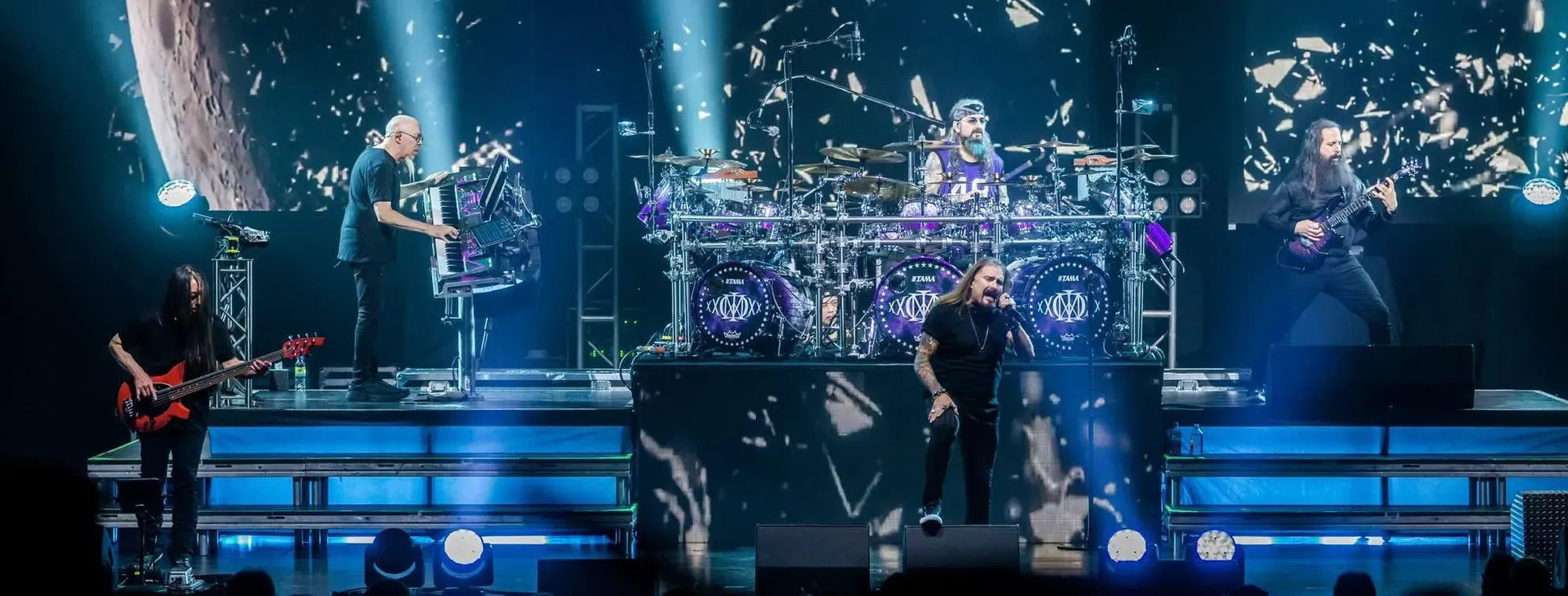
Originally published in Heavy magazine 08 · 2013
Dream Theater
By Words: Fabio Marraccini
InterviewJames LaBrie4 min read
After more than twenty years of forging progressive metal while achieving legendary status in the process, Dream Theater have recently been associated with controversy and a question-marked future due to the departure of the founding member and drummer extraordinaire Mike Portnoy. But they’re out to prove they are as strong as ever.
Featuring some of the more proficient and skilled musicians in the whole heavy music business, Dream Theater are quite often labelled – or mistaken for – a band for musicians. Yet there’s far more to their music than simply running unusual scales at the speed of light on the guitar while changing odd time signatures every couple of bars. Their music is nothing but melodic, immersive, exciting and inspired. More than 20 years have elapsed since their seminal sophomore album Images and Words sent shockwaves around the metal community. With the recent departure of an influential founding member, many cast dark shadows over their future. Singer James LaBrie took some time to talk to HEAVY and gave us his view on the matter.
Right off the bat we questioned how the band took Mike Mangini in during the recording of the upcoming self titled album – his second with the band.
“Absolutely naturally,” says LaBrie. “He was totally involved in writing, and his contributions were nothing but essential. Mike is a very musical and intuitive guy; he goes way beyond just playing the drums. On some songs we would do the first or second take and he would stop us and come up with cool ideas to improve the song,” he adds. “We pretty much developed the songs together. Add on the amount of energy you feel in the room when he is around. He was a catalyst on this album for sure,” he confirms.
After this many albums, the band decided to self-title their release, and that is for a very good reason.
“A Dramatic Turn of Events was a transitional album, an interlude. We had to prove to ourselves that the band could function without one of its founding members,” explains LaBrie. “That is proven now, so the new album is like a new beginning. This is why it is self-titled. As usual the core team of writers were Jordan [Rudess] and [John] Petrucci, but everyone else including Mike had an active voice in the creation. It’s back to being what we are, and to having a great time while making an album,” he concludes.
Known for bringing progressive metal to a wider audience, and for inspiring lots of bands along the way, Dream Theater now have to rub shoulders with many of their pupils in the music marketplace. Not a problem, apparently.
“Progressive metal is a reality now, but if you remember, we were a sore thumb 20 years ago. When Images and Words came out, grunge was huge, and it was based on simplicity,” he cleverly responds. “We were the opposite of that: technical, complicated and sophisticated. And yet the album was a success not only here in America but in other parts of the world. So back then we established the way we wanted to write songs. And since then we have kept our integrity, our sound signature. We would never change because of what is going on in music,” he adds.
Some of these so-called prog acts that emerged since then became huge. The likes of Opeth, Tool and more recently Mastodon might have grown even bigger than Dream Theater, but that’s not at the centre of LaBrie’s musical radar. “I try to avoid listening to the same kind of music that we play”, he says. “I think if I did that I could end up trapped in a niche, and even become influenced by the very bands I had an influence on. All the bands you mentioned are extremely talented and unique sounding, but I just don’t immerse myself in them. Bands like Sleeping with Sirens, Alter Bridge and Deftones, for example, are on my radar now instead.”
Due to the technically challenging nature of the music they play, a good part of their fan base seems to only be seeking the technical or virtuoso side of the band, but LaBrie’s not phased.
“We are technical for sure – that is part of the kind of music we play – but there are many more sides and layers to Dream Theater. To me it is all about creating memorable songs. Not intentionally difficult or easy, that is just a consequence. On this last album there was a lot of focus on vocal melody, for example. Jordan and I went out of our way to get the best potential from the songs. We turned every possible stone. There was a great sense of involvement during the making of this album,” he says proudly.
Saving the best – or the beast – for last, we had to pop the Portnoy reunion question. “No reunion planned now, and I don’t think there ever will be,” he says. “Mangini is our drummer until we or him decide to call it quits. He fought hard for this position and he deserves to be where he is. He’s not only a phenomenal drummer and musician, but also a wonderful human being,” he concludes.
Many other bands have endured the departure of founding or deemed essential members; some survived, some didn’t. The crystal ball may be foggy, but Dream Theater’s musical quality seems to be untouched, and their will to survive seems to be unscathed.
Box
Dream Theater by Dream Theater
Words: Fabio Marraccini
This album shows that, drummer change aside, this is still by far the most relevant band in progressive metal. It surely feels looser and more natural than the previous one, where the lack of gel between the longstanding members and their new drummer could be heard. ‘The Enemy Inside’ is a classic Dream Theater song – long keyboard and guitar arrangements, majestic vocal lines, and a rhythm section that requires a masters degree in music to be decoded. The shining moment is the muscular prog exhibited during long closing track ‘Illumination Theory’, a five-part opus that shows why this band deserve their stellar reputation