

Originally published in Metal Italia.com · April 2012
Dream Theater – Between Past and Future...
by Dario Cattaneo · Published on April 6, 2012
InterviewTranslatedJames LaBrie16 min read
Translated from the original language with Google Translate, so the wording may differ from what was actually said.
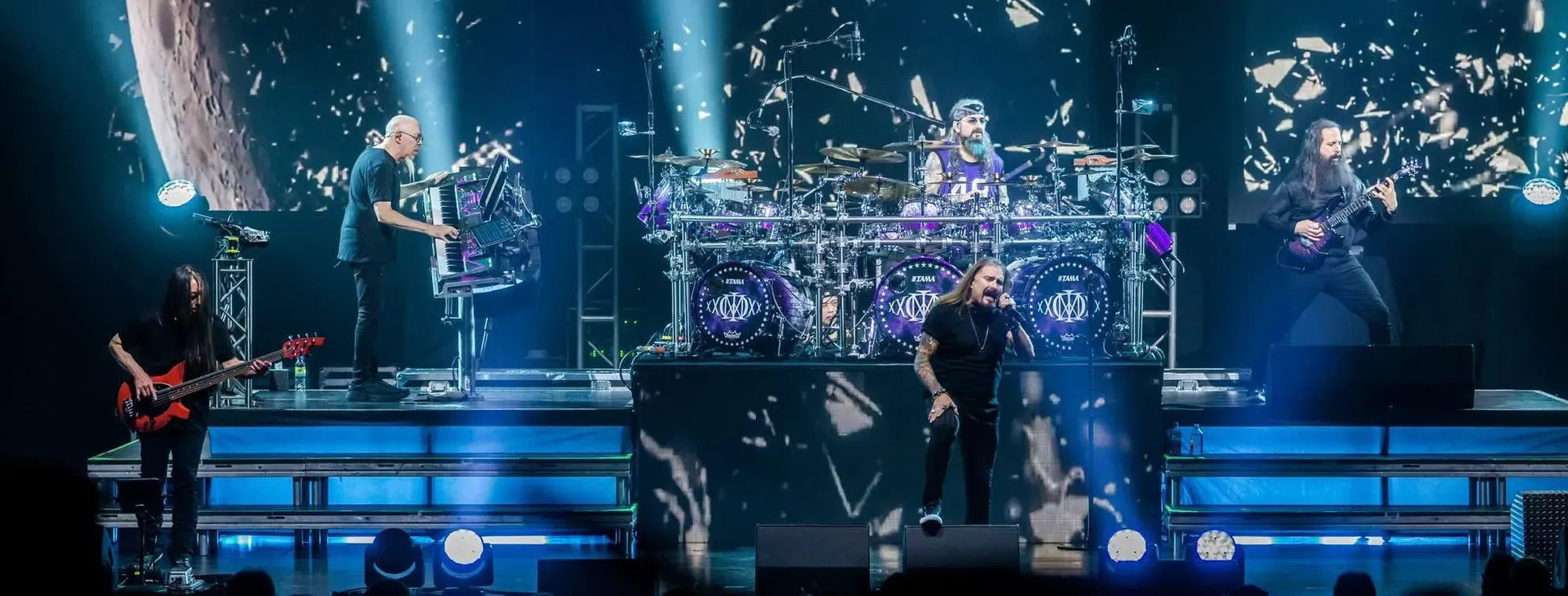
A Dramatic Turn Of Events represented a significant step in Dream Theater’s career, especially as the Boston band’s first album without the charismatic figure of previous drummer Mike Portnoy. Currently engaged in the tour to promote the album, Dream Theater are slowly reaping the benefits, in terms of attendance and acclaim, from the album’s release until now. We at Metalitalia.com decided to confront James LaBrie, the band’s singer, with the group’s cumbersome legacy, asking him questions ranging from the current tour to some strange initiatives undertaken in the past. In this interview, we see how the charming singer juggles the past and future of his band...
Dario Cattaneo: Okay, it’s been six months since the release of A Dramatic Turn Of Events. Could you tell us now, with a clear head, how the public has received the album? Are you happy with what you’ve produced, given the fan response?
James LaBrie: Absolutely! I’m absolutely satisfied with both how the album is doing and how it turned out. We’ve always been well received around the world with every release, but I think this was exactly the album we needed to make at this time. We felt like we’d done a good job based on what fans are expressing through various forums, chats, and discussion channels; but it’s precisely during this tour that we’ve truly seen how much everyone is appreciating this new album. And all of this comforts us, telling us that A Dramatic Turn Of Events was a much-needed release for the current Dream Theater. It also shows that we’re still the same band, that the band’s main songwriters are all still here, and that ultimately the only difference from the Dream Theater of the past is that we now have a new drummer. A truly exceptional drummer, at that.
DC: So the tour is going well? Are there a lot of people coming to the shows? Are you feeling good?
JL: The tour is going better than we thought! There are so many people and... are we feeling good? Well, you’ll see tonight!
DC: Speaking of concerts, how do the songs from A Dramatic Turn Of Events sound live? Are they more or less difficult to perform compared to your past productions?
JL: Actually, not much has changed in this regard. Really. Each of our songs has always required us to be very focused on stage. Not for fear of forgetting a song, or making a mistake, but because of how the songs themselves are made. They always require a lot of attention. And the new songs are neither more difficult nor easier to play on stage than the old ones, if that’s what you mean. It’s just about concentration, as I was saying, and also about predisposition, so that you can play naturally, and have fun while doing it. We can say that the new songs we’re playing on this tour sound slightly more powerful on stage, or at least that’s the impression I get. In any case, the live performance is an aspect we’ve always paid a lot of attention to, even in the past, in all the moments spent in the studio. For almost every song we’ve always asked ourselves: “It’s beautiful, yes, but how will it sound once performed in concert?” The concert is the most important moment for a band; when you are in front of your fans, that’s where the song has to sound really ‘big’!
DC: The choice of Periphery as your opening act is perhaps a little strange. They have a much more compressed and extreme sound than yours, and a truly modern approach to progressive metal. How are your fans reacting to the music of this interesting band?
JL: I really like this band! I think they’re truly extraordinary guys, with huge potential for the future. Their sound is super explosive, and Spencer has a truly great voice, phenomenal! Our fans are very welcoming of them. But why shouldn’t they? They’re progressive, they’re heavy, they’re melodic... and what are we like? We’re progressive, heavy, and melodic! In fact, they remind me of what Dream Theater were like in the early ‘90s, when we had that thirst for success and that desire to rock that they have now. They’re great, anyway, and I wish them all the success they can get because they work so hard, believe me!
DC: In 1997, during some shows you played a song or two, swapping instruments. It was a pretty cool idea called ‘Nightmare Cinema,’ if I’m not mistaken... will you never do anything like that again?
JL: I never really liked that idea... I thought it was stupid! It might have even seemed like a nice initiative, but in reality it was something that took us far from what we wanted, and still want, to be. Our music is very emotional, very complex, and that was just comical. It contradicts everything we wanted to represent... the emotional side of our music, the passion and seriousness... were erased by something that was just comical. We’ll never do anything like that again, that’s for sure, also because I’m convinced we never should have done it in the first place.
DC: Throughout your career, you’ve always shown a certain interest in covers, both live and recorded as B-sides or special features. What are the reasons that drive you to dedicate so much time and space to covers of other bands’ songs?
JL: Actually, Mike was the real cover fanatic. Not that we don’t like them, but many of the ones that were proposed were by him. For us, however, it was always a sort of homage to the bands that inspired us, therefore a way of saying thank you. Do you want to know if we’ll do more covers in the future? I say yes, and maybe we’ll even re-release entire albums, true classics by other bands, as we’ve done in the past [remember that Dream Theater re-released the entire albums The Number Of The Beast and Master Of Puppets by Iron Maiden and Metallica on some live dates – Ed.]. Do you want to know if we’ll do something similar on this tour? No. I don’t think so, sorry, but we’ll see what happens in the future...
DC: I understand... but in a cover, is it more important to capture the original feeling of the song or instead incorporate the emotions it evokes in you?
JL: You know, you should try to respect both aspects... respecting the artist’s original direction and intention is certainly important, but at the same time, a cover is only truly valuable if it reflects a part of you. A perfect copy of a cover doesn’t add much musically to what was already there. People are listening to your interpretation of a certain song, so you have to make them understand that it is truly ‘yours.’ I think you have to start by respecting the overall feeling and intention, but always putting something of your own into it, something that the song itself awakens in you.
DC: As you were saying, you’ve often performed entire suites, or even entire albums, live in one go. For example, the album Scenes From A Memory or the suite ‘Six Degrees Of Inner Turbulence’ have been performed in their entirety in a single show in the past. Will you do the same for the famous ‘Twelve Steps Saga’?
JL: [laughs] I really don’t know what to say right now! I can tell you that there might come a day when it makes sense to do something like that. It might. But this tour is called A Dramatic Tour Of Events and it’s not about that suite. Maybe, on some upcoming tour, or at some summer festival, it might make sense for us to perform the entire suite all at once, but not for now. It’s a discussion we should all have together, as a band, and right now our focus is solely on this tour and this album. Right now, we’re dedicated to this specific incarnation of Dream Theater, but everything you’re telling me might be possible in the future; we’ll see...
DC: The idea of a sort of cyclicality is embedded in many elements of your production. ‘A Change of Seasons’ ends with the same theme it begins with; Octavarium takes up the succession of notes on the staff and ends on the same note it begins with... but is the idea of creating cycles important to Dream Theater? In music and in life?
JL: The way I see it, life is something that doesn’t repeat itself... I don’t believe in reincarnation, there’s no cycle in life. But musically, I can tell you that we’ve always made these choices to reinforce the idea behind each composition. To extrapolate a central theme behind a very long development. When you think of a highly conceptual or very complex piece, it’s still necessary to find a common thread that holds together the entire structure of what you’re doing. A theme is needed, musically and melodically, that lets the listener understand how the piece begins, evolves, changes, and then ends. A melody repeated at multiple points does just this: it brings attention back to the piece, conveys continuity but doesn’t interrupt the evolution. It’s in this evolution that we can say that music resembles life. Life, like a song, is something that begins in one way, evolves, tries to reach its full potential, and finally closes. Let’s say that ending with the same theme as the opening is mainly a musical solution, while the pattern we follow in evolving the song, from the beginning through its development to the end, partly reflects a concept that can be assimilated to life.
DC: Do the lyrics you write reflect your way of seeing life? Or are they also the product of your imagination?
JL: In a certain sense, music is a mirror of what you grasp of life itself. Music is something that comes out of you, and that somehow speaks to the way you see life, how you live life, interpret it, and ultimately experience it. But alongside this, there is also the more imaginary side of the music you write, something you simply invent, because in some strange and mysterious way you feel a connection between that invented idea and the song you’re writing at a given moment. Music is a balance of the two, a sort of reflection of the artist’s life and the ultimate form of expression of their imagination.
DC: The themes of this interview show us just how much Dream Theater have actually created in their twenty-plus year career! But how does it feel to realize that so many people are so connected to what you’ve created? Do you feel proud of all this?
JL: I feel extremely proud of what we’ve accomplished so far! My greatest satisfaction is having done something in the ways and with the means that seemed right to me, following my passion and my ideas, and then seeing that so many people have ended up appreciating it. We’re thrilled to have created something that people are so attached to, and even happier to have managed to maintain it throughout all these years. It’s an indescribable feeling.
Original text
Dream Theater – Tra Passato E Futuro...
da Dario Cattaneo
Pubblicato il 06/04/2012
“A Dramatic Turn Of Events” ha rappresentato un passo importante nella carriera dei Dream Theater, soprattutto in quanto capitolo primo della formazione di Boston senza la carismatica figura del precedente batterista, Mike Portnoy. Alle prese adesso con il tour di promozione dell’album stesso, i Dream Theater stanno poco a poco raccogliendo, in termini di presenze e consensi, quando seminato dall’uscita dell’album fino ad ora. Noi di Metalitalia.com abbiamo pensato però di mettere a confronto James Labrie, cantante della band, con l’ingombrante eredità del gruppo, ponendogli delle domande che spaziano dal tour attuale ad alcune strane iniziative compiute in passato. Nel corso di questa intervista vediamo come il simpatico cantante si destreggia tra il passato ed il futuro della sua band...
Dario Cattaneo: Ok, sono passati sei medi dall’uscita di “A Dramatic Turn Of Events”. Ci diresti, adesso, a mente fredda, come il pubblico ha accettato il disco? Siete felici di quanto prodotto, alla luce della risposta dei fan?
James LaBrie: “Assolutamente! Sono assolutamente soddisfatto sia di come il disco sta andando sia di come è venuto. Siamo sempre stati bene accolti in tutto il mondo ad ogni uscita, ma penso che questo fosse esattamente l’album che dovevamo fare in questo periodo, in questo momento. Avevamo la sensazione di aver fatto un buon lavoro già attraverso quello che i fan esprimono attraverso i vari forum, le chat o i canali di discussione; ma è proprio durante questo tour che abbiamo osservato veramente quanto tutti stiano apprezzando questo nuovo lavoro. E tutto ciò ci conforta, ci dice che ‘A Dramatic Turn Of Events’ era una release davvero necessaria per i Dream Theater attuali. Dimostra anche che siamo sempre la stessa band, che i compositori principali della band sono ancora tutti qui, e che in definitiva l’unica differenza con i Dream Theater di un tempo è che ora abbiamo un nuovo batterista. Un batterista davvero eccezionale, peraltro”.
DC: Quindi il tour sta andando bene? Sono in tanti a venire agli show? Vi sentite in forma?
JL: “Il tour sta andando meglio di come pensavamo! C’è tanta gente e... se ci sentiamo in forma? Be’, lo vedrai stasera!”.
DC: Parlando di concerti, come suonano le canzoni di “A Dramatic Turn Of Events” dal vivo? Sono più o meno difficili da riproporre rispetto alla vostra passata produzione?
JL: “In realtà, non è che cambia molto sotto questo aspetto. Davvero. Ogni nostra canzone ha sempre richiesto di essere molto concentrati sul palco. Non per paura di dimenticare un pezzo, o di fare un errore, ma proprio per come sono fatte le canzoni stesse. Richiedono sempre tantissima attenzione. E i brani nuovi non sono né più difficili né più facili di quelli vecchi da suonare sul palco, se è questo che intendi. Si tratta solo di concentrazione, come dicevo, e anche di predisposizione, in modo da riuscire a suonare restando naturali, e divertendosi mentre lo si fa. Possiamo dire che le canzoni nuove che stiamo riproponendo in questo tour suonano però leggermente più potenti sul palco, o almeno questa è l’impressione che ne ricavo io. Comunque, la resa dal vivo è un aspetto che abbiamo sempre curato molto, anche in passato, in tutti i momenti passati in studio. Per quasi ogni canzone ci siamo sempre chiesti: ‘Bella, sì, ma come suonerà una volta portata in concerto?’. Il concerto è il momento più importante per una band; quando si è davanti ai propri fan, è proprio lì che la canzone deve suonare veramente ‘grande’!”.
DC: La scelta dei Periphery come gruppo d’apertura è forse un po’ strana. Hanno un suono molto più compresso ed estremo del vostro, ed un approccio al progressive metal davvero moderno. Come stanno reagendo i vostri fan alla musica di questa interessante band?
JL: “A me questa band piace tantissimo! Penso siano dei tizi davvero straordinari, con un potenziale altissimo anche per il futuro. Il loro suono è super esplosivo e Spencer ha davvero una grande voce, fenomenale! I nostri fan li stanno ricevendo benissimo. Ma perché non dovrebbero? Loro sono progressive, sono pesanti, sono melodici... e noi come siamo? Noi siamo progressive, pesanti e melodici! In effetti, mi ricordano come eravamo noi Dream Theater nei primi anni ’90, quando avevamo quella sete di successo e quella voglia di spaccare che hanno loro ora. Sono dei grandi, comunque, e auguro loro tutto il successo che possono avere perché si sbattono un sacco, lavorano veramente duro, credimi!”.
DC: Nel 1997, durante alcune date suonavate uno o due pezzi scambiandovi gli strumenti. Si trattava di un’idea abbastanza simpatica chiamata ‘Nightmare Cinema’, se non erro... non rifarete più niente di simile in futuro?
JL: “Quell’idea non mi è mai piaciuta in realtà... la trovavo stupida! Magari come iniziativa poteva sembrare anche ‘simpatica’, ma in realtà era qualcosa che ci portava lontano da quello che volevamo, e vogliamo tutt’ora, essere. La nostra è musica molto emozionale, molto complessa, e quella cosa lì risultava essere soltanto comica. E’ una contraddizione a tutto quello che volevamo rappresentare... il lato emotivo della nostra musica, la passione e la serietà... erano cancellate da qualcosa che era solamente comico. Non rifaremo mai più niente del genere, è sicuro, anche perché sono convinto in primo luogo che non avremmo mai dovuto farla”.
DC: Durante la vostra carriera avete sempre mostrato un certo interesse nelle cover, sia dal vivo che registrate come B-side o contenuti speciali. Quali sono le ragioni che vi spingono a dedicare così tanto tempo e spazio a cover di canzoni di altri gruppi?
JL: “In realtà era Mike il vero fanatico delle cover. Non che a noi non piacciano, ma molte di quelle che sono state proposte provenivano da lui. Per noi si è sempre trattato però di una sorta di omaggio a quelle band ci hanno ispirato, un modo di ringraziare, quindi. Vuoi sapere se faremo ancora cover in futuro? Io dico di sì, e magari anche riproporremo album interi, veri classici di altre band, come abbiamo fatto in passato (ricordiamo che i Dream Theater hanno riproposto in alcune date dal vivo gli interi album ‘The Number Of The Beast’ e ‘Master Of Puppets’ di Iron Maiden e Metallica, ndR). Vuoi invece sapere se faremo qualcosa del genere durante questo tour? No. Non credo proprio, spiacente, ma vedremo in futuro cosa succederà...”.
DC: Capito... ma in una cover, è più importante catturare il feeling originale della canzone o inserire invece le emozioni che essa vi suscita?
JL: “Sai, dovresti cercare di rispettare entrambi gli aspetti... rispettare la direzione e l’intenzione originale dell’artista è certamente importante, ma allo stesso tempo una cover ha veramente valore solo se rispecchia una parte di te. Un copia perfetta di una cover non aggiunge molto a livello musicale a ciò che c’era già. La gente sta ascoltando una tua interpretazione di una certa canzone, quindi devi far loro capire che essa è effettivamente ‘tua’. Penso che si debba quindi partire dal rispetto del feeling e dell’intenzione generale, ma sempre mettendo qualcosa di tuo, qualcosa che la canzone stessa risveglia in te”.
DC: Come dicevi, spesso avete suonato intere suite, o addirittura interi album, dal vivo in un’unica soluzione. Per esempio, l’album “Scenes From A Memory”, o la suite “Six Degrees Of Inner Turbulence”, in passato sono state riproposte per intero nella durata di un unico show. Farete lo stesso anche per la famosa “Twelve Steps Saga”?
JL: “(ride, ndR) Proprio non saprei risponderti, ora! Posso dirti che però potrebbe arrivare un giorno in cui avrà senso fare un’operazione del genere. Potrebbe. Ma questo tour si chiama ‘A Dramatic Tour Of Events’ e non parla di quella suite. Forse, in qualche prossimo tour, o in qualche festival estivo, avrà senso per noi di riproporre l’intera suite in un’unica soluzione, ma per adesso no. E’ una discussione che dovremmo fare tutti assieme, a livello di band, ed ora la nostra attenzione è rivolta solo a questo tour, e a questo album. Ora siamo dedicati a questa specifica incarnazione dei Dream Theater, ma tutto quello che mi dici può essere realizzabile in futuro, vedremo...”
DC: L’idea di una sorta di ciclicità è contenuta in molti elementi della vostra produzione. “A Change Of Seasons” finisce con lo stesso tema con cui inizia; “Octavarium” riprende la successione delle note del pentagramma e chiude con la stessa nota con cui inizia... ma l’idea di creare dei cicli è importante per i Dream Theater? Nella musica e nella vita?
JL: “Per come la vedo io, la vita è una cosa che non si ripete... non credo nella reincarnazione, non c’è alcun ciclo nella vita. Ma musicalmente posso dirti che queste scelte le abbiamo sempre fatte per rinforzare l’idea che stava dietro ogni composizione. Per estrapolare un tema portante dietro uno svolgimento molto lungo. Quando pensi ad un pezzo molto concettuale, o molto complesso, è necessario comunque trovare un filo conduttore che tenga unito tutto il costrutto di ciò che si sta facendo. Occorre un tema, dal punto di vista musicale e melodico, che faccia capire all’ascoltatore come il pezzo inizia, evolve, cambia e poi si chiude. Una melodia ripresa in più punti fa proprio questo: riporta l’attenzione su pezzo, trasmette continuità ma non interrompe l’evoluzione. E’ nell’evoluzione che possiamo dire che la musica somigli alla vita. La vita, come una canzone, è qualcosa che inizia in un modo, si evolve, cerca di raggiungere l’intero suo potenziale, ed infine si richiude. Diciamo che finire con lo stesso tema dell’apertura è prevalentemente una soluzione musicale, mentre lo schema che seguiamo nell’evolvere la canzone, dall’inizio attraverso il suo svolgimento fino alla fine, rispecchia in parte un concetto assimilabile alla vita”.
DC: Le liriche che scrivete riflettono la vostra maniera di vedere la vita? O è frutto anche della vostra fantasia?
JL: “Da un certo punto di vista la musica è uno specchio di ciò che tu cogli della vita stessa. La musica è qualcosa che esce da te, e che in qualche modo parla del modo in cui tu vedi la vita, in cui vivi la vita, la interpreti e infine la sperimenti. Ma, accanto a questo, c’è comunque da considerare il lato più immaginario della musica che scrivi, quel qualcosa che semplicemente inventi, perché in qualche strana e misteriosa maniera senti in te una connessione tra quell’idea inventata e la canzone che stai scrivendo in un determinato momento. La musica è un equilibrio delle due parti, una sorta di riflesso della vita dell’artista e l’ultima forma di espressione della sua immaginazione”.
DC: I temi di questa intervista ci mostrano quanto i Dream Theater abbiano effettivamente creato, nei loro venti e più anni di carriera! Ma come vi sentite nel realizzare che tanta gente è così legata a quanto da voi creato? Vi sentite fieri di tutto ciò?
JL: “Mi sento estremamente fiero di quanto abbiamo fatto fino ad ora! La mia soddisfazione più grande è aver fatto qualcosa nei modi e con i mezzi che mi sembravano giusti, seguendo la mia passione e le mie idee, e vedere poi che un grande numero di persone ha finito per apprezzare tutto ciò. Siamo felicissimi di aver creato qualcosa alla quale la gente è così legata, e ancora più felici di essere riusciti a mantenerla attraverso tutti questi anni. E’ una sensazione indescrivibile”.