

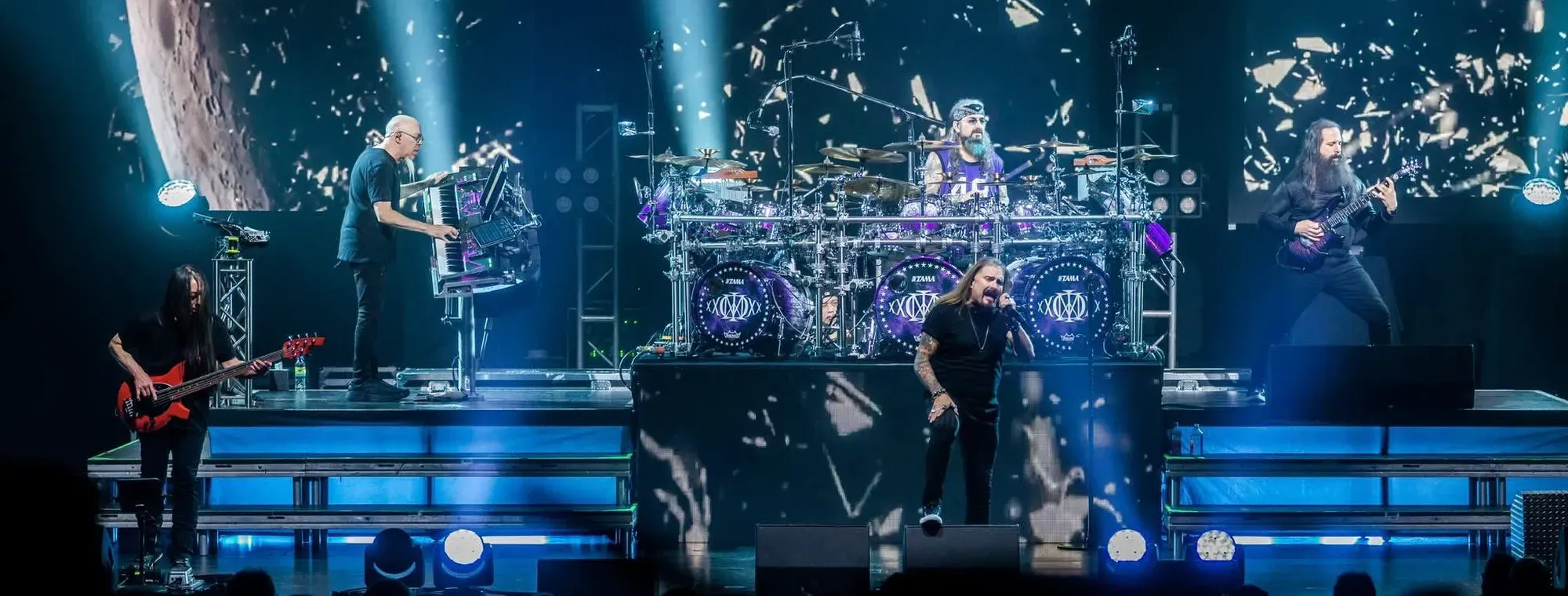
Originally published in Watch Mojo YT channel · November 2011
John Petrucci interview
InterviewJohn Petrucci7 min read
Rebecca Brayton: There have been some significant changes in the band since we last spoke to you. First, I just want to know, were there any warning signs that you thought that Mike was gonna leave the band?
John Petrucci: No, there really weren’t. In fact it was very strange to me because we had just come off of a big tour with Iron Maiden, which is something that in our entire career we were never really able to do in North America – open for a band to play those kind of venues and play for example in New York, Madison Square Garden to a sold-out crowd – we’ve never done that before, so it was really a highlight. Not only that, but the album that we were touring in supportive of was our first top 10 album in America and debuted number 6, so we had top-ten album, we had the successful tour, we had the Maiden thing, so it was very strange that Mike chose that timing to want to do something else.
RB: What was your initial reaction?
JP: I was kind of shocked and surprised. We’ve been doing this for 25 years plus. We had built, not only our all of our careers around this band, but we’ve been through so much together on a personal level. Our families are very intertwined and everything, so it’s just really disappointing and confusing and upsetting.
RB: What’s your ongoing relationship like with him now?
JP: I’ve known Mike for a long time and I’m sure we’ll always have a relationship. I haven’t talked to him in a while, but we’re on tour, he’s busy, and I’m sure as time goes by we’ll reconnect.
RB: This obviously led to drummer auditions, so what did those auditions consistent of?
JP: It turned out to be something really cool in the end, because not only was the whole thing filmed, but it was presented in a way that really brought in our fans and our listeners into the experience that we were having. I think it helped people to get to know Mike Mangini a little bit before finding out that he was the new drummer and I think it helped people like realize that this whole thing is really important to us. We’re passionate about what we do, and we take a lot of time and pride in making decisions like this.
RB: What songs did you choose and why?
JP: The audition had three different components. One of them was like you said, playing songs, because we wanted to see what it sounded like playing with them. We never played with another drummer in Dream Theater. So we played ‘A Nightmare to Remember,’ ‘The Dance of Eternity’ and ‘The Spirit Carries On.’ And the reason we picked those songs was we wanted to make sure that they had all of the musical sensibilities that make up our band. One of them is the metal side. We’re progressive man but we have a metal sound. ‘Dance of Eternity’ is all technical, so it’s kind of like, “If you can play that with us, you can pretty much play anything.” And ‘The Spirit Carries On’ was one of our sides where it’s kind of more of like a free-flowing groove type of thing. We wanted to make sure that the drummer’s weren’t stiff and that they can just relax and let a groove happen. Then we also just jammed with them, just kind of free-form improvising. And then we did a thing where we had pre-composed some riffs and said, “Alright check out this riff. What would you play to it?” So some of the guys wrote it out, some of the guys had to count it out, think about it. Some guys got it right away, some guys didn’t. And so it was very revealing as to where their musical minds work.
RB: Now were you looking for someone to put their own twist on the music?
JP: As far as the catalogue material, I think that it’s important that it’s played as recorded, because we have a lot of albums, we’ve been around for a long time, we have fans all around the world that are very passionate about what we do, and I totally relate to that. If I was going to see a band, I wouldn’t want them to all of a sudden (the songs) to have a different feel and any twists and different parts. And our music is also very composed, so a lot of the drum parts have to be the way they are because they’re doubling what the guitars doing or whatever. Yeah, we wanted to play the songs the way they were recorded. As we have more live experiences with Mike, he’s able to kind of mix it up and add in his flair and his flavor, but really the songs sound like the recorded versions which is great. It’s very comforting for us, and I think to the fans when they see it, you’re not thinking, “Whoa! Something sounds weird or something doesn’t belong,” or “Who’s that guy? I don’t like this.” The reactions been very positive and I think that’s probably one of the reasons.
RB: Now let’s talk about A Dramatic Turn of Events. What were you guys going from?
JP: Before we went in to record the album, we had many discussions as to the kind of album we wanted to make, and also the importance of the album, because we realized with the situation that just happened that a lot of eyes would be on us probably more than usual. We wanted to make sure that every decision that we made was what we had deemed undeniable. So when people see this person that’s the drummer, it’s like, “Oh, OK. That’s great. I get it.” And we wanted to take that same approach with the music, so we wanted to make sure that the album had a lot of depth, a lot of quality, that the songs were written to their fullest potential, that the vocals were presented in the best way that we can as far as the melodies and the range and the sound. We kept that sort of mindset the whole time as we were writing. It’s like, “Is this good enough?” “No, that’s not good enough. Let’s go back and refine it.” “Is a section tight enough or crazy enough?” If it wasn’t then we’d go back in and make it, and we did that every step of the way.
RB: What would you say influenced the album?
JP: Musically it’s hard to say, because when we get together there’s so many ideas, and we’re in a room and we’re just playing together. It’s not like we’re listening to a particular album together and we’re getting influenced that way. It’s just kind of each other. Lyrically, I was looking at major things that were happening in the world that were changing the world, which is where the title of the album stems from.
RB: Now if I’m not mistaken Mike wasn’t involved in the writing process. Why was that a choice that you guys made?
JP: Really, besides the auditions, we didn’t really have any experience with him. This time going in, I felt it was important not to have to incorporate another person. I just didn’t want to take those kind of chances right at the beginning. I think as the tour goes on and as we jam during sound checks and do different things, we’ll gain more experience. On next album, it’ll be more comfortable. We’ll know each other better and we’ll be able to mesh.
RB: How do you think this album fits in your back catalog?
JP: I’m very proud of the way that this is album sounds, the way that the sonic landscape ended up coming out. A lot of that has to do with Andy Wallace. I’m a big fan of the way he mixes records and he just spent so much detail in mixing to every single instrument, and the result is incredible. We returned a little bit back to some of the more progressive roots. The album kinda leans a little bit that way more. It is a bit more balanced than some of the other albums as far as the elements that make up our sound. Maybe other albums were leaning more metal-y. This one has more of a balance, it’s probably more progressive. I think vocally it’s probably one of James’ strongest albums. I think he really is an MVP on this album. With every song there’s something that you can really latch on to. There’s nothing that kind of irks you or sounds strange. There’s some of the other albums or some things here and there that, “Well, maybe I would have changed that,” or “Maybe I would change that,” but this one I’m just totally happy.