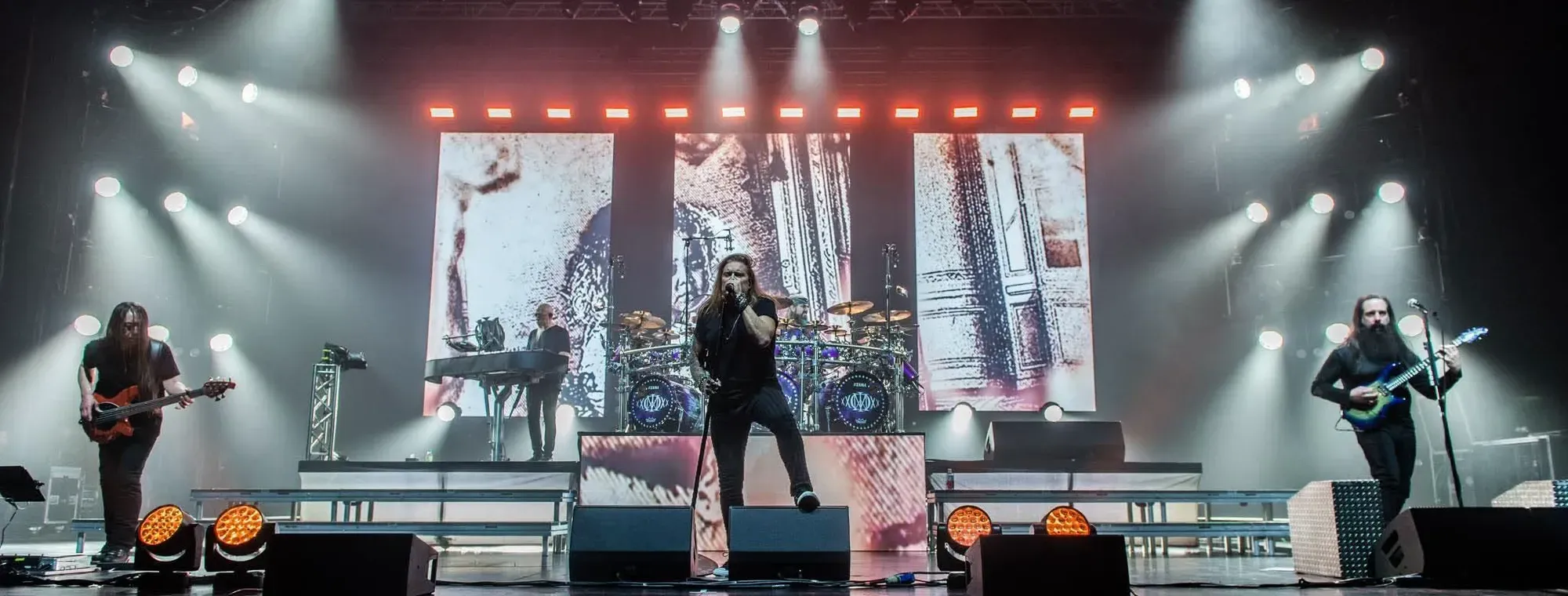

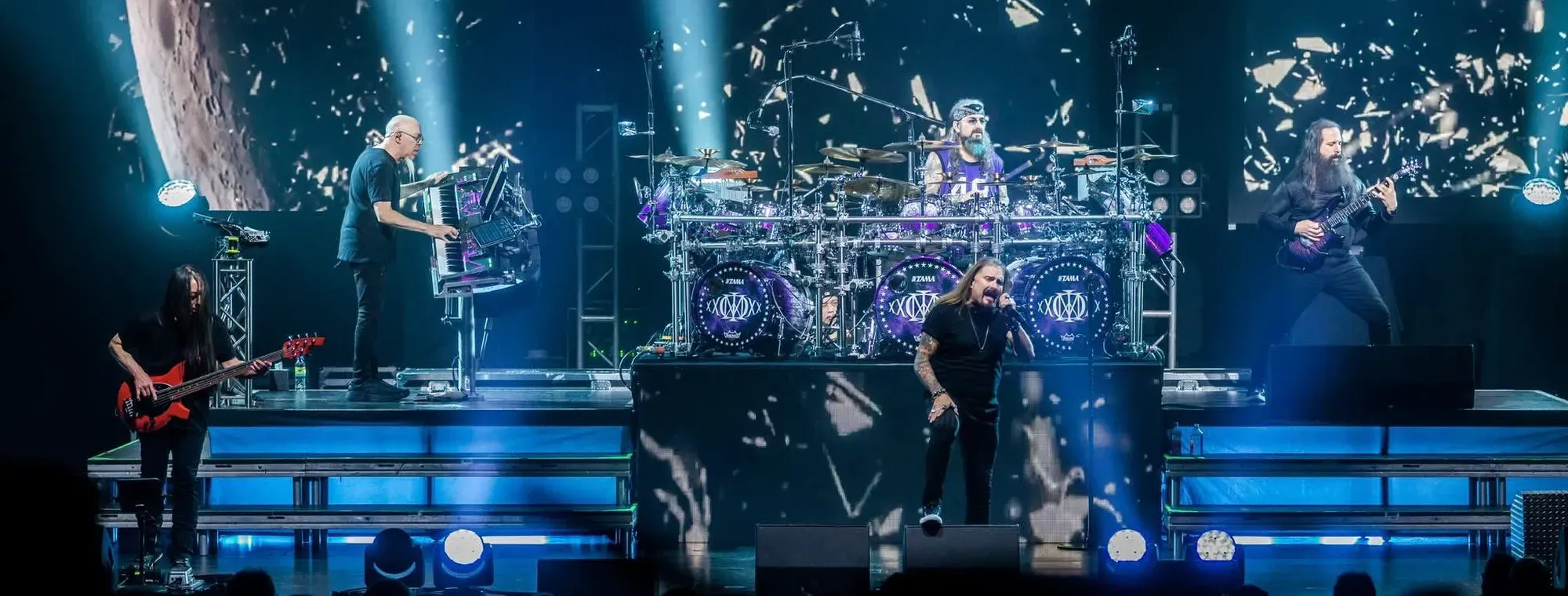
Originally published in Mariskal Rock.com · September 2011
Dream Theater: Exclusive Interview with Mangini
September 2, 2011
InterviewTranslatedMike Mangini19 min read
Translated from the original language with Google Translate, so the wording may differ from what was actually said.
He’s thrilled. Until now, most of his prestige was confined to the drumming world, his name not being particularly well-known among the general public. He had built his reputation mainly among those almost-anonymous professional instrumentalists, always in the shadow of artists who form their bands with session musicians, or among diligent students who never miss a clinic and use their vacations – for a hefty sum – to learn from some percussion master. Despite having showcased his speed in Annihilator, acting as a rock star in Extreme, and even proving himself a technical prodigy in Steve Vai’s band, in recent years he had lived away from the public eye, teaching at Berklee and occasionally recording with – what a coincidence! – James LaBrie. Now, having become Mike Portnoy’s replacement after beating out the other candidates – Aquiles Priester, Peter Wildoer, Virgil Donati, Derek Roddy, Marco Minnemann, and Thomas Lang – millions of people will be watching him closely, and he knows he’ll rise to the occasion. A Dramatic Turn of Events arrives on September 13th, and Juan Destroyer brings you this interview so you can get to know this drumming god in depth. He’s calling from his usual residence in Boston and, like any mortal, combats the heat with “ice-cold drinks and cold beer at night.”
Juan Destroyer: Who told you that you were the new drummer for Dream Theater, and how did they do it?
Mike Mangini: After the auditions were over, I received a call from the band, which you can see in the documentary The Spirit Carries On. After a long conversation with all of them, James LaBrie is the one who told me.
JD: Did you ever imagine that one day your friendship with James would lead to you becoming the drummer for Dream Theater?
MM: Realistically, you can’t imagine something like that happening. Although I might have had that longing 10 years ago, I always thought they would stay together and have a consistent lineup.
JD: At any point during the last few years did you feel any concern about a deterioration in your relationship with Portnoy?
MM: No, no, in fact, James didn’t exert any influence whatsoever on me ending up in the band, because the fact that I’m his friend didn’t mean I was the best drummer, that I would work in the studio or live. Keep in mind that they weren’t looking for someone temporary, but someone they could work with for the rest of their career. That’s why they held auditions with the most technically skilled drummers in the world competing against each other, to be sure they made the right decision. That’s how I got the job, not because of my friendship with James. On the other hand, he never told me anything about what might be going on with Mike backstage. They’re very discreet about that and would never have shared it with anyone outside the band.
JD: Do you admire any of the drummers who competed with you for the position?
MM: Absolutely! In fact, I could spend a good while pointing out what each of them does better than anyone else. I could tell you what Virgil Donati does that the rest of us can’t, the same with Marco Minnemann. Yes, I admire and respect them a lot.
JD: Were you a Dream Theater fan before joining the band?
MM: Of course! I’ve been to many concerts and then spent time with them backstage. They knew who I was from the time I played with Extreme and Steve Vai.
JD: And do you like how Portnoy plays?
MM: I love it! Put it this way: If he weren’t so good, why would he have so many fans all over the world? They love him because he’s a fantastic drummer, and I agree.
JD: Aside from being the drummer, he was, in a way, the brains of the band. How are you going to fill the void he’s left? Quite a challenge, isn’t it?
MM: I’m not entirely sure what you mean by “the brains of the band,” because the songwriters are Jordan Rudess and John Petrucci. I know Mike handled certain logistical aspects that will now be taken care of by a large and experienced team of people within the Dream Theater network. I don’t have to cover six roles; I only have two to worry about: playing the drums and being friendly, since eight of us sleep on the same bus.
JD: Portnoy used to remind us almost constantly that he was there with constant rolls, filling the space completely. I’d say you work more towards the final result of the songs, would you agree?
MM: Absolutely. I use my skills in a different way. On the new album, there are drum parts that, if you put on headphones or if I explain them to you, you’ll see are technically very complex even when they seem simple. That’s what makes me different. For example, I’m ambidextrous, and my drum kit isn’t set up like a left-handed or right-handed drummer’s. Instead, it starts from the center. This way, I can choose at any point in the song which half I’ll be best suited for, depending on the toms I need to use, switching between left-handed and right-handed drumming as needed without losing any of the power in my playing. I’m always able to play with the same intensity on the correct tom-tom, the one that perfectly matches the keyboard’s frequency, for example [in the middle of this revealing statement, his two-year-old daughter interrupts him, as you might expect. He takes it in stride and tells me that she’s already starting to play the drums and that his five-year-old is learning to play the guitar]. This way, I always “follow” the melody. In Mike’s case, he’s right-handed and will probably always use his right hand to play a particular tom-tom that will sometimes be too far away, so he’ll dismiss it, while I can reach it with my left hand without losing any power. No one else in the world has ever been able to master my technique. Some people think they can, and their fans think so too, but it’s not the case. In fact, it took me six years to learn to play simple rhythms like those in AC/DC songs correctly; you have to make your brain split. Some people dare to try it in a rehearsal space, that’s no feat, I’ve internalized it in my daily life. On the other hand, I don’t like the drums too loud in the mix, especially if the band is playing a heavy part. I prefer to develop rhythms that are intricate but designed to support the melody or to highlight a moment of madness, adapting to each emotion expressed through the music. Of course, I reserve the right to go crazy myself from time to time.
JD: Some songs on A Dramatic Turn of Events remind me of Awake and others of Scenes From A Memory, what do you think?
MM: You’re right, and I’d add that others even remind me of Images And Words. Perhaps Mike’s biggest influence on the last few albums was that he suggested how the band was supposed to sound, the direction to take, because he was always up-to-date with what was popular. I think he was the one who pushed them to sound heavier, because that’s the kind of music he liked most at the time, but that’s just my opinion, like yours. I don’t know if it’s true or not; I wasn’t there either.
JD: So can we talk about this LP as a return to your roots?
MM: I think so, but again, it’s just my opinion.
JD: Are you going to dare to do a drum solo when you start your own tour, or do you prefer to stay in the background for now?
MM: I will, because I can do super-technical and ultra-fast things that aren’t easy to fit into the context of a song. In a drum solo, I can show all the crazy things I’m capable of without fear of ruining a track.
JD: You’ve played with such different artists over the years that the word “boredom” probably doesn’t exist in your life. What do you remember about your time in Annihilator, Extreme, and Steve Vai’s band?
MM: With Annihilator, I remember being incredibly excited because I did my first European and Canadian tour with them. We played fantastic heavy metal, and I loved playing those tracks from Set The World On Fire live. That feeling of touring abroad for the first time with a band is indescribable. I had already played with Nuno, who is an impeccable guitarist with an exceptional right hand, outside the public eye. When I joined Extreme, I felt like I had found a musical brother, someone with whom I could develop my full potential. Unfortunately, I never got to record a whole album with them, and it feels like an unfinished project, especially because before they broke up, we tried out some amazing things during soundchecks before concerts – skeletons of songs that were lost forever. Steve Vai was very inspiring to me because he has extraordinary knowledge, so, for example, not only was I allowed to play strange or very fast rhythms, but he actually demanded them of me. With him, I was able to develop all my skills and I felt understood. The great thing is that in John Petrucci I’ve found the musician who embodies all those positive experiences I’ve had in the past; he’s like a combination of those three guitarists, with all their qualities. It’s incredible to play with him and the rest of the guys.
JD: Were you the drummer for Extreme when they opened for Aerosmith at the Palacio de los Deportes in Madrid in 1994? I still remember that glorious acoustic guitar piece, ‘Midnight Express,’ which you would later record for Waiting For The Punchline...
MM: I remember that concert! Among other things, because during that tour I took a ton of photos, more than any tourist would. I remember having some time to wander around Madrid, I have vivid memories of the performance, and it was also one of the cities where I got to chat a bit with Steven Tyler. I was playing ‘Midnight Express’ with Nuno; I used to play it with a pre-recorded track, but I told him I was up for the challenge of accompanying him and playing it as well as the machine. [laughs]
JD: You taught for years at the prestigious Berklee College of Music in Boston. Did you teach any famous drummers?
MM: I can assure you that many of my students have gone on to great success, and I’m talking about them ending up playing with people like Beyoncé. Robert Falzano was in Annihilator. Drummers from already famous bands also come to me looking to expand their knowledge with a couple of lessons – I could say about twenty, although I prefer not to reveal their names in case they mind. [Coincidentally, two days later I travel to Pamplona to meet Marea, and jumping from one topic to another, I find out that Alen is one of those musicians who have taken lessons with Mangini.]
JD: I’ve read that even as a child you practiced the drums for six to ten hours a day. How did you manage to do your homework?
MM: Well, I had no choice but to do it, and in fact, I never got below a B in any subject, only once did I get a C, and my father got so angry that it never happened again. I was always so attentive and diligent that I did my homework right there at school, before going home.
JD: How did you get into drumming? Usually, all kids want to be guitarists or singers. On the other hand, I suppose your parents weren’t thrilled about seeing you “wasting time” playing so many hours a day.
MM: My father didn’t like so much noise in the house, but my mother loved it. My brother and sister, who were older than me, played records for me from the time I was two years old. By two and a half, I’d already been banging on anything I could get my hands on. When I was three, my father bought me a toy drum set, and when I was about three and a half, my grandfather noticed I could keep the beat of the songs, simple things like the Beatles, so when I turned four, he gave me a drum set, a simple one, but a real one. The first thing I remember paying attention to, even at that age, was Blood, Sweat & Tears, and it wasn’t that I could play it – it was complex music – but I did understand what they were doing. I have a vivid memory of lying on the floor with my brother looking at the album cover.
JD: Mangini sounds like an Italian surname, do you have Italian roots?
MM: Yes, indeed. All my grandparents are from the area around Rome.
Original text
Dream Theater: Entrevista Exclusiva Con Mangini
2 septiembre, 2011
Está encantado de la vida. Hasta ahora la mayor parte de su prestigio se restringía al ultramundo de la batería, sin ser su nombre especialmente reconocido entre la gente de a pie. Se había labrado su fama principalmente entre esos instrumentistas profesionales cuasi-anónimos, siempre a la sombra de artistas que montan sus bandas con sesioneros, o entre estudiantes aplicados de los que no se pierden un clinic y aprovechan sus vacaciones para –pastón mediante- aprender al lado de algún maestro de la percusión. A pesar de haber dejado muestras de su velocidad en Annihilator, ejercer de rock star en Extreme y aun cuando constató ser un prodigio de la técnica en la banda de Steve Vai, en los últimos años vivía retirado del ojo público, impartiendo clases en Berklee y grabando de vez en cuando con -¡qué casualidad!- James LaBrie. Ahora, habiéndose convertido en el sustituto de Mike Portnoy tras imponerse a los demás candidatos -Aquiles Priester, Peter Wildoer, Virgil Donati, Derek Roddy, Marco Minnemann y Thomas Lang- son millones de personas las que le estarán mirándole con lupa, y sabe que estará a la altura. ‘A Dramatic Turn Of Events’ llega el 13 de septiembre y Juan Destroyer te trae esta entrevista para que conozcas en profundidad a este dios de la batería, que llama desde su residencia habitual en Boston y, como haría cualquier mortal, combate el calor con “bebidas heladas y cerveza fría por la noche”.
Juan Destroyer: ¿Quién te comunicó que eras el nuevo batería de Dream Theater y cómo lo hizo?
Mike Mangini: Después de que terminaran las audiciones recibí una llamada de la banda que puedes ver en el documental The Spirit Carries On en la que tras una larga conversación con todos ellos, James LaBrie es quien me lo dice.
JD: ¿Te imaginaste alguna vez que llegaría un día en que tu amistad con James daría lugar a que te convirtieras en el batería de Dream Theater?
MM: Siendo realista, no puedes imaginar que ocurrirá una cosa así. Aunque quizás tuviera ese anhelo hace 10 años, siempre pensé que permanecerían juntos y con una formación consistente.
JD: ¿En algún momento durante los últimos años te puso sobre alerta acerca de un deterioro en las relaciones con Portnoy?
MM: No, no, de hecho James no ejerció ningún tipo de influencia para que yo acabara en la banda, porque el hecho de que sea su amigo no significaba que fuera el mejor batería, que funcionara en el estudio o en directo, pues ten en cuenta que nos buscaban a alguien temporal, sino una persona con la que poder trabajar el resto de su carrera. Por eso hicieron las audiciones con los baterías más técnicos del mundo compitiendo entre ellos, para estar seguros de que su decisión era la acertada. Así me quedé con el puesto, no por mi amistad con James. Por otro lado, nunca me dijo nada de lo que pudiera estar ocurriendo con Mike entre bastidores, son muy discretos para eso y nunca lo hubieran compartido con alguien ajeno a la banda.
JD: ¿Admiras a alguno de los baterías que compitieron contigo por el puesto?
MM: ¡Por supuesto! De hecho me pasaría un buen rato señalándote en qué son mejores que nadie cada uno de ellos. Podría decirte qué hace Virgil Donati que no podemos hacer el resto, lo mismo con Marco Minnemann. Sí, los admiro y respeto mucho.
JD: ¿Eras seguidor de Dream Theater antes de entrar en la banda?
MM: ¡Claro! He estado en muchos conciertos y luego he compartido ratos con ellos en el backstage. Sabía quién era yo por el tiempo que toqué con Extreme y Steve Vai.
JD: ¿Y te gusta cómo toca Portnoy?
MM: ¡Me encanta! Ponlo así: Si no fuera tan bueno, ¿por qué iba a tener tantos admiradores a lo largo y ancho del mundo? Le aman porque es un grandísimo batería y yo soy de la misma opinión.
JD: Aparte del batería, él era en cierta manera el cerebro de la banda, ¿cómo vas a llenar el vacío que ha dejado? Qué reto, ¿no?
MM: No estoy muy seguro de qué quieres decir con que era el cerebro de la banda, porque los compositores son Jordan Rudess y John Petrucci. Sé que Mike se encargaba de ciertos aspectos logísticos de los que ahora se ocupará un numeroso y experto equipo de personas del entramado que rodea a Dream Theater. Yo no tengo que cubrir seis facetas, sino que solo han de preocuparme dos: tocar la batería y ser amable, pues dormimos ocho personas en el mismo autobús.
JD: Portnoy solía recordarnos casi a cada instante que estaba ahí con redobles constantes, llenando mucho, diría que tú trabajas más en pos del resultado final de las canciones, ¿estás de acuerdo?
MM: Totalmente. Utilizo mis aptitudes en una dirección diferente. En el nuevo disco hay baterías que si te pones los cascos o te las explico verás que son técnicamente muy complejas incluso cuando parecen simples, en eso es en lo que marco la diferencia. Por ejemplo, soy ambidiestro y mi kit de batería no está dispuesto ni como el de un zurdo ni como el de un diestro, sino que parte del centro, de esta forma puedo elegir en cada momento de la canción cuál es la mitad en la que mejor me desenvolveré en función de los timbales que tenga que utilizar, reconvirtiéndome en batería zurdo o diestro según me convenga y sin perder un ápice de fuerza en la pegada. Siempre soy capaz de tocar con la misma intensidad en el timbal correcto, ese que casa perfectamente con la frecuencia del teclado, por ejemplo (en medio de tan reveladora afirmación le interrumpe su hija de dos años, como no podía ser de otra manera, se lo toma con humor y aprovecha para contarme que ya empieza a darle a la batería y que el mayor, de cinco años, está aprendiendo a tocar la guitarra). De esta forma siempre “sigo” la melodía. En el caso de Mike, es diestro y es probable que siempre use la mano derecha para tocar un timbal determinado que en algunos momentos le pillará lejos, por lo que desestimará tocarlo, mientras que yo puedo alcanzarle con la izquierda sin perder pegada. Nunca nadie más en el mundo ha podido dominar mi técnica, algunos creen que pueden hacerlo y sus seguidores así lo piensan también, pero no es así, y de hecho a mí me llevó seis años aprender a tocar correctamente ritmos simples como los de las canciones de AC/DC, has de hacer que tu cerebro se bifurque. Hay quien se atreve a intentarlo en un local de ensayo, eso no tiene mérito, yo lo tengo asimilado en mi día a día. Por otro lado a mí no me gusta que la batería esté muy alta en la mezcla, sobre todo si la banda está tocando una parte cañera, prefiero desarrollar ritmos que son intrincados pero que están pensados para apoyar la melodía o para resaltar un momento de locura, adaptándome a cada emoción expresada con la música. Por supuesto me reservo mi derecho a volverme loco yo también de vez en cuando.
JD: Algunas canciones de ‘A Dramatic Turn Of Events’ me recuerdan a ‘Awake’ y otras a ‘Scenes From A Memory’, ¿tú qué opinas?
MM: Que estás en lo cierto, y añadiría que otras recuerdan incluso a ‘Images And Words’. Quizás la mayor influencia ejercida por Mike en los últimos álbumes era que sugería cómo se suponía que debía sonar el grupo, la dirección a seguir, porque él siempre estaba al tanto de lo que se llevaba. Pienso que fue él quien les movió a sonar más duros, porque esa es la música que más le gustaba en ese momento, pero es únicamente mi opinión, como la que puedas tener tú, no sé si es verdad o no, yo tampoco estaba allí.
JD: ¿Podemos hablar entonces de este LP como de una vuelta a las raíces?
MM: Yo pienso que sí, pero nuevamente, es solo mi opinión.
JD: ¿Vas a atreverte a realizar un solo de batería cuando comencéis vuestro propio tour o de momento prefieres mantenerte en segundo plano?
MM: Lo habrá porque puedo hacer cosas supertécnicas y ultrarrápidas que no es sencillo encajar en el contexto de una canción. En un solo de batería puedo mostrar todas las locuras de las que soy capaz sin miedo de arruinar un tema.
JD: Has tocado con artistas tan diferentes a lo largo de los años que en tu vida no existirá la palabra aburrimiento, ¿qué recuerdas de tu estancia en Annihilator, Extreme y la banda de Steve Vai?
MM: Con Annihilator recuerdo que estaba ilusionadísimo porque con ellos hice mi primera gira europea y canadiense, además hacíamos un heavy metal buenísimo y me encantaba tocar aquellos temas de ‘Set The World On Fire’ en directo. Esa emoción de girar por primera vez con una banda en el extranjero es indescriptible. Con Nuno, que es un guitarrista impecable y tiene una mano derecha de excepción, ya había tocado antes fuera del ojo público. Cuando entré en Extreme sentí que había encontrado a un hermano musical, alguien con el que podía desarrollar todo mi potencial, aunque por desgracia nunca llegué a grabar un disco entero con ellos y me queda la sensación de que fue un proyecto inacabado, sobre todo porque antes de que se separaran estuvimos probando cosas asombrosas en las pruebas de sonido previas a los conciertos, esqueletos de canciones que se perdieron para siempre. Steve Vai fue muy inspirador para mí porque tiene unos conocimientos extraordinarios, de manera que, por ejemplo, no sólo tenía permitido tocar ritmos extraños o muy rápidos, sino que me los demandaba. Con él sí que pude desarrollar todas mis habilidades y me sentí comprendido. Lo bueno es que en la figura de John Petrucci he encontrado al músico que reúne todas esas experiencias positivas que he vivido en el pasado, es como un compendio de esos tres guitarristas, con todas sus cualidades, es increíble tocar con él y con el resto de los chicos.
JD: ¿Eras tú el batería de Extreme cuando abrieron para Aerosmith en el Palacio de los Deportes de Madrid en 1994? Aún recuerdo aquella gloriosa pieza de guitarra acústica, ‘Midnight Express’, que acabaría grabando para ‘Waiting For The Punchline’...
MM: ¡Me acuerdo de ese concierto! Entre otras cosas porque durante aquella gira hice un montón de fotos, más de las que haría cualquier turista. De Madrid recuerdo haber tenido un rato para pasear, me vienen imágenes nítidas de la actuación y también fue una de las ciudades en las que pude charlar un poco con Steven Tyler. Yo tocaba ‘Midnight Express’ con Nuno, anteriormente la hacía con un pregrabado detrás, pero le dije que asumía el reto de acompañarle y hacerlo tan bien como la máquina (risas).
JD: Has sido profesor durante años de la prestigiosa Berklee College of Music de Boston, ¿le diste clase a algún batería famoso?
MM: Te puedo asegurar que muchos de mis alumnos han prosperado, y te hablo de que han acabado tocando con gente como Beyonce. Robert Falzano estuvo en Annihilator. También vienen a mí baterías de bandas ya famosas buscando ampliar sus conocimientos con un par de clases, podría decirte como veinte, aunque prefiero no revelar sus nombres por si acaso les molesta (casualmente a los dos días viajo a Pamplona para encontrarme con Marea y saltando de tema a tema me entero que Alen es uno de esos músicos que han tomado clases de Mangini).
JD: He leído que aún siendo un niño practicabas con la batería de seis a diez horas diarias, ¿cómo te las arreglabas para hacer los deberes del colegio?
MM: Pues no tenía más remedio que hacerlos, y de hecho nunca bajé del Notable en ninguna asignatura, solo una vez que saqué un Bien y mi padre se cabreó tanto que ya no volvió a ocurrir. Estaba siempre tan atento y era tan aplicado que hacía los deberes en la misma escuela, antes de volver a casa.
JD: ¿Cómo te aficionaste a la batería? Normalmente todos los chavales quieren ser guitarristas o cantantes. Por otro lado, supongo que a tus padres no les seducía la idea de verte “perder el tiempo” tocando tantas horas al día.
MM: A mi padre no le gustaba que hubiera tanto ruido en la casa, pero a mi madre le encantaba. Mi hermano y mi hermana, que eran mayores que yo, me pinchaban vinilos desde que tenía dos años, con dos años y medio ya llevaba el tiempo golpeando lo que estuviera a mi alcance. Cuando tenía tres años mi padre me compró una batería de juguete y teniendo unos tres años y medio mi abuelo se dio cuenta de que podía seguir el ritmo de las canciones, cosas sencillas como los Beatles, así que al cumplir cuatro años me regaló una batería, sencilla pero de las de verdad. Lo primero a lo que recuerdo yo haberle prestado atención, ya con esa edad, es a Blood, Sweat & Tears, y no es que pudiera tocarlo, era música compleja, pero sí que entendía lo que estaban haciendo. Tengo la viva imagen de estar tirado en el suelo con mi hermano mirando la portada del disco.
JD: Mangini no parece un apellido italiano, ¿tienes raíces italianas?
MM: Efectivamente. Todos mis abuelos son de los alrededores de Roma.