

Originally published in Metal Inside.de · July 2009
Interview: 2009-07-06 Dream Theater
by Jan Westenfelder
InterviewTranslatedJohn Petrucci8 min read
Translated from the original language with DeepL, so the wording may differ from what was actually said.
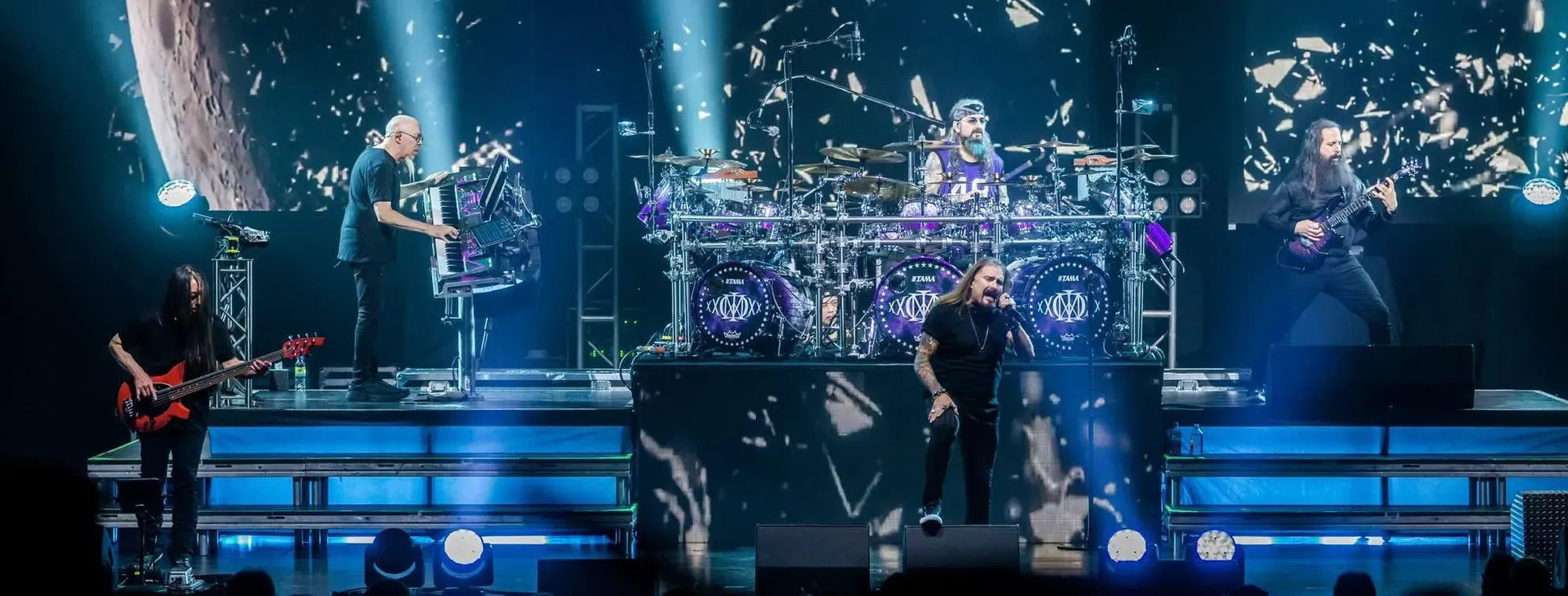
Dream Theater are undoubtedly musical gods at their instruments. Nevertheless, they always have fun with hard riffs as well, which they clearly prove with their new album “Black Clouds & Silver Linings”. Before the concert in Wettingen, Switzerland, a good-humored John Petrucci told us about the making of the album, his secret as a guitarist and why you only hear the bass so rarely.
Have you already written the setlist for tonight, or do you do it directly before the concert?
The setlist is already written. Mike writes the setlists, and he always does that a week or at least a couple of days before the concerts.
On the last concerts of the European tour you played only one song from the new album, “A Rite Of Passage”. In the meantime the album is on sale. Will you therefore play more new material?
Yes, we will. We will add another new song to the program, probably not yet for the next concert, but certainly for the one after next. And then when we tour the U.S. starting in July, we’ll add a few more.
There are a lot of hard metal riffs on the new album. Have you been influenced by certain bands?
It may sound like a cliché, but for me it’s always the influence of Metallica. I just love Hetfield’s style and the way he plays. For sure bands like Megadeth or Sabbath and all those things were also important. When I write those kind of riffs, it always goes back to that for me.
How does a typical Dream Theater album come together?
Usually we all meet in the studio, carry our equipment in and set it up. We kind of move in there and then we all live in the city where we’re recording. Then we write for a couple of months. Usually we don’t write the stuff at home and then bring it in. Sometimes, like on “Wither,” that’s the case, but the majority of the songs we all work out together. We jam and construct the songs as we go, like building a house. We create the foundation, record the music, write the lyrics, record the vocals, and mix the whole thing. All in all, it’s a process of a few months.
To the outside world, you and Mike seem to be the bosses in Dream Theater. What part do the other band members play in composing?
The songwriting itself is mostly up to Jordan, Mike and myself. We’re all always there though, including John, but he’s been pretty quiet lately. He hasn’t contributed as much to the new album in that regard. When we were younger, he played and said more. So in general it’s Mike, Jordan and myself doing the dirty work. Ha ha...
What’s your secret to being a guitar player? How much of it is practicing and technique, and how much of it is feeling and inspiration?
I think with any instrument you play, there has to be a good balance. The more you can do on your instrument, the more you can express what you hear in your head. If you hear something that’s very complex, or something that’s growing that you can build on, you want to be able to play that. It’s like a classical musician. To be able to play a complete symphony, you have to be able to play passages that are very complicated and fast, but also the parts that are very beautiful and emotional. You have to be able to do both. That’s very important.
What do you enjoy more? Complex solos or straight metal riffs?
They’re both fun, each in its own way. Playing complicated solos is always a challenge. It’s almost a bit like sports, gymnastics or something. You want to try to get the highest score. On the other hand, we are a hard rock band, metal band, rock ‘n roll band, whatever you want to call it. Turning up the amp and playing, that’s awesome, nothing beats that.
Why is the bass so rarely heard with you guys?
Do you think that’s the same on the new album? I thought when we mixed the record that we specifically brought the bass more up front overall. Compared to our previous albums, we consciously worked on bringing the bass forward, bringing its energy. Didn’t you feel that way?
Actually, no. On all your albums, you really only hear the bass when it’s playing alone or only together with the drums. But when there’s also guitar and keyboards, it gets lost.
It’s probably because we all play the same thing on a lot of the riffs and lines. So maybe the bass kind of goes into the overall texture, or at least it doesn’t stand out from the other instruments. Do you have the special edition with the cover songs?
No...
There’s a cover of a King Crimson song. And there the bass sounds fabulous. It really stands out there.
Okay, I definitely have to listen to that. In the fall you will be back in Europe with the “Progressive Nation” tour. Will you possibly play Mike’s 12-step suite in one piece?
We’ll do that at some point, but probably not on the tour in the fall. We’ll probably wait a little bit to do that.
So is that really in the works?
Yeah, it definitely needs to be done at some point. Ha ha...
Original text
Interview: 2009-07-06 Dream Theater
by Jan Westenfelder
Dream Theater sind zweifellos musikalische Götter an ihren Instrumenten. Trotzdem haben sie auch immer wieder Spaß an harten Riffs, was sie mit ihrem neuen Album „Black Clouds & Silver Linings“ deutlich unter Beweis stellen. Vor dem Konzert im schweizerischen Wettingen gab uns ein gut gelaunter John Petrucci Auskunft über die Entstehung des Albums, sein Geheimnis als Gitarrist und darüber, warum man den Bass nur so selten hört.
Habt ihr die Setlist für heute Abend schon geschrieben, oder macht ihr das direkt vor dem Konzert?
Die Setlist steht schon. Mike schreibt die Setlists, und das macht er immer schon eine Woche oder mindestens ein paar Tage vor den Konzerten.
Auf den vergangenen Konzerten der Europa-Tournee habt ihr mit „A Rite Of Passage“ nur einen Song vom neuen Album gespielt. Mittlerweile ist das Album ja im Handel. Werdet ihr daher mehr neues Material spielen?
Ja, das werden wir. Wir werden einen weiteren neuen Song ins Programm aufnehmen, wahrscheinlich noch nicht für das nächste Konzert, aber sicherlich für das übernächste. Und wenn wir dann ab Juli in den USA touren, kommen noch ein paar weitere hinzu.
Auf dem neuen Album gibt es auffällig viele harte Metal-Riffs zu hören. Seid ihr von bestimmten Bands beeinflusst worden?
Es mag wie ein Klischee klingen, aber bei mir ist das immer der Einfluss von Metallica. Ich liebe einfach Hetfields Stil und die Art und Weise, wie er spielt. Sicher waren auch noch Bands wie Megadeth oder Sabbath und all diese Sachen wichtig. Wenn ich diese Art von Riffs schreibe, geht das für mich immer darauf zurück.
Wie entsteht ein typisches Dream Theater-Album?
Normalerweise treffen wir uns alle im Studio, tragen unser Equipment rein und stellen es auf. Wir ziehen dort quasi ein und leben dann auch alle in der Stadt, in der wir aufnehmen. Dann schreiben wir ein paar Monate lang. Normalerweise schreiben wir die Sachen nicht zu Hause und bringen sie dann mit. Manchmal, wie etwa bei „Wither“, ist das zwar der Fall, aber den Großteil der Songs erarbeiten wir alle zusammen. Wir jammen und konstruieren die Songs nach und nach, wie wenn man ein Haus baut. Wir erstellen das Fundament, nehmen die Musik auf, schreiben die Texte, nehmen die Vocals auf und mischen das Ganze ab. Insgesamt ist das ein Prozess von ein paar Monaten.
Nach außen hin scheinen du und Mike die Chefs bei Dream Theater zu sein. Welchen Anteil haben die anderen Band-Mitglieder am Komponieren?
Das Songwriting selbst liegt vor allem bei Jordan, Mike und mir. Wir sind aber immer alle da, auch John, aber in letzter Zeit ist er ziemlich ruhig. Er hat in dieser Hinsicht nicht so viel zum neuen Album beigetragen. Als wir noch jünger waren, hat er mehr gespielt und gesagt. Generell sind es also Mike, Jordan und ich, die die Drecksarbeit übernehmen. Ha ha…
Was ist dein Geheimnis als Gitarrist? Wie groß ist der Anteil von Üben und Technik, wie groß der von Feeling und Inspiration?
Ich glaube, bei jedem Instrument, das man spielt, muss es eine gute Balance geben. Je mehr man auf seinem Instrument tun kann, desto mehr kann man ausdrücken, was man in seinem Kopf hört. Wenn du etwas hörst, das sehr komplex ist, oder etwas, das wächst, auf dem man aufbauen kann, dann willst du im Stande sein, das zu spielen. Das ist wie bei einem klassischen Musiker. Um eine komplette Symphonie spielen zu können, muss er Passagen beherrschen, die sehr kompliziert und schnell sind, aber auch die Teile, die sehr schön und emotional sind. Du musst beides können. Das ist sehr wichtig.
Was macht dir mehr Spaß? Komplexe Soli oder straighte Metal-Riffs?
Das macht beides Spaß, und zwar jeweils auf seine eigene Art und Weise. Komplizierte Soli zu spielen, ist immer eine Herausforderung. Es ist fast ein bisschen wie Sport, Turnen oder so etwas. Man möchte versuchen, die höchste Punktzahl zu erreichen. Auf der anderen Seite sind wir eine Hard Rock-Band, Metal-Band, Rock ´n Roll-Band, wie immer man das nennen möchte. Den Verstärker aufzudrehen und zu spielen, das ist fantastisch, da geht nichts drüber.
Warum hört man den Bass bei euch so selten?
Findest du, dass das auf dem neuen Album auch so ist? Ich dachte, als wir die Platte abgemischt haben, dass wir speziell den Bass insgesamt gesehen mehr nach vorne gebracht hätten. Verglichen mit unseren vorigen Alben haben wir bewusst daran gearbeitet, den Bass nach vorne zu bringen, seine Energie zu transportieren. Hast du das nicht so empfunden?
Eigentlich nicht. Auf all euren Alben hört man den Bass eigentlich nur, wenn er alleine oder nur zusammen mit den Drums spielt. Aber wenn auch Gitarre und Keyboards zu hören sind, geht er unter.
Wahrscheinlich ist das so, weil wir bei vielen Riffs und Linien alle das gleiche spielen. Vielleicht geht der Bass dann irgendwie ins Gesamtgefüge ein, oder zumindest hebt er sich nicht von den anderen Instrumenten ab. Hast du die Special Edition mit den Cover-Songs?
Nein…
Da gibt es ein Cover eines King Crimson-Stücks. Und dort klingt der Bass sagenhaft. Dort hebt er sich wirklich ab.
Okay, das muss ich mir definitiv anhören. Im Herbst werdet ihr wieder in Europa mit der „Progressive Nation“-Tour unterwegs sein. Werdet ihr da eventuell Mikes 12-Stufen-Suite am Stück spielen?
Das werden wir irgendwann mal machen, aber vermutlich nicht auf der Tour im Herbst. Wir werden wahrscheinlich noch ein wenig damit warten.
Also ist das wirklich in Planung?
Ja, das muss definitiv mal gemacht werden. Ha ha…