

Originally published in Jazz and Rock.com · May 2007
James LaBrie: The power of our music lies in its complexity
InterviewTranslatedJames LaBrie14 min read
Translated from the original language with DeepL, so the wording may differ from what was actually said.
Dylan Cem Akalin
May 1, 2007
They know no musical boundaries. They have consistently expanded the dimensions of progressive rock since the late 80s. And so the band Dream Theater is considered today as the most famous representative of this music genre. The album “Images And Words”, released in 1992, is the best-selling prog rock album. The quintet from New York is also considered one of the most impressive live bands with extremely virtuoso musicians who seem to effortlessly incorporate quotes from the entire history of rock and pop into their playing. James LaBrie is the group’s frontman and lead singer. Cem Akalin spoke with him.
Hi James. You’ve been using your middle name since you joined the band in 1992 because the keyboard player back then was also named Kevin. So, should I call you Kevin instead?
LaBrie: No, James is fine.
You were born in Penetanguishene...
LaBrie: Yeah. That’s Indian for “place of rolling white sand.”
How does a boy from a small town in Ontario, Canada, end up training in classical singing? You even trained as an opera singer.
LaBrie: I went to Toronto when I was 18 and had lessons with a lady named Rosemary Burns. I wanted to get more out of my voice. I was all about the techniques.
Did you sing opera as well?
LaBrie: Not in public concerts. Only privately. But in 2002, I started taking lessons again with opera singer Victoria Thompson.
For your “three tenors project”?
LaBrie: Oh, that’s a really great project. It’s called “True Symphonic Rockestra,” and we recorded it in Krasnodar in Russia. But the album is not out yet. We recorded a kind of ‘best of’ of the pieces that the three tenors Luciano Pavarotti, Placido Domingo and José Carreras sang – but as a rock version. So, for example, (singing) “O sole mio” comes across like a version of Fear Factory. But we didn’t want to go from one extreme to the other. It’s already very balanced.
Who’s involved in that?
LaBrie: Dirk Ulrich from Germany is the producer. The other two tenors are Thomas Dewald and Vladimir Grishko. Thomas is a professor of voice in Mainz, and he’s fantastic, an insane singer and a nice guy. And Vladimir, too. We had a lot of fun together. Now we are negotiating with some labels.
With your solo album “Elements of Persuasion” and the new Dream Theater CD “Systematic Chaos” (release June 1), I have the feeling that your voice is back in full force. Am I right?
LaBrie: Oh, you know about my...
Yeah, you had food poisoning in Cuba a few years ago, and as a result your vocal cords were damaged.
LaBrie: Yeah, I went to a lot of specialists, and they all told me that it would take a long time to get my full vocal range back. That was part of the reason I went to Victoria Thompson five years ago. Because I could feel that my voice, that some of the power was coming back. So I said to myself, you’ve got to get back to training and doing something for your voice.
“Systematic Chaos” is much darker than the last DT album. Does that have to do with the events of the last years?
LaBrie: Yes, that’s right, it’s bleak in parts.
Let’s talk about 9/11.
LaBrie: Sure.
You were in New York on that day six years ago. How did you experience that day?
LaBrie: It was horrible. I had flown to New York the night before. It was surreal, unbelievable what happened. A friend of mine, our tour manager Bill Barclay, was also just in town and had met with Meatloaf. He called me and said, “My God, you see what happened there”? The whole city was... We were walking down Fifth Avenue. There were no cars driving. No people on the streets, like everybody had fled. We were just on Canal Street. That’s about half a mile from Ground Zero. There was incredible heat there! All this dust in the air. Just unbelievable.
And on this day of all days, your album “Live Scenes From New York” was released. On the cover a burning apple with the Twin Towers in flames.
LaBrie: We were totally shocked. No one could have predicted, no one could have even guessed that something like this could really happen. We immediately pulled the album from circulation. Out of respect for the victims, we had to do that. It then came out with a different cover.
Did that influence your music in any way?
LaBrie: No, 9/11 had not affected us musically.
What about “Prophets of War” on the new album?
LaBrie: It has to do with what’s going on in the world right now. It’s about all this misdirection and deception that ultimately led to the Iraq war. We’re still in America, after all, trying to unravel all these entanglements. I was inspired in writing the lyrics to the song by a book by former American diplomat Joseph Wilson. His wife, Valerie Plame, was in the CIA, and she was framed by her own government. And it was only because the government was upset with her husband. He had determined on behalf of the government that the accusations that Iraq had bought uranium in Nigeria were based on forged documents, which he had made public. As a result, various media outlets close to President Bush were informed about his wife’s intelligence activities.
Why did you raise the issue?
LaBrie: What “Prophets of War” is also about for me is that we as a people always have to question what the politicians are telling us. We need to resolve our differences with others in a different way than war. Above all, we have to show respect for other cultures, we have to try to understand other religions, accept other people and accept them as they are without trying to change them.
“Systematic Chaos” is once again very diverse. “Forsaken” could even be on the radio. Is there maybe a single release as well?
LaBrie: We do indeed have a single out, which we shot a video for last week in New York. For Constant Motion.
That track is heavy.
LaBrie: Very heavy, aggressive, full of power. We wanted that track because it shows where we’re at musically right now. The album is overall more aggressive, heavier, but still balanced.
There are also emotional ballads again.
LaBrie: Yeah, emotion is in there, and yet you find progressive and heavy metal elements in there. We have all kinds of elements in there to bring a lot of character and dynamics to the album, and it allows me as a singer a lot of room to express myself. But you’re right: Forsaken will be our second single.
You play with extraordinary virtuosity, technically just perfect. The compositions are sophisticated and very demanding. Nevertheless, there is a lot of feeling in it. What is the secret?
LaBrie: Everyone in the band has always listened to a lot of music since childhood. And we still do. We listen to a lot and very different things. Including a lot of pop and mainstream...
You even covered an Elton John song once.
LaBrie: ...heavy metal, fusion and classical. And it all flows through us into the music we play. I think the secret to our music is that we’re not entrenched, that we’re not sworn to one style, one genre. The power of our music lies in its complexity. We do not repeat ourselves. We are not a one-dimensional band. That would be much too boring for us within time. These many influences allow us to breathe a lot of soul and power into the pieces, despite the technical finesse. That’s what makes Dream Theater so unique.
Which CD is currently in your player?
LaBrie: The new Porcupine Tree. It’s really cool. And System of a Down’s “Mezmerized.” That’s what my son is really into right now. That’s his favorite band.
How old is he?
LaBrie: Nine. He’s really, really into music.
You’re coming to Bonn on June 16. Is there already a setlist?
LaBrie: Mike (Portnoy, drummer) has been writing the set lists since the band started. So I know roughly what’s coming.
You’ve played quite a few cover nights. Under the title “An Evening with” you played the entire Made in Japan album by Deep Purple, Master of Puppets by Metallica, Dark Side of The Moon by Pink Floyd. Will there be the same in Bonn?
LaBrie: I don’t think so. We only play covers on very special nights and special venues, like “Made in Japan” in Tokyo.
How would you describe Dream Theater concerts to someone who doesn’t know the band?
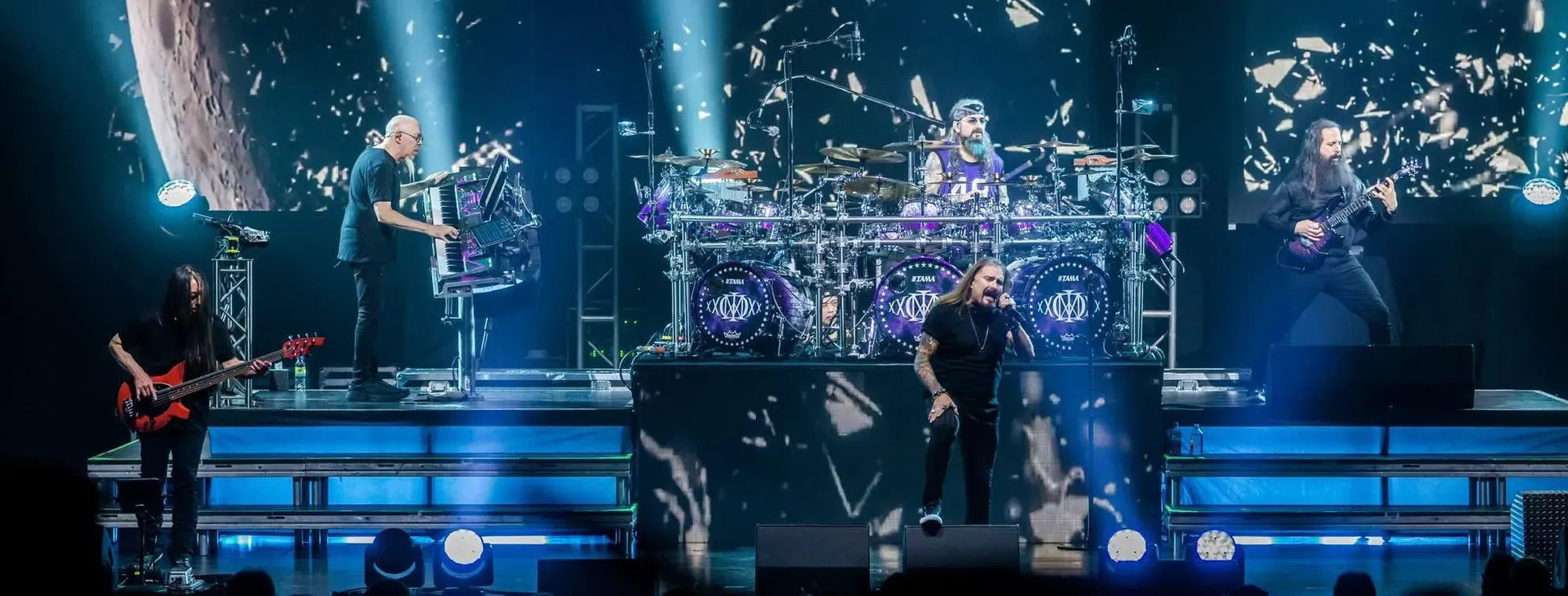
LaBrie: Acoustically, we have a really big sound. We play a different set list every night. It keeps our sound fresh and alive. It’s good for the fans and it’s good for the band. If we played the same songs over and over in the same order, we would sound like machines. But our audience can also expect something visually. With our pictures and the lightshow our concerts are a very intense experience.
You are known for your extremely long concerts. The fans love you because you give everything. Absolute commitment. Mike Portnoy, the drummer, even had a breakdown once in New York.
LaBrie: That was during the recording of the DVD “Live Scenes From New York”. He directed, organized, set up the shoot and was really busy for many days. The day of the concert he hardly ate, hardly drank, and after the show he collapsed. The body was dehydrated.
Three-, four-hour concerts are totally unusual in times when many artists are hardly on stage for an hour. You could also earn your money more simply.
LaBrie: Well, it’s the nature of our music. A lot of our songs are very long. A one-hour show would be completely impossible for us. We want to give our fans something that is appropriate. We want to give them something special.
Original text
James LaBrie: Die Kraft unserer Musik liegt in der Vielschichtigkeit
Dylan Cem Akalin
1. Mai 2007
Sie kennen keine musikalischen Grenzen. Die Dimensionen des Progressive Rock haben sie seit Ende der 80er Jahre konsequent erweitert. Und so gilt die Band Dream Theater heute als die bekannteste Vertreterin dieser Musikrichtung. Das 1992 erschienene Album „Images And Words“ ist das meistverkaufte Prog-Rock-Album. Das Quintett aus New York gilt darüber hinaus als eine der beeindruckendsten Live-Bands mit überaus virtuosen Musikern, die scheinbar mühelos Zitate aus der gesamten Rock- und Pop-Geschichte in ihr Spiel einbauen. James LaBrie ist der Frontmann und Sänger der Gruppe. Mit ihm sprach Cem Akalin.
Hi James. Du benutzt seit Eintritt in die Band 1992 deinen zweiten Vornamen, weil der Keyboarder damals auch Kevin hieß. Also, soll ich dich lieber Kevin nennen?
LaBrie: Nein, James ist in Ordnung.
Du bist geboren in Penetanguishene …
LaBrie: Ja. Das ist indianisch und bedeutet „Platz des rollenden weißen Sandes“.
Wie kommt ein Junge aus einer Kleinstadt in Ontario/Kanada dazu, eine klassische Gesangsausbildung zu machen? Du hast sogar eine Ausbildung zum Opernsänger.
LaBrie: Ich ging mit 18 nach Toronto und hatte Unterricht bei einer Dame namens Rosemary Burns. Ich wollte mehr aus meiner Stimme herausholen. Mir ging es um die Techniken.
Hast du auch Opern gesungen?
LaBrie: Nicht bei öffentlichen Konzerten. Nur privat. Aber 2002 habe ich bei der Opernsängerin Victoria Thompson wieder begonnen Unterricht zu nehmen.
Für dein „3-Tenöre-Projekt“?
LaBrie: Oh, das ist ein wirklich tolles Projekt. Es nennt sich „True Symphonic Rockestra“, und wir haben es in Krasnodar in Russland aufgenommen. Aber das Album ist noch nicht veröffentlicht. Wir haben eine Art Best off der Stücke aufgenommen, die die drei Tenöre Luciano Pavarotti, Placido Domingo und José Carreras gesungen haben – aber als rockige Version. Also zum Beispiel (singt) „O sole mio“ kommt wie eine Version von Fear Factory. Aber wir wollten nicht von einem Extrem ins andere verfallen. Es ist schon sehr ausgewogen.
Wer macht da mit?
LaBrie: Dirk Ulrich aus Deutschland ist der Produzent. Die anderen beiden Tenöre sind Thomas Dewald und Vladimir Grishko. Thomas ist Professor für Gesang in Mainz, und er ist fantastisch, ein wahnsinniger Sänger und ein netter Kerl. Und auch Vladimir. Wir hatten eine Menge Spaß zusammen. Nun verhandeln wir mit einigen Labels.
Bei deinem Solo-Album „Elements of Persuasion“ und der neuen Dream Theater-CD „Systematic Chaos“ (VÖ 1. Juni) habe ich das Gefühl, dass deine Stimme wieder voll da ist. Habe ich Recht?
LaBrie: Oh, du weißt von meiner…
Ja, du hattest vor einigen Jahren eine Lebensmittelvergiftung auf Kuba, und in der Folge waren deine Stimmbänder geschädigt.
LaBrie: Ja, ich war bei vielen Spezialisten, und alle haben mir gesagt, dass das lange dauern würde, bis ich wieder mein volles Stimmvolumen bekommen würde. Das war mit ein Grund, warum ich vor fünf Jahren zu Victoria Thompson gegangen bin. Weil ich spüren konnte, dass meine Stimme, dass einiges von der Kraft wieder zurückkam. Also sagte ich mir: Du musst wieder trainieren und etwas für deine Stimme tun.
„Systematic Chaos“ ist sehr viel düsterer als die letzten DT-Alben. Hat das mit den Ereignissen der letzten Jahre zu tun?
LaBrie: Ja, stimmt, sie ist teilweise düster.
Lass uns über den 11. September reden.
LaBrie: Klar.
Du warst an diesem Tag vor sechs Jahren in New York. Wie hast du diesen Tag erlebt?
LaBrie: Es war schrecklich. Ich war am Abend zuvor nach New York geflogen. Es war surreal, unglaublich was da passiert ist. Ein Freund von mir, unser Tourmanager Bill Barclay, war auch gerade in der Stadt und hatte sich mit Meatloaf getroffen. Er rief mich an und sagte: Mein Gott, siehst du, was da passiert ist? Die ganze Stadt war … Wir liefen die Fifth Avenue runter. Da fuhren keine Autos. Keine Menschen auf den Straßen, Als wären alle geflohen. Wir waren gerade an der Canal Street. Das ist etwa eine halbe Meile von Ground Zero entfernt. Dort herrschte eine unglaubliche Hitze! Dieser ganze Staub in der Luft. Einfach unglaublich.
Und ausgerechnet an diesem Tag erschien Euer Album „Live Scenes From New York“. Auf dem Cover ein brennender Apfel mit den Twin Towers in Flammen.
LaBrie: Wir waren total geschockt. Niemand konnte voraussagen, niemand konnte auch nur erahnen, dass so etwas wirklich einmal geschehen könnte. Wir haben sofort das Album aus dem Verkehr gezogen. Schon aus Respekt vor den Opfern, mussten wir das tun. Es kam dann mit einem anderen Cover raus.
Hat das Eure Musik irgendwie beeinflusst?
LaBrie: Nein, 9/11 hatte uns musikalisch nicht geprägt.
Was ist mit „Prophets of War“ auf dem neuen Album?
LaBrie: Das hat mit dem zu tun, was sich zurzeit in der Welt tut. Es geht um diese ganzen Irreführungen und Betrügereien, die letztendlich zum Irak-Krieg geführt haben. Wir sind in America ja immer noch dabei, diese ganzen Verwicklungen aufzulösen. Ich bin bei dem Text zu dem Song von einem Buch des früheren amerikanischen Diplomaten Joseph Wilson inspiriert worden. Seine Frau, Valerie Plame, war bei der CIA, und sie wurde von ihrer eigenen Regierung reingelegt. Und das nur, weil die Regierung sich über ihren Mann aufgeregt hatte. Der hatte im Auftrag der Regierung festgestellt, dass die Vorwürfe, der Irak hätte in Nigeria Uran gekauft, auf gefälschten Dokumenten beruhten, was er ja auch öffentlich gemacht hatte. Daraufhin wurden verschiedene Medien aus dem Umfeld von Präsident Bush über die Geheimdiensttätigkeit seiner Frau informiert.
Warum hast du das Thema aufgegriffen?
LaBrie: Worum es mir bei „Prophets of War“ auch geht, ist, dass wir als Volk immer hinterfragen müssen, was uns die Politiker da gerade erzählen. Wir müssen unsere Differenzen mit anderen anders lösen als mit Krieg. Vor allem muss man anderen Kulturen Respekt entgegenbringen, man muss versuchen, andere Religionen zu verstehen, andere Menschen zu akzeptieren und zwar so, wie sie sind, ohne zu versuchen, sie ändern zu wollen.
„Systematic Chaos“ ist wieder einmal sehr abwechslungsreich. „Forsaken“ könnte sogar im Radio laufen. Gibt´s vielleicht auch eine Single-Auskopplung?
LaBrie: Wir haben in der Tat eine Single-Auskopplung, zu der wir letzte Woche in New York ein Video abgedreht haben. Zu Constant Motion.
Das Stück ist heavy.
LaBrie: Seeehr heavy, aggressiv, voller Power. Wir wollten dieses Stück, weil es zeigt, wo wir uns gerade musikalisch bewegen. Das Album ist insgesamt aggressiver, heftiger, aber trotzdem ausgewogen.
Es gibt auch wieder gefühlvolle Balladen.
LaBrie: Ja, Emotionen sind drin, und doch findet du da Progressiv- und Heavy-Metal-Elemente drin. Wir haben alle möglichen Elemente drin, um viel Charakter und Dynamik ins Album zu bringen, und es erlaubt mir als Sänger viel Raum zum Ausdruck. Aber du hast recht: Forsaken wird unsere zweite Single.
Ihr spielt mit außergewöhnlicher Virtuosität, technisch geradezu perfekt. Die Kompositionen sind ausgefeilt und sehr anspruchsvoll. Trotzdem steckt eine Menge Gefühl drin. Was ist das Geheimnis?
LaBrie: Jeder in der Band hat seit seiner Kindheit immer sehr viel Musik gehört. Und das tun wir immer noch. Wir hören viel und sehr unterschiedliche Dinge. Darunter auch viel Pop und Mainstream, …
Ihr habt sogar mal ein Elton-John-Stück gecovert.
LaBrie: …Heavy-Metal, Fusion und Klassik. Und das alles fließt durch uns in die Musik, die wir spielen. Ich glaube, das Geheimnis unserer Musik ist, dass wir nicht eingefahren sind, das wir nicht eingeschworen sind auf einen Stil, ein Genre. Die Kraft unserer Musik liegt in der Vielschichtigkeit. Wir pflegen uns nicht zu wiederholen. Wir sind keine eindimensionale Band. Das wäre uns mit der Zeit auch viel zu langweilig. Diese vielen Einflüsse erlauben uns eben, den Stücken trotz der technischen Finessen sehr viel Soul und Kraft einzuhauchen. Das ist es, was Dream Theater so einzigartig macht.
Welche CD liegt derzeit in Deinem Player?
LaBrie: Die neue Porcupine Tree. Die ist wirklich cool. Und System of a Downs „Mezmerized“. Das ist das, worauf mein Sohn im Moment total abfährt. Das ist seine Lieblingsband.
Wie alt ist er?
LaBrie: Neun. Er ist wirklich sehr, sehr an Musik interessiert.
Am 16. Juni kommt Ihr nach Bonn. Gibt es schon eine Setlist?
LaBrie: Mike (Portnoy, Schlagzeuger) schreibt die Setlisten seit, seit es die Band gibt. So ungefähr weiß ich was kommt.
Ihr habt schon so manche Cover-Abende gespielt. Unter dem Titel „An Evening with“ habt Ihr in Japan das gesamte Made in Japan Album von Deep Purple gespielt, Master of Puppets von Metallica, Dark Side of The Moon von Pink Floyd. Wird es das in Bonn auch geben?
LaBrie: Ich glaube nicht. Wir spielen Covers nur an ganz speziellen Abenden und spieziellen Orten, so wie „Made in Japan“ in Tokio.
Wie würdest du Dream Theater-Konzerte jemandem beschreiben, der die Band nicht kennt?
LaBrie: Akustisch haben wir einen wirklich großen Sound. Wir spielen jeden Abend eine andere Setliste. Das hält unserer Sound frisch und lebendig. Das ist gut für die Fans und für die Band. Wenn wir immer und immer wieder dieselben Stücke in der selben Reihenfolgen spielen würden, würden wir klingen wie Maschinen. Unsere Zuschauer können aber auch visuell etwas erwarten. Mit unseren Bildern und der Lightshow sind unsere Konzerte ein sehr intensives Erlebnis.
Ihr seid bekannt für Eure extrem langen Konzerte. Die Fans lieben Euch, weil Ihr alles gebt. Absoluter Einsatz. Mike Portnoy, der Schlagzeuger, hatte in New York sogar mal einen Zusammenbruch.
LaBrie: Das war bei den Aufnahmen für die DVD „Live Scenes From New York“. Er hatte die Regie, die Organisation, und war wirklich. Er hatte die Regie, die Organisation, die Vorbereitungen für den Dreh, und war wirklich voll eingespannt, und das für viele Tage. Am Tag des Konzerts hat er kaum gegessen, kaum getrunken, und nach der Show ist er zusammengebrochen. Der Körper war ausgetrocknet.
Drei-, Vier-Stunden-Konzerte sind total ungewöhnlich in Zeiten, wo viele Künstler kaum eine Stunde auf der Bühne stehen. Ihr könntet Euer Geld auch einfacher verdienen.
LaBrie: Naja, das liegt in der Natur unserer Musik. Viele unserer Stücke sind sehr lang. Eine Ein-Stunden-Show wäre für uns völlig unmöglich. Wir wollen unseren Fan etwas geben, das angemessen ist. Wir wollen ihnen etwas Besonderes bieten.