

Originally published in Fireworks magazine 28 · July 2007
Organized Chaos
InterviewJames LaBrie19 min read
An interview with Dream Theater’s James LaBrie
by Phil Ashcroft
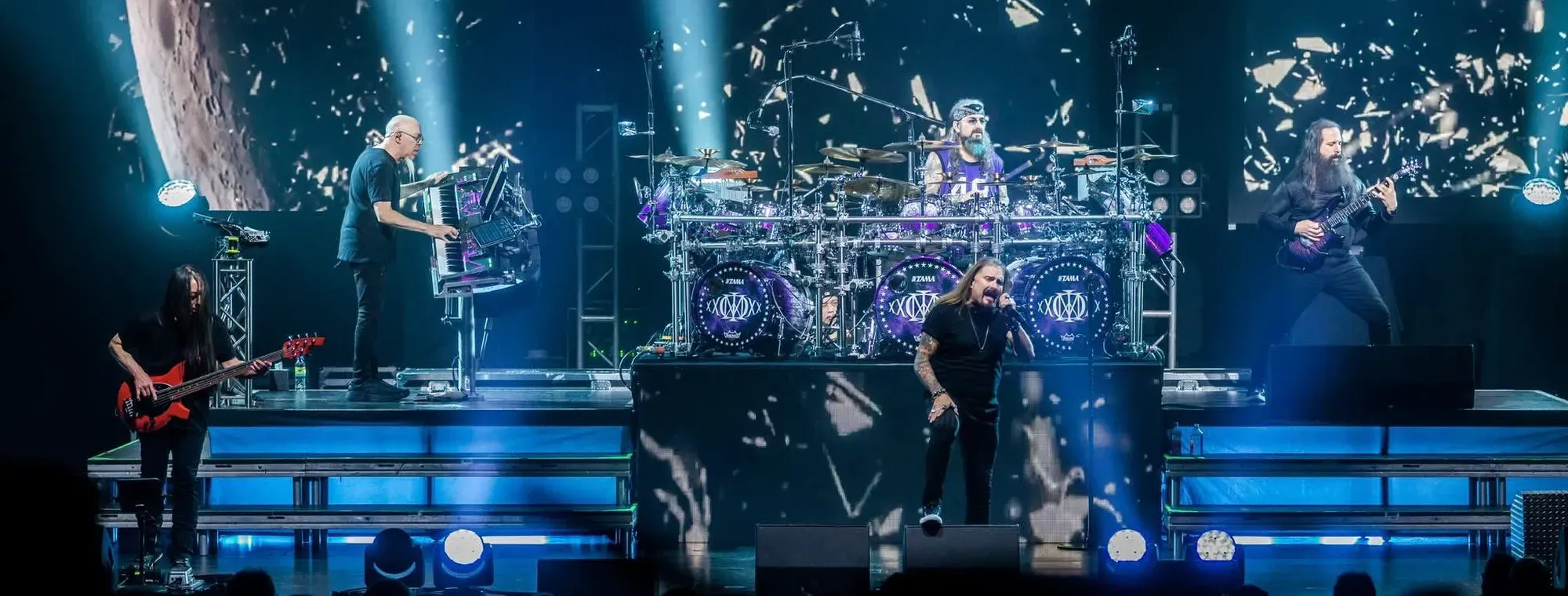
By combining the influences of several musical genres Dream Theater became the most influential and copied band of the last twenty years, each member (James LaBrie – vocals, Mike Portnoy – drums, John Petrucci – guitar, John Myung – bass and Jordan Rudess – keyboards) inspiring thousands of youngsters to take up learning a musical instrument. After fifteen years of recording albums for Atlantic Records the progressive metal giants have left the label for pastures new. With the new album ‘Systematic Chaos’ due for release through Roadrunner, and another long World Tour to follow – including a slot at this year’s Download festival – a particularly buoyant James LaBrie was in London to update us on current activities.
Why did you finance this recording yourselves?
We didn’t really. Well I guess we used our own money to get into the studio to do the writing sessions but then Roadrunner stepped in and it was all reimbursed. To get us in there at the beginning of September through until the end of February was pretty much on our buck, but we did that because we wanted to keep the momentum going. We had to visit all the labels that were interested in us at the time and we knew that eventually the money was going to come back to us, we knew that the label – whichever was the chosen one – would be picking up the tab (laughs).
Did the involvement of Derek Oliver as A&R man at Roadrunner have anything to do with your decision? (Ex-Kerrang! journalist Derek was the A&R man who signed them to Atlantic subsidiary Atco in 1992)
Well... no, I mean obviously there’s a history there with Derek Oliver, and the fact that he’s understood this band from the very beginning does help. I think that the reason it came down to Roadrunner was just because of their history and the kinds of bands that they’ve made successful, and their relationship with the bands. Their interaction with the artists on their roster has really impressed us for quite some time – they weren’t like a lot of the corporate juggernauts who just put things out, and if you have some kind of a buzz or a spin on things they’ll get behind it and try to make it as big as possible, but then it’s “good luck” when their next thing comes out. The deal with Roadrunner is that they’re still of the old mentality where there’s artist development and artist support and they’ve done wonders for a lot of their bands – I mean look what’s going on with Dragonforce right now, and what they’ve done with Slipknot and Nickelback and Stone Sour – they’re just a fantastic label. I think that was the deciding factor. With the internet you can do a lot of research on your own, and obviously with the people that surround us: management and lawyers, we were able to do some research on their infrastructure. and internationally it was extremely impressive. They’re really in constant communication with each other and they know what one another is doing, whereas our experience in the past has been with one office in Germany, one office in Australia and one office in South America, and they had no idea what either one of the others is doing. With Roadrunner it was just a really good organization that we thought would be exactly what this band needed.
‘Octavarium’ had some of the most straightforward songs you’ve ever done, ‘Systematic Chaos’ is the exact opposite isn’t it?
Well, I guess ‘Octavarium’ had a couple of songs that you could say were easily digestible. but at the same time we were also still maintaining that progressive heaviness that has come to be known as Dream Theater. Definitely on this album we’re more into the experimentation and the epic endurance, and definitely not following something that might be considered formulated, it’s a really intense endeavor on our part. I know it’s probably become cliched for most bands to say “It’s definitely the best album we’ve ever done!” – but I can positively say that ‘Systematic Chaos’ is our strongest material to date from Dream Theater. I think it’s because of the music and how it’s presented, and the elements – there’s a very strong balance that’s been maintained from the beginning until the end. It’s exciting, it’s dynamic, it’s atmospheric and moody – not that these elements haven’t existed on other albums. but I think the music on this album is just telling a completely different story.
Is that Mike Portnoy doing the processed vocal on ‘The Dark Eternal Night’?
Yeah. the interplay between him and myself, that’s Mike.
A while back Mike had said there would be a twenty-five minute track on the album, was ‘In The Presence Of Enemies’ Parts 1 & 2 originally meant to be all together and not split into two at the beginning and end?
No... that’s obviously the track he was talking about but it was always meant to be in two different parts. That is our twenty-five minute epic for this album.
The first single is going to be ‘Constant Motion’, why that and not something more commercial like ‘Forsaken’?
Just because the label and we ourselves, felt it was an extraordinarily strong track musically and vocally, and we thought we’d come out with a bang and hit them over the head. For so long the band has always been perceived as a progressive, heavy metal-ish kind of band, and unfortunately too many people who are ignorant or unaware of the actual music history of Dream Theater. will first and foremost refer to us as ‘progressive’, and can’t see any further than that. If they were to take the time to listen to some Dream Theater music they might realise that it’s not just that element that’s involved. Like you said, there’s a commercial side to Dream Theater too, or a more straight-forward, even pop influenced side to Dream Theater as well as the progressive and the heavy rock side – and even jazz and classical influences thrown in there. With that track we just thought it was a real heavy, great sounding song and it would make for a great video – so we were all keen on making that our first single on the merits of the music within that song.
You worked with Paul Northfield this time, how was that?
He’s great! The guy’s been around for a long time – you name it, he’s worked with them – a lot of great artists. and especially bands who are similar to us like Rush and Queensrÿche and so on. He had a complete understanding of the kind of band that we are and what we’re trying to achieve, and what the writing process involves. The recording process is pretty intense, and it’s pretty long and can sometimes be arduous, but at the end of the day we got to what we were trying to achieve. Because he wasn’t producing this time – he was mainly the engineer, and he mixed the album as well – he was able to sit back, and he understands this kind of music and the direction in which it goes, and he was really able to harness it as an engineer and really mix it properly. His experience really did come in quite remarkably through the entire process.
You mentioned the writing and recording. Has that process changed much over the years?
No, I think it’s pretty much the same. The five of us are in the studio and ideas are thrown around about the direction that it needs to go – that’s usually talked about, along with what we feel is influencing us and what should be the musical statement currently for us. Then I think it’s a matter of pinpointing what that statement needs to be and then having a starting point, be it an idea or a riff that happened at a soundcheck, or something fresh that’s being experimented with right there in the writing session. Since ‘Train Of Thought’ I’ve been there from the beginning of the writing sessions to the end of recording, whereas prior to that I would only come in when it came time to start constructing vocal melodies and then start my input for whatever lyrics I wanted to do. Now it’s all of us being there from beginning to end and communicating all the way through – what we like and what we don’t like – and trying to guide it to what is the end result.
I read on the internet that you advertised for fans to come in and do some chant vocals. Tell me more.
Yes, absolutely. It was for the song ‘Prophets Of War’. What was originally going to happen when I was recording the vocals for that song – it was Mike, John Petrucci and I in the room and Mike said “I was thinking that in this one particular section, some words being chanted. Now the three of us can go in there and we can multi-layer it, because of the wonders of modern technology – or my other idea is that we can bring in some fans and let them be part of it.” I was like “That’s great, let’s go for it!” So we did, we put up a notice through the internet – the internet being a wonderful thing where you can communicate with thousands of people immediately and instantly – and I think about four hundred people that lived close by showed up at the studio. We could only accommodate about sixty people, but it was great – they went in there excited and they did a great job – it was very cool.
The ‘Score’ DVD & CD wrapped up the first twenty years of the band, now you’re on a new label do you feel this is the start of a new chapter?
Absolutely it is! We already feel the label’s involvement and feel the difference – and like I said earlier, they’re really a label who are doing things like labels used to do years ago. They really know the artists, and when you sign you get the impression that they really want to know the band and the music, and sincerely be able to support it and do something for it. Everything that Roadrunner said to us when we initially met with them – the things they want to do for the band, and in fact the things they would have done for the band had they been involved with us many years ago – which of course wasn’t possible because of our contractual obligations to Atlantic – but they said they would have done many things differently – they would have seen us on a completely different level. They just basically told us what they want to do with the band and how they’re going to give us that continued support – from the very beginning even before the album comes out, to when we’re done touring in support of that album and even after that – they’re already delivering everything that they said they would. So far it’s everything we were hoping for and it is a reality.
Can you explain the fact that you’ve managed to expand your fan base up to where you are now without having any major media coverage or promotion?
Well... I think it’s the kind of band we are. Obviously the music is the kind of music that once it attracts somebody who’s a true believer and does become passionate about our music, then they stay with us forever – like a Rush fan or a fan of Queen or Genesis or Yes or Pink Floyd. Once you harness these listeners and they become your fans they are dedicated, they are with you from that moment on until you call it quits, and I think that’s a big reason why we’ve been able to do what we’ve done until this point. As far as continuing to attract more people – our sales have been strong and they’ve continued strong as far as units being sold, and live we just get bigger and bigger because visually and in terms of the audio at our shows, I think we’re really powerful in the live environment. So any new listeners keeps it expanding because we don’t lose many along the way, and the number of people showing up at the gigs just keeps expanding. I guess it’s all these things along with the style of music we play that has led to an upswing and a continued climb.
Tell me about the documentary that’s going to be with the limited edition of the CD.
It’s all basically behind the scenes stuff through the whole recording process from being in the room constructing the songs and writing the songs, to recording the songs. There are little snippets here and there. I haven’t watched it yet but Mike put it all together and directed it and made it into what it is – right now I’m not allowed to tell you the exact details of it but I know that’s some of the things that are involved.
The artwork’s quite interesting again isn’t it?
Yeah, it’s Hugh Syme... I mean his works speak for themselves, but Mike worked very closely with Hugh, and Hugh has a very good understanding of the band’s visual aspects and was really able to create something that I think is excellent.
As your career goes on does it get harder to make an album that’s totally different from the others?
You know what? Knock on wood it just seems to happen, and there’s never been a lull or a writer’s block or a wall in front of us that we can’t seem to stride. We’ve always been able to be very productive and prolific – so far it hasn’t really been an obstacle in our way. It just seems to flow quite easily each and every time we go in, and like I said, it starts with talking about where we see it going and what we see this album has to be, and musically trying to convey those actual ideas and the direction becoming a reality.
As a singer, do you ever wish the band would cut down on the instrumental sections?
No... why would I do that? (laughs) You know what? That’s the thing that saves me when we’re doing three hour shows every night. That’s been a part of Dream Theater from day one, before I came into the band when ‘Images & Words’ was being done – that’s the kind of band it’s always been. Aside from the instrumental interludes and extravaganzas, I think the music itself – any vocalist would be thrilled to be able to sing around it because it allows you to be expressive in every way possible as a vocalist, just due to the nature and direction of the music. There are many different ways to convey and interpret and use your voice through different textures and inflexions, and tonalities, and characters. It’s the ultimate I think, and the music supports that.
You probably have the most fanatical fan base of any band out there, how do you feel about having every word you say in interviews discussed on dozens of message boards?
Well... it’s par for the course I guess, it’s always going to happen. They’re rabid for the information for what we’re doing currently and for what we’re going to be doing in the foreseeable future, and obviously they’re going to discuss it. The internet is an amazing vehicle for chat rooms and message boards to exist, and for fans to interact with one another. I think it’s great – for one thing it keeps us fresh within their thoughts and hearts – it’s not always going to be positive but you can’t satisfy every single individual and do the right thing for every one of them – but that’s all part of it – I think it’s good, it’s healthy and it’s great for the band.
And after the album comes the world tour. You’re taking other bands out this time instead of doing the 3 hour “An Evening With Dream Theater” shows.
Yes. It was just something we started to talk about when the last world tour was starting to wind down – we want to once again bring bands out with us and support some of the new and exciting bands, or even go out with some of the established bands. We’re in a position now where we can help other bands, just like we were helped in the past.
After 15 years of constant touring how do you feel about spending so much of your time away from home?
Well... obviously at the beginning it was a little easier to take because we all were married but nobody had kids. Since then we all have families and it’s a little harder – I guess there’s always something you do in life that you’re not too keen on, and for us it’s the travelling. We all thoroughly love being on stage and performing each and every night, and we love the writing process and recording process – all of that is what inspired us to begin with, but I think being separated from families and the cost of travelling – not in a monetary sense – is something we could all do without. I hope teleportation is here before we decide to retire – ha ha! I don’t know... it’s a hard thing to contend with and it’s a sacrifice, but it’s necessary and you learn to deal with it the best you can.
The last time I spoke to you was around the time of your last solo album ‘Elements Of Persuasion’, do you have any plans for your next one?
I’m talking about it right now. Myself and Matt Guillory (keyboards – ex-Dali’s Dilemma) and a couple of other people have been constructing songs and we love what’s there so far – a lot of it is already written – it’s just a question of when I can see myself doing one. I want it to be right, and just as good as ‘Elements...’ if not better – I just have to co-ordinate and fit the schedule into my Dream Theater world. We’re starting another world tour and it’s pretty hectic and very demanding in itself, so to try to fit in any solo endeavours is also taxing, so it has to be balanced. I should be able to shed some more light on that in the next few months.
On the solo tour you did in 2005 did you get any heat for refusing to play any Dream Theater songs?
No I didn’t. Maybe there were a couple of people going (adopts a pathetic voice) “I thought you were going to play just one Dream Theater song?”, but we tour enough and you should think about getting your fix then, you don’t necessarily need to hear it again from just me just because I’m the vocalist, because that’s a whole jukebox thing going on. Aside from a few people there was really none of that I had to contend with.
You’ve been singing exceptionally well for the last few years, do you still go to a vocal coach?
Yes! Victoria Thompson – who my daughter is actually studying with as well. I was the first one to be saying “Finally!” when my voice did come back to its older self, because for eight years there I was contending with a lot of vocal problems. It all comes from a vocal rupture I endured on December 30th 1994 – a date I always remember because it was just completely horrific for me. I was down in Cuba with food poisoning, and retching uncontrollably, and basically ripping my throat to put it in laymen’s terms. I had seen ear, nose and throat specialists – three of them – and they’d all told me that it was something that would heal, but it would be a long time coming. I guess you could say that from the very beginning of 1995 up until... probably 2002 is when I began to feel everything was coming together and I was starting to feel the power in my voice come back, and the range and the consistency was coming back. Also if I got sick when I was on the road I had to contend with what every singer does when they get sick – you have to concede some of the more, shall we say, operatic endeavouring. But yeah, I was really relieved that it came back because I was down in the dumps for quite some time, it was an extremely depressing time for me.
Were the band concerned about it?
Oh yeah, absolutely they were! First of all, they were all great in the sense that they all showed me unbelievable support, but they were really concerned for me. They were constantly asking me how I was and how I was handling it, and asking me if I could see myself coming out the other side. Ironically that didn’t even start to become part of a conversation until just before it started to turn around. In 2002 I decided to go back to studying again and hooking up with Victoria Thompson, and I said “This has been going on for quite some time. In your experience is there something I can do to get my voice back on its original path and back to its former self?”, and she said “Yeah, we’re just going to have to work on your technique and you’re going to have to really stay dedicated to doing these exercises – breathing and everything else involved – and you’ll get back that consistency and reliance”. But the band were very concerned. They were wondering how serious and how passionate I was, because when I say I was down, you have no idea how miserable I was. Thankfully they could see that I was really giving it my best to get back to where I was, and each and every one of them has commented that I was singing how I used to.
Just for my own curiosity as they’re a band I loved – tell me about your time with Coney Hatch in the 80’s.
Oh wow! Well... I was in a band called Trance in Toronto, and unbeknown to me Andy Curran and Steve Shelski were out in the audience one night. They heard me sing and contacted me – they had a drummer, not the original drummer but a guy called Paul Marangoni was playing for them at the time – so I went and I jammed with them. I was with them for almost a year and we demoed songs but basically nothing was really coming from it – we were out touring and playing a lot in the Northern states of Canada. Nothing was happening and I was 23 at the time and started to get a little impatient and had had enough, and they were getting a little impatient with my impatience, so it kind of came to a close.
Carl Dixon’s a good friend of mine and he said he had a hard time seeing you or Phil Naro singing his songs.
Yeah, I met Carl a few times and he was cool, but like you said, he really couldn’t handle seeing anyone else fronting the band. They eventually got the original line-up back together for a while but I think that’s the way they should have remained, but sometimes when a band seems to be spiraling out of control and there isn’t a unified direction then they think otherwise and start to change members around.
They’ve tried a few reunions in recent years but Andy Curran isn’t interested.
Yeah, Andy’s now working for Rush’s label, Anthem. He’s been there for quite some time. Let’s face it, I guess it comes to a point where – fortunately or unfortunately – he has a better gig now, and something that’s more stable and lucrative. Music’s always going to be in Andy’s blood, but at the same time he’s probably going to be very realistic about it. It was great while it lasted – I remember seeing them on tour with Judas Priest, but that was in another lifetime (laughs). I had a great time in that band and they still had a good following – that was in late ‘85 to ‘86, and in 1987 Winter Rose started.
And of course your partner in Winter Rose – Richard Chycki – has done a few interesting things recently.
Rich? Yes, I believe he just engineered the new Rush album and mixed it too, and also mixed their 30th Anniversary DVD in 5.1. He’s worked with a lot of great artists like Seal and Aerosmith and Pink – he’s very talented. Being a musician first – he’s a great guitar player – he has a great understanding of where things are going and that really helps in that position – but he has great ears. When he mixed my last solo album I remember telling him how I wanted it to sound, and when I went back to do the final tweaking I didn’t have to tweak too damn much – but he was right on it, he really understood where I wanted it to go and it came out great.
So, finally, good luck with the tour.
Yes, thanks. It should be interesting – like I said, there’s a rejuvenation of energy and belief and faith because of our new situation. It’s a new chapter in every respect and we’re really excited about it.