

Originally published in The Improper Bostonian · August 2005
Misfit Connection
InterviewJohn Petrucci3 min read
Dream Theater brings the hard side of progressive rock to Gigantour.
By Paul Robicheau
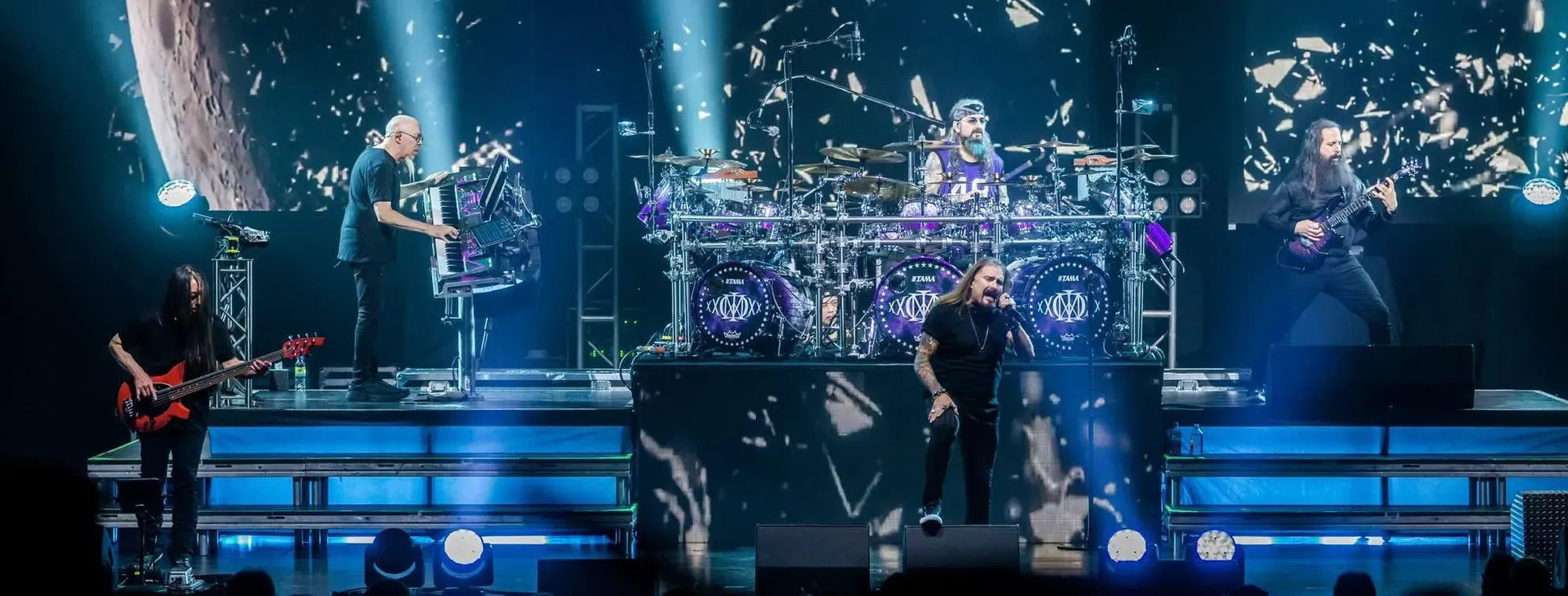
Dream Theater has lived a 20-year dream in the ether between progressive rock and metal. When guitarist John Petrucci and bassist John Myung started the group with drummer Mike Portnoy at Berklee College of Music in 1985, they were all fans of Rush, Yes and the harder-hitting Iron Maiden.
“When we got together to write music, it just came out as being this progressive music combined with heavy metal, and that has stayed true to this day,” Petrucci says. “Sonically, we’re able to fit into the metal scene. When it comes down to it, we’re not a ‘70s-style prog-rock band. We’ve always had a Metallica influence in the basis for our sound.”
So perhaps it should come as no surprise that Dream Theater has joined Megadeth, fronted by ex-Metallica guitarist Dave Mustaine, on the multiband Gigantour, invading the Bank of America Pavilion Aug. 26.
“We kinda fit in and we kinda don’t,” Petrucci says during the festival’s stop in Phoenix. “And to be honest, we’ve never really fit in, yet we fit in.”
Dream Theater also can sound more streamlined than most metal or progressive rock band, reflecting such added influences as Pink Floyd, Queensrÿche and even U2 and Coldplay. “That’s not what people would think when they hear us,” he says. “But rom our very first album, there’s always been a song or two that had that kind of influence.”
An example on Dream Theater’s new album Octavarium is the ballad “The Answer Lies Within,” for which Petrucci wrote lyrics about loneliness and hope. And even though the title track is 24 minutes long, the disc as a whole is focused on lyrics, penned by Portnoy and singer James LaBrie as well.
“As far as the musicianship and odd time signature and chops and all that goes, and that’s stylistically what we’re about,” says Petrucci, “any song – no matter what the style – has to be a good song and be well written.”
“On this album, we even tried to focus on that more,” says the guitarist, whose foil in the textural structure of songs is keyboardist Jordan Rudess, who also lent Floyd-ish lap steel to the opening of the title track. “We wrote songs in a simple setting, with piano and acoustic guitar.”
The quintet also enlisted an orchestra for the title track and “Sacrificed Sons,” which LaBrie cast as a 9/11 song, with lyrics such as “Heads all turning/towards the sky/towers crumble/heroes die.” That subject seemed an odd choice, given that Dream Theater recalled its 2001 album Live Scenes from New York after it was released on that fateful day with cover art of the New York skyline in flames. “I was surprised that he picked that subject, and I was a little concerned, like do we really want to go there?” admits Petrucci, adding of the Live Scenes mishap, “That was really bizarre, just a horrible coincidence.”
Against all odds, Dream Theater has endured for 20 years thanks in part to its dedicated, under-the-radar audience, which is evolving with the addition of a new generation.
“You meet parents, and their kids are like, ‘My dad turned me on to you guys,’ and they’re 13 or 14,” says Petrucci, 38. “There are a lot of musicians in our fan base, a lot of guys, a lot of people who are into music and into hearing something that’s a bit more challenging. And as far as it changing, we’ve probably brought in more of a younger metal crowd, which is really cool.”
“Otherwise, it’s ‘Oh, I’ve kinda heard of you guys,’” he says. “It is a cult thing. It’s almost like Phish or bands like that, where you have people who are really into the history and the shows, the way we change up our sets.”
On Gigantour, Dream Theater plays 90 minutes, compared with its usual three-hour show with intermission. So fans will have to wait until the band’s next headlining visit to see Octavarium’s epic title track or video enhancement.
Petrucci claims his group also has seen increased attention thanks to today’s prog-rock resurgence, which includes the eclectic hard-rockers System of a Down and the Mars Volta, both appearing at Worcester’s DCU Center the night after Gigantour hits Boston.
“Music has to stay interesting,” he says. “As much as you could say simple pop music appeals to the masses because more people listen to music casually, there are lots of people out there who listen to music and want to hear something that’s exciting or freaky and moves them.”