

Originally published in Newsday · July 2003
Their Heavy Metal Dream Won’t Fade
By Rafer Guzmán
InterviewJohn Petrucci2 min read
If the name John Petrucci doesn’t immediately ring a bell, that’s OK. The Kings Park native is used to it.
“A lot of times, I’ll meet somebody new, and I’ll tell them what I do,” says the guitarist for Dream Theater, which plays at the Tommy Hilfiger at Jones Beach Amphitheater tonight. “And they’ve never heard of us, so they say, ‘How can you be headlining Jones Beach?’”
Petrucci laughs. “Pretty cool, right?”
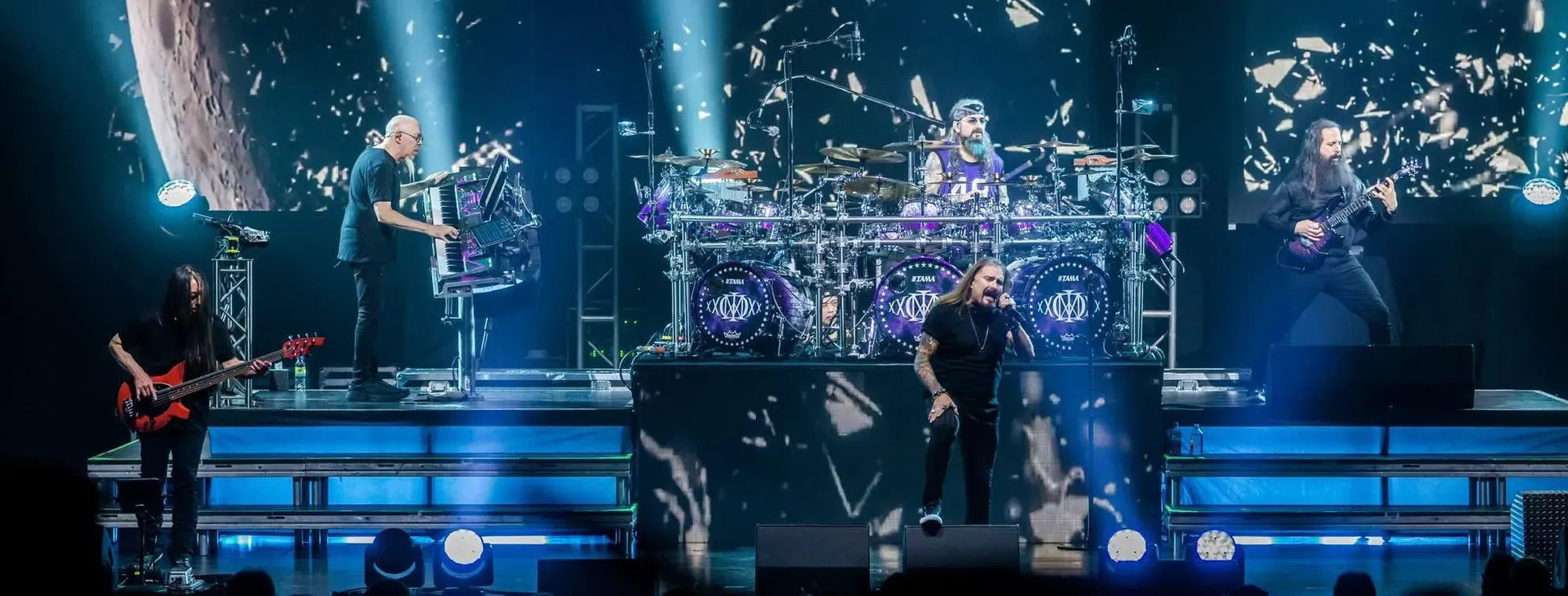
Cool is not a word most people would associate with prog-rock, a subgenre of heavy metal characterized by mythical story lines, grandiose orchestration and operatic structures. It fell out of favor around the same time as parachute pants, when bands such as Yes and Rush were pushed aside by new wave and punk rock. Yet for the past 15 years, Dream Theater has been carrying the prog torch, releasing nearly a dozen albums of conceptual, highfalutin heavy metal.
Last year, Dream Theater hit a zenith of sorts with “Six Degrees of Inner Turbulence” (Elektra), a 97-minute opus that sprawls across two CDs. One disc consists of a single song, broken into eight acts, that lasts 42:04.
“We were laughing about that,” admits Petrucci. “Our one song on one CD was like the length of an entire Yes album.”
So what’s it about? Suffice it to say that the story revolves around six emotionally disturbed individuals – including a war veteran and a depressed, black-clad girl – as they battle their personal demons. And if that’s not enough, there are also references to an unseen messiah and an ethical debate over stem-cell research.
Not even Styx could have dreamed this stuff up. “We just tried on purpose to do something different,” says Petrucci. “If something sounds boring to me, or not fresh, or uninspired, how do I expect somebody listening to get into it?”
Whether or not you buy the storyline, it’s hard not to be impressed by Petrucci’s musicianship. He is, in old-fashioned terminology, a major shredder. A virtuoso in the mold of Joe Satriani or Steve Vai, Petrucci says he frequently writes guitar parts that he’s actually unable to play. On “The Glass Prison,” he asked keyboardist Jordan Rudess to transcribe a complicated arpeggio passage and then attempted to play it on guitar.
“That was a mistake,” Petrucci says, admitting that the riff was tougher to play than he realized. “A lot of keyboard parts don’t translate very well to guitar.” And yet, a few minutes into the song, you can hear Petrucci burn through the notes with the precision of a microprocessor.
But the most amazing thing about Dream Theater is the fact that they even exist in this era of fast-forgotten rap and pop acts. Petrucci says he and Elektra Records have come to an understanding: “We have the trust from the label that we know what we’re doing,” he says. “With all these different bands coming and going, and getting dropped, we just continue to make albums.”