

Originally published in Ytsejam.com · January 2002
Interview With James LaBrie Of Dream Theater
01/30/2002
InterviewJames LaBrie10 min read
Jim Harrel: You guys are out on tour, aren’t you?
James LaBrie: Yeah. I actually just came off stage maybe 40 minutes ago.
JH: Are you kidding me?
JLB: No, I’m not kidding you.
JH: What is it, the middle of the night over there?
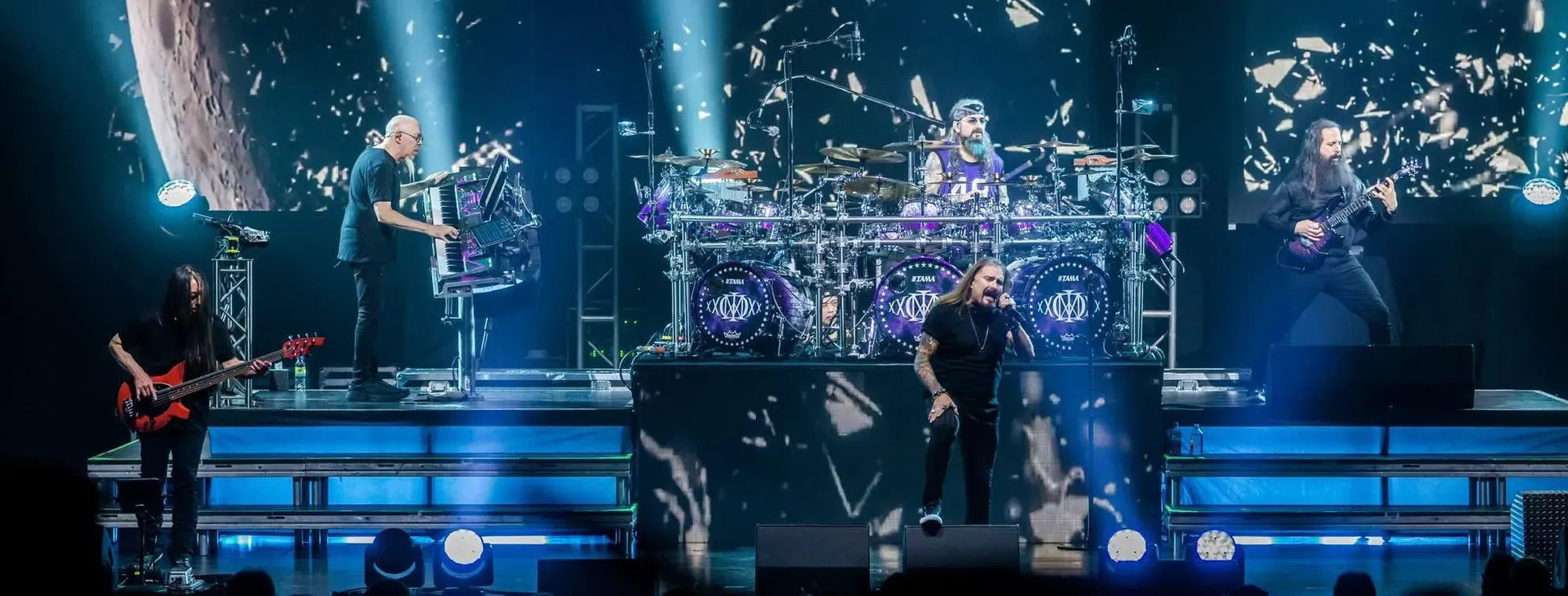
JLB: Yeah, we’re in Sweden right now. We played a nice big, I guess you could call it an arena.
JH: An arena?
JLB: Yes, there were about 4500 people.
JH: Holy Christ!
JLB: Yeah, it was great.
JH: You guys are kicking ass I hear.
JLB: Yeah. (laughing) What, is it being told on the net?
JH: That’s what they’re saying.
JLB: Yeah? Well it’s going good! We’re having a good time and the whole reaction to the new album has been really positive. So its looking pretty sweet right now.
JH: So you’re playing real long sets, eh? (Speaking Canadian)
JLB: Yeah, we’re playing the big long sets again. At least 2 and a half-hours. You know, we’re jumping all over the place and trying to keep it fresh and new not only for ourselves but obviously for the fans as well.
JH: You guys have had a great last few years. You’ve gotten a lot of support from the record label, you’ve done a DVD, you’ve done double albums, etc. There’s a lot of prog bands right now trying to work their way up the ranks. What do you suppose that you guys have got going in your favor that’s making things work for you?
JLB: Well, I guess as far as the label getting behind us, it has taken some time before they’ve kind of seen things our way. When we came out with Images and Words it was a very successful album for us so everything was sort of on auto-pilot for that. And then you know the following albums such as Awake, ACOS and Falling Into Infinity particularly, it was kind of up and down. It was a very dynamic period in our careers. Especially with FII I think the label was really trying to mold us into getting a hit, or getting a little bit more exposure on the radio, which is just the complete opposite of what this band is about. So I think that once FII came to a close we made it perfectly clear to them that if they continued to try and push us down that road that we were going to break up. And I think at that point we were still very successful for them so they kind of stood back, and I give them credit for that, and they allowed us to really start doing what we do. And that was quite evident with Scenes From a Memory, that we had gotten back to our roots so to speak, and really started doing the music that we love to do. Even in that sense the writing with Dream Theater has really matured. It’s more about the song structure, and granted you still have the technical and complex aspects within all that. But I think more and more as we go on in our careers we’re becoming a lot more focused and unified as far as “it’s the song”, you know? That’s what it all comes down to. And everything else around it is just icing on the cake so to speak.
So I think because we had some time to really craft who we are and what we are all about we’ve gone through a little bit of the tumultu... why can’t I say that word? Say it for me.
JH: Tumultuous.
JLB: Yes, tumultuous (both laugh) period it’s now, we’re on the other side and things are really opening up for us. We’re really given the freedom now to do what we do.
JH: Are the numbers coming back to tell the label that they did the right thing by backing off?
JLB: Oh, they know it! They know it because they were overwhelmed with the reaction on the last album SFAM. It sold very well for us. The touring alone, we were like selling out everywhere. The numbers were increasing. Even now, just starting the world tour for Six Degrees of Inner Turbulence, we’ve noticed that the fan base has grown once again. I mean, we’re playing a lot bigger rooms, the people are really enthusiastic, you know, real pumped when they come to the shows. It’s all quite evident that it’s continuing to grow substantially.
JH: It probably helps. I’ve been tracking CDnow and Amazon.com, and you guys have been in the top 5 selling albums in the last month, and the album wasn’t even released! And now, you’re number one.
JLB: (laughs) Yeah, I know. It was pretty crazy. Even over here (Europe) we’re charting really well in many countries and the labels are coming out and saying “Well you guys are coming in, debuting the highest you’ve ever come.” “It’s amazing.” “Everybody’s really excited about the new album.” The whole reaction and the whole press over here even including the UK, which is a real tough nut to crack, you know? Kerrang gave us 4 and a half stars, which is incredible coming from a magazine that has been not so favorable in the past. They’ve really come around, they’re praising this latest album of ours, which is great to have. And obviously we’ve got the other magazines, Classic Rock and all that from the UK that have always been very supportive and that helps. And the fanzines and so on and so forth, and the Internet. It all helps to really bring the awareness to as many people as possible, to get to the point where people actually access our material, our songs, our albums.
JH: You guys are enjoying popularity now as a “progressive rock band” that hasn’t been seen since the days of Genesis and Yes. Are a lot of the popular radio stations getting on board and playing your material over there?
JLB: You know, well as far as I know, yeah. There have been situations over here. But it’s a little bit different though, Jim, the environment over here. Their radios aren’t as uh, corporate run, or directed, as I think it is in North America, as I think that its quite evident that it is there. So I think there’s a bit more freedom with the DJ’s or even the uh, what do you call it...
JH: The program directors?
JLB: Yeah, exactly. I think that they have a little bit more freedom to actually put on the radio waves what they find interesting, what they’re passionate about, what they like. So that kind of helps to a certain degree. But you know I still have faith that the bigger radio stations and that, they might just come to the table one day for us. But I don’t know. We just try to stay positive, and if it doesn’t happen that’s fine because we are who we are. There is a lot of support out there especially the Internet now has been a very integral tool for us. That’s helped quite a bit.
JH: Do you think that you guys are an anomaly in rock music right now, or do you think that this might open the door for other bands in the progressive genre?
JLB: Well I think (laughing) we’ve always been an “anomaly” don’t ya think? (both laughing)
JH: Yeah, and yet you are a part of a style of music.
JLB: Yeah, we’ve always been... We’re not the new trend, we’re not the flavor of the month, we’re anything but that! And I think it’s been that way since the beginning. When we first started hitting it big, grunge was in. And then it became all this “alternative”. And we’ve just been doing what we do, kind of like running a completely different ship along side all these trend setters and whatever. I think that too, has really proven itself, in the sense that our fans really appreciate that. The people that come on board and get into a band like Dream Theater, they’re into that type of music I think to begin with. But with that being said, at the same time I’ve had quite a few people come up to me in the last 2 or 3 years saying “I really didn’t know what you guys were about, I heard you were a progressive band, so automatically I thought it was just all these long winded tunes. But then I started listening to you guys and there’s a little bit more than that going on. You’re music’s very interesting and dah dah dah dah.” And I say absolutely! It’s a good old saying: “You can’t judge a book by its cover.” I think that if a lot more people did give it a listen they would see that it’s not just the whole progressive gauntlet, you know? It’s many things. It’s very eclectic music.
JH: Yeah. It’s a cross-pollination of a few styles.
JLB: Absolutely. And I think more and more people are becoming aware of us, and its really exciting to see. What I’m seeing is that more and more people are wanting to get a little bit more substance from the music, so they’re looking elsewhere. They’re not just listening to the radio and thinking that’s what represents music today, which we all know doesn’t. And I think that because of the net, and because of magazines and so on, and even because of satellite radio that’s becoming bigger and bigger, people are given the opportunity now to hear these things or tap into these things on their own accord.
JH: Probably one of the most used terms to describe you music, and its happening again with this CD is “it’s not like anything they’ve done before.” And especially on disc 2, you know the beginning opens with almost a symphonic interlude by Jordan I guess, mostly with keyboards, at least it starts off with keyboards...
JLB: Like a soundtrack.
JH: Yeah! As a matter of fact I was in the car with Nick D’Virgilio, we were going to the NAMM conference and...
JLB: Say HI to Nick for me!
JH: I’ll do that. Anyway I played it for him, and it was the first time he had heard it and he said “It sounds like a movie soundtrack!”
JLB: Yeah, absolutely.
JH: It really is different than anything you’ve ever done.
JLB: You’re speaking of the title track, right? Six Degrees of Inner Turbulence?
JH: Exactly.
JLB: Yeah, granted. We wanted to make that a very exciting and... you know once again, here we are when we approached this album we wanted to obviously be very experimental and push the envelope as far as we possibly could. But at the same time keep everything really focused and directed, and that was the challenge before us, to make all that become a reality. It’s funny, because the first disc, the five songs on the first disc, that was the thing that took most of the time writing. If I do recall correctly the actual writing of 6DoIT was done in about 12 days, and the rest of the album was kind of like getting there. Like getting everything, and then all of a sudden the wheel’s greased and bang, everything is becoming very prolific.
JH: Why was that? You guys...
JLB: We don’t know! (both laughing) I mean, we just sort of got into a groove there and it just, I don’t know, it seemed to really present itself very quickly and everybody was able to communicate ideas, and where it was going. It was a pretty magical thing.
JH: I personally want to applaud you guys for...
JLB: I mean it didn’t just drop in our laps! I mean obviously we had to be very concentrated and focused, but I’m just saying that it was surprising how much that came together more quickly and easily than the first disc.
JH: That whole piece, how would you describe it? Do you think of it as one song?
JLB: Well, there’s eight “sections”. It’s a conceptual piece. Its obviously dealing with 6 different characters that suffer from mental and emotional disturbances.
JH: So that would be you five and you’re manager?
JLB: (courtesy laugh) No! Nothing like that. It’s definitely specific characters that have like schizophrenia or bi-polar conditions. There’s the whole Viet Nam war thing going on. When it comes to lyrics though, I always like to stand back and let the lyricist do the interpretation.
JH: On the US leg of the tour you’re moving up to larger venues I’ve noticed, and many of those are with assigned seating. Is that something that happened just because the crowds have gotten bigger, or is it a conscious decision to move to a more conventional theater type environment?
JLB: It’s something that we’ve wanted to do as a band, but even the promoters are saying “Look, you guys have got to get up into bigger rooms because there are more people that want to see you.” And obviously we though too, what better room to see a band like Dream Theater where we can really present ourselves to the fullest extent. You know, being able to put on an incredible show with al it’s production, it’s lighting and sound and having a great stage to do that on there’s going to be found in more theatre type environments. So yeah, definitely, we’ve been speaking with our management and our booking agent saying that we really want to see this happen over in the States. It just brings us into that next level, and gives us the opportunity to really bring a different show to the people, something that’s a little bit more grandiose, ya know?
JH: And the old guys like me really appreciate it!
JLB: We want to keep growing and presenting stuff that’s new to our fans and keep it really exciting. This is one of the things that has to be done. We have to move out of the big clubs and into the soft seat theaters. You know, do it right.
JH: Well hey man, I really appreciate your time.
JLB: No problem, Jim. I’ll see you out there?
JH: Yes you will!