

Originally published in WBAB · September 2002
Mike Portnoy interview
InterviewMike Portnoy6 min read
Keith ‘Fingers’ Nuttig: Where are you actually calling me from? What part of the country?
Mike Portnoy: We are in Baltimore today. So, we started on the West Coast. We’ve been sprawling across America for the past month or so and working our way back home.
KN: Let me ask you, since we’re so close to the September 11th events... I’ll preface this with a story. The same day that your album came out, several albums came out. Slayer’s album came out. The Biohazard album came out. And I was at Looney Tunes doing an in-store for Biohazard. Actually, it was a midnight sale on September 11th, so it was actually going from September 10th into the 11th. When you walked in, there was a big Biohazard thing, but right next to it was a big display of the Dream Theater album. And, of course, it was the Twin Towers, and it had the flame around it and stuff like that. And the irony is, the next morning that happens. What in God’s name did you feel?
MP: It was just beyond incredible. I think that day was unbelievable, incredible for the whole world, as it was. Everybody was just in shock. But it obviously added a whole other level of disbelief for us with this album cover coming out that day, the Big Apple in flames with the Twin Towers in the middle of it.
KN: What was the message the album cover was trying to put out?
MP: Well, dating back to Images And Words 10 years ago, we had this kind of symbol. It was the Flaming Heart of Jesus or whatever it was, a heart with barbed wire and flames coming through it. It was a symbol that’s been around with us for years now. When we did this Roseland show in August of 2000, the show that the album was recorded at and the DVD was filmed at, basically we came up with a commemorative event T-shirt that we sold at that show, which instead of the Flaming Heart, we had the Flaming Big Apple with the New York City skyscraper in flames. And basically that was a T-shirt sold at that show. Then when we put out the DVD in early 2001, we used that image on the DVD, and then it was natural that when we would release the live album, we’d utilize it there as well. Who in the hell would have realized that our album would be released the morning of September 11th and obviously what would happen happened. So it was just unbelievable. And then actually we pulled the cover. It wasn’t something that the label forced upon us. It was actually the other way around. It was something that we felt real strongly about, was getting them off the shelves and then changing the cover as soon as we could, because we didn’t want this CD to be a reminder of September 11th. The CD is supposed to be a reminder of August 30, 2000, and the Roseland show. We didn’t want it to be forever linked to September 11th, because obviously that wasn’t the intention of the package at all. So it was important for us to get it off the shelves and change the cover. Just the whole thing was just really eerie. And it got us probably more mainstream exposure or coverage than we’ve had in 10 years or so. Rolling Stone and Entertainment Weekly, VH1 – everybody’s covering it. So it was a bizarre twist of fate for us.
KN: Yeah, I imagine you’re watching the events unfold on the television, because that’s the first thing that hits you, and then you’re like, “Oh, the album!” It’s like, “Oh no.”
MP: It was that morning I called up our manager. I was like, “Have you heard from the FBI yet?”
KN: Well, thank God that the content of the record overrode the cover, because you did indeed pull it, and the album did okay for you as well. And the new album is out, and everybody is excited that you’re gonna come and perform. I’m gonna get some of the new album on stage?
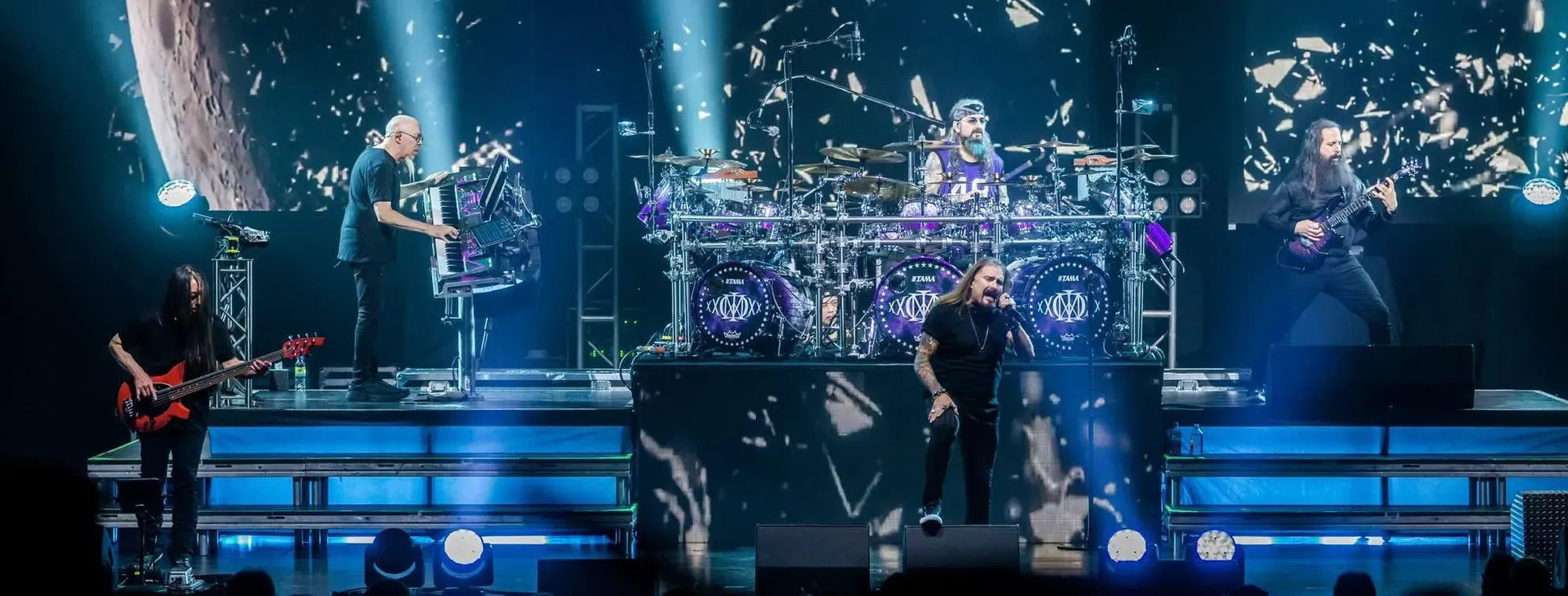
MP: Yeah. I haven’t even written the set list yet for that particular show, but like I said, we do different sets every night now. Basically, when I write the setlist, I’m very conscious of making sure there’s a nice balance. The repeat visitors get something new, and the new visitors get something that will satisfy them as well. I’m sure there’ll be a balance of everything in there.
KN: You’re running the whole show over there. You probably put more hours than anybody in there.
MP: Yeah, yeah. It’s definitely been a nonstop job for me for 10 years now, at least.
KN: And how many side projects you got on?
MP: I just finished my third.
KN: Which one? The Expo?
MP: I just finished an album with our ex-keyboard player, Kevin Moore, and along with Jim Matheos from Fates Warning, who’s an old friend of mine for many, many years. And we just put this project together called OSI, and that’s gonna be out in January.
KN: Well, it’s always good to be passionate about something and to get a chance to really dive into it with both hands. With your new album, there’s quite a few tracks. Some of them are long storytelling things, and some of them are not. The opening track, I noticed that you dedicate, or I don’t have it in front of me, but you somehow acknowledge Bill W. Explain how that track came about.
MP: Well, ‘The Glass Prison’... I’ll tell you quickly, musically, how it came about. For starters, that was the first thing we wrote as we went into the sessions. And John Petrucci and I went to a Pantera at the Hammerstein Ballroom the weekend before the sessions began. So obviously we had the Pantera flowing through our blood once we came Monday, when we entered the studio. So the first thing we did, we started just going with these riffs, and ‘Glass Prison’ ended up being this total Pantera meets Megadeth kind of relentless ball of energy. So that’s where the music came from. And then lyrically, it was something that I wrote, which is real, something personal for me for the past few years and dealing with addiction and recovery and 12-step program. In fact, something that I’ve been through in my life the past couple of years and recovering and things like that. So the song is dedicated to Bill W., who’s the co-founder of AA. And without getting preachy, I just decided to write it out. I wrote about the first three steps of the 12 Steps of Recovery, and that’s exactly what the three sections of the song are.
KN: Well, I’m glad that you put it out there, because I’m in the same club, if you will, and it’s good, I think, for us to put out the positive things that are out there in life that maybe are not so accessible or people don’t think are accessible.
MP: Well personally, I’ve never had a problem opening myself up in my lyrics. So some people, you know, there’s a lot of friends in the program that keep it anonymous, and that’s their choice. But I suppose if you are working a program and it’s something that is a big part of your life and you feel open about it, then I think it’s a good thing to spread the message, because it’s all about being a responsible person and trying to deal with things. And that’s how I find writing lyrics very therapeutic. So writing these lyrics was real good for my recovery.
Even in the past, I’ve written about everything from my mom dying all the way to the hassles and the crap that you deal with in the record company and the whole music business. So whenever I write lyrics, I’m usually getting stuff off my chest, whether it be something that’s professional or personal. And in this case, it was something that was personal that I had no mind. I didn’t mind sharing it with the people that were willing to give an open ear to it.
KN: Well, as they say, thanks for sharing. Now, before I let you go, everybody in the band is good?
MP: Everyone’s great, man. We’re having a great summer, a great year. It’s all good stuff, man. The party’s coming to a nice little finale at Jones Beach. It’s just the ultimate way for us to finish the tour on home turf. So many friends and family coming out. It’s just going to be a great night for us that we’re really looking forward to.