

Originally published in Reforma newspaper · March 2002
Six Degrees Of Progressive Turbulence
By Alonso Arreola
InterviewMike Portnoy4 min read
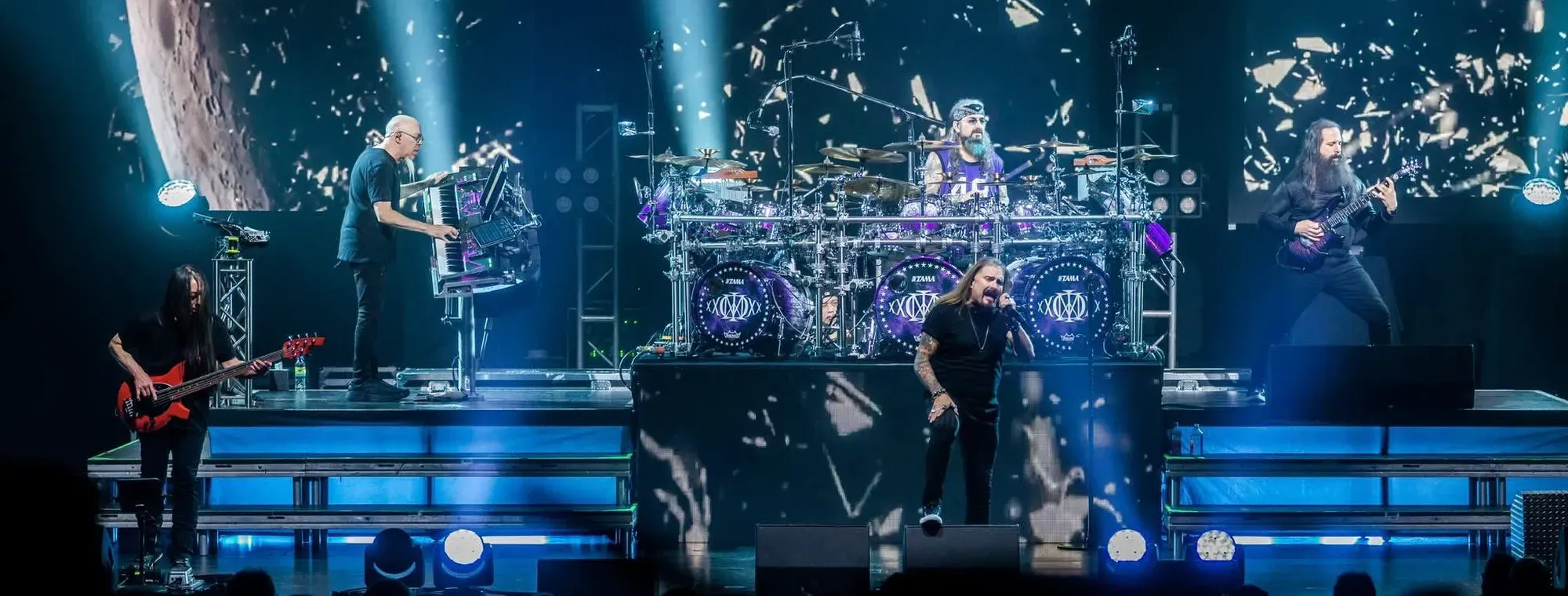
Federal District (March 1, 2002) Mike Portnoy (drums), John Petrucci (guitar), John Myung (bass), James LaBrie (voice) and Jordan Rudess (keyboards). Five American musicians loved and hated for the same reasons: for virtuosos, for fools, for transgressors of a commercial system that has made their career a milestone in the history of modern progressive rock.
They are called Dream Theater and they return to the National Auditorium this Sunday, March 3 to present a last and risky album, Six Degrees Of Inner Turbulence, a double album with six full-length pieces, one of which, with eight movements, occupies the extravagant space of 42 minutes (almost double that of its direct antecedent A Change of Seasons).
This is followed by a talk with Mike Portnoy, founding member and six-time winner of the Best Progressive Drummer Award by the world’s leading trade publication, Modern Drummer.
Tell me how you came to the title of this new album, Six Degrees Of Inner Turbulence (6Dolt), as well as the narrative content of it.
The title of the album is the same as one of the songs, which was created first. It is a 42-minute piece with eight different divisions or themes that, put together, have an epic result. John Petrucci and I had the idea of writing the lyrics about six different characters who live in an institution, in a nursing home. It is about six stories, six lives, each with its own past and problems. That’s where the title was born. Later came the coincidence that the album has a total of six songs.
It is about two albums in one: the first, more grunge and heavy, the second, more classic and progressive. Does this decision respond to creative interests within the group or does it try to meet the diverse expectations of your followers?
Every time we make a record we try to have a balance. If you listen to songs like “The Glass Prison” or “Disappear” it seems that they are two different groups. One is heavy and the other melodic. In the case of this latest album, it is by chance that the progressive piece is apart on another CD. We were originally going to make a single album, but as it was very long, we decided to make a double album. In reality it is not about such a conscious decision between album and album but between song and song.
Sometimes when I listen to them I think of the virtuous musicians of the European baroque, of the relationship that existed between technique and the possibility of connecting with something higher, with God and with the spirit. Tell me, do they talk about this profile of the group, about this stigma of virtuous?
I definitely see a relationship with classical music, with musicians like the ones you mention. We treat music in the same way as classical composers interested in virtuosity. We never think about surprising to sell or how to appear on the radio, we do not care if a piece lasts three, four or 42 minutes, just like in classical music. Many people think that we are ridiculous with such long songs, but in cult music there are always cases like this, gigantic compositions with different movements.
In those terms, the entry of Jordan Rudess to the band has been important, as he has deep knowledge about that music. The overture of the new album is the perfect example of the influence of the classical in us.
As for virtuosity, I think it is an important part of Dream Theater, we are serious musicians interested in taking care of both our individual development and our abilities as instrumentalists. So we try to focus on our instruments to play the best we can. In fact, I think the instruments largely define the kind of people we are.
In addition to your work with Dream Theater, you produce books, instructional videos, solo albums and participate in other projects such as Transatlantic, Liquid Tension Experiment, Platypus, Mullmuzzler, Explorers Club, G3, etc. How do you find the time and desire to do all of this?
It is very tiring to have so many projects at the same time. Even if I just went to Dream Theater it would be too much, because not only am I the drummer who records and travels, but I am also involved in decisions about the merchandise we sell at concerts, in the design of our records and on the Internet site.
It is a 24-hour-a-day job, so we don’t spend as much time as we’d like to ally our families. And also, when Dream Theater is taking a break, we all have other projects... But all those records are things that are around, they can only happen when Dream Theater is not doing anything. We are all clear that this group is the center of everything, that it is our number one priority; and I also think it is healthy that, after 17 years together, each one decides to do other things. It is something that even helps to keep the group together, without restrictions.
In the midst of the maelstrom of pop music, Dream Theater has important contracts in America, Europe and Japan, it does what it wants when it wants and how it wants. Do you think they can continue like this for the next ten years?
We are fortunate that our career exists outside of radio, MTV, the mass media. We have always grown apart from that and I think we are lucky, although it has been difficult to have the level of popularity and audience that we have without those promotional vehicles. We are also fortunate to stick together in this way, a way that gives you longevity, as everything is done on our own terms. So in ten years we will continue, if our fans remain behind us, developing the same vision of artistic freedom.