

Originally published in Billboard magazine · June 2001
Bubbling Under The Surface
Article5 min read
Progressive rock is ready to make a comeback
By Bryan Reesman
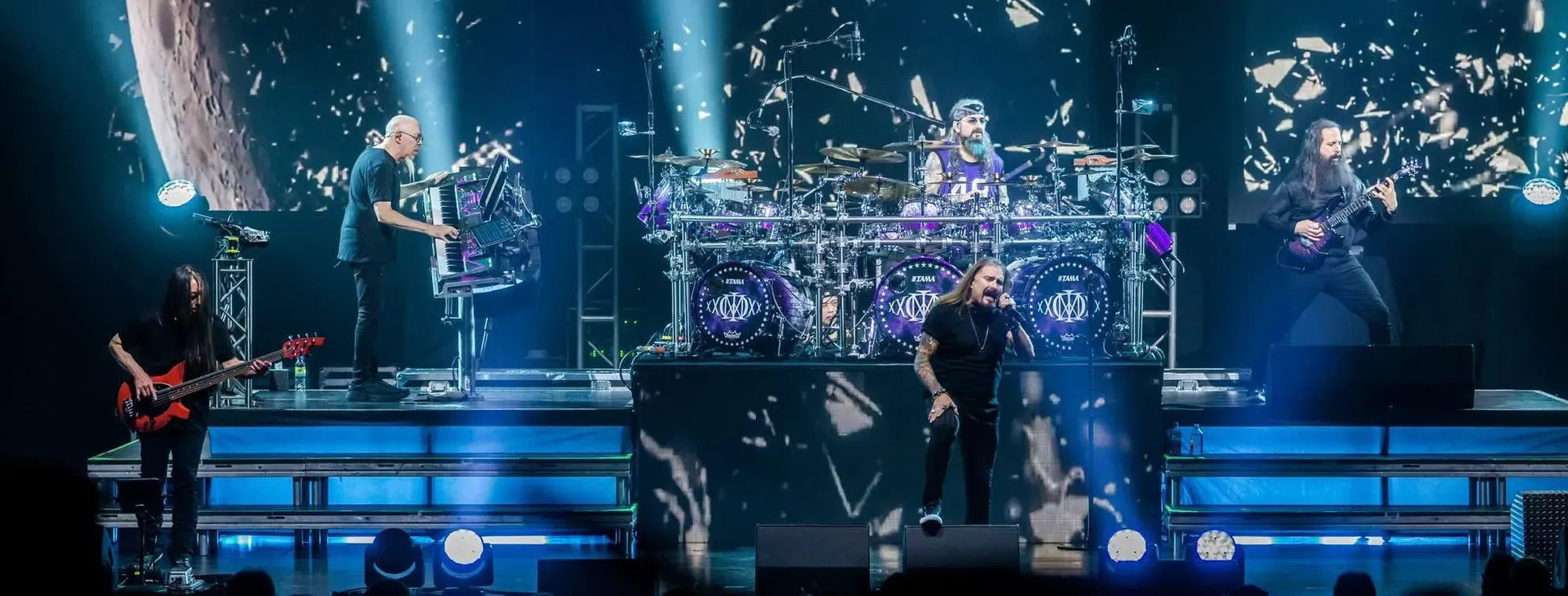
Progressive rock is in the midst of a new revolution. Long stigmatized as a genre full of dinosaur bands reliving the glory days of the ‘70s, it has become vibrantly reinvented in heavy-metal form.
“The fanbase for the scene is getting younger,” remarks Ken Golden, director of operations for Sensory, the progressive-metal sublabel of The Laser’s Edge that includes Gordian Knot, Spiral Architect, Zero Hour and Edenbridge. “The guys who are listening to [and playing] this stuff grew up listening to bands like Marillion, Iron Maiden and Rush, so this new generation of bands is more rooted in that sound than they are in the old-school progressive sound [à la Yes and ELP].”
Festivals Are Thriving
While the music remains as complex and challenging as ever, with its guitarists and keyboardists both playing important instrumental roles, newer bands are broadening its scope and giving it renewed commercial appeal. “It’s not just an egghead subgenre of metal,” declares InsideOut America’s managing director Jim Pitulski, whose roster includes Platypus, Planet X, Pain of Salvation and DC Cooper. “It’s got power and passion, and it’s got credibility and a growing fanbase. Younger kids are starting to come into the fold, which is always encouraging.”
The downside to this phenomenal growth is the inevitable competition springing up. “I think there are so many new bands that the market can’t accommodate them all,” observes Pete Morticelli, president of Magna Carta Records, whose artists include Shadow Gallery, Trent Gardner, Tempest and Ice Age. “Nobody can release all those records – the bands can put them out on their own, but that’s just not viable. Somebody has to come up with a way to get some visibility, and it’s probably going to come about as a result of playing live.”
Other insiders concur. Touring is an important factor in breaking through to a larger audience, but it’s a tough sell to convert clueless booking agencies and resistant radio programmers. Nonetheless, groups like Planet X, Spock’s Beard, Symphony X and Transatlantic all hit the national club circuit recently to prove the genre’s concert viability.
For those groups that don’t attempt a nationwide trek, festivals are a good way to amass new fans. Many one- or two-day annual festivals exist throughout the country, including NEARfest (Bethlehem, PA), Baja Prog (Mexicali, Mexico), Progfest (Los Angeles), Prog-Day (Chapel Hill, NC), ProgPower USA (Chicago) and last month’s debutant, the Pittsburgh Prog & Metal Festival. Three years running, NEARfest (featuring headliners Porcupine Tree and PFM June 23–24) presold all 1,200 tickets in two hours. ProgPower drew a sold-out crowd of 500 with headliners Pain of Salvation this past February, while Progfest has pulled in 1,000 fans before.
Veteran Acts Still Sell
Another significant factor in a future progressive breakthrough lies with fans and the media. Mainstream press is difficult to obtain, but metal fanzines are taking this subgenre more seriously. Pitulski believes that word-of-mouth through fans is absolutely vital. The Internet has united progressive-metal fans via Web sites, chat rooms, newsgroups and bulletin boards like the ever-popular Perpetual Motion Board, which holds an annual readers’ poll.
Progressive metal is growing in the States but is even stronger in Europe. “It’s definitely bigger there,” notes Brian Slagel, chairman/CEO of Metal Blade Records, home to Spock’s Beard, Labyrinth, Transatlantic and Fates Warning. “But it still hasn’t reached the height of where black metal was at. That was probably the last big genre over there. Progressive metal hasn’t gotten so gargantuan that it’s reached its peak.”
The European market is certainly important. InsideOut is headquartered in Germany; Metal Blade has offices there, while Magna Carta and Sensory receive European distribution through numerous companies. Bands that might sell 10,000 units in the States can sometimes break the 30,000 sales mark overseas. Japan also offers solid sales for some bands – Symphony X is rumored to have hit the 60,000 mark there with one of its four previous import-only albums.
Morticelli remarks that, while he is hoping and waiting for a young new band to break through, his veteran artists have been selling well. He says Liquid Tension Experiment (Tony Levin and three Dream Theater members) has sold 100,000 copies each of its two albums worldwide, with U.S. sales reaching 40,000. Meanwhile, the label’s recent Kansas release, Somewhere To Elsewhere, also hit 40,000. On the flip side, Slagel says that in Europe and America, his label sold 40,000 copies of Labyrinth’s sophomore effort, Return to Heaven Denied. On the veteran-band front, he estimates that Fates Warning has sold 900,000 units globally of its nine-album catalog.
New Talent, New Fans
The new generation has plenty of talent to offer, as well. “It’s really the new artists we want to develop,” declares Pitulski, who previously managed Dream Theater and Spock’s Beard before forming InsideOut America. “That’s what’s going to take this thing someplace else.” He says bands like Transatlantic, which combines old- and new-school progsters, bridge the generations and draw attention to new talent. The upcoming seven-date summer tour of Tool and support act King Crimson may do both, drawing together fans of different ages to different bands. Some feel that Tool – and front man Maynard Keenan’s other band, A Perfect Circle – might help bring progressive music back into the mainstream spotlight with its eclectic sound.
Many newer progressive-metal groups include veteran rockers. Platypus encompasses members of King’s X, Dream Theater and the Dixie Dregs; Transatlantic features musicians from Dream Theater, Marillion, Spock’s Beard and the Flower Kings; and the forthcoming Gordian Knot will include contributions from King Crimson drummer Bill Bruford, Genesis guitarist Steve Hackett and possibly a one-song appearance by Steve Vai.
Then there’s Ayreon, the amorphis group conceived by composer /multi-instrumentalist Arjen Anthony Lucassen, whose recent two-CD “space opera” The Universal Migrator features guest members like Bruce Dickinson (Iron Maiden), Andi Deris (Helloween), Fabio Lione (Rhapsody) and Lana Lane.
Time For Revival
The progressive indie labels are also discovering crossover appeal in different forms, including recent fusion-based albums by Simon Phillips, Derek Sherinian and Niacin; an electronic remix album of Magna Carta artists by Vapor Space; and that same label’s forthcoming Sounds Like Christmas compilation featuring traditional Christmas tunes done in the styles of classic-rock bands like Yes, Led Zeppelin and Pink Floyd.
The unfairly stigmatized progressive genre seems due for another breakthrough. Following its original ‘70s heyday, it spiked again with Marillion in the mid-’80s and Dream Theater in the early ‘90s. Everything goes in cycles – remember that musicianship was in during the ‘80s and out during the ‘90s.
Golden reports that while “progressive metal is a subgenre of a sub-genre, it’s definitely growing” and being acknowledged by numerous Indies. Limb Music Products (via SPV) has Rhapsody, Lana Lane, Ivory Tower and Vanishing Point; Koch Records has Opeth; Nuclear Blast has Steel Prophet and Savatage; and Century Media has Royal Hunt and power /prog crossovers Nightwish and Blind Guardian. Self-reliant New York dark-wave rockers Braindance is set to make a splash this year with its third album, Redemption.
Hopeful of the subgenre’s future, Slagel views the ever-widening progressive-metal realm as possessing appeal beyond a niche audience. “I think kids that are into aggressive music can be into [progressive],” he remarks. “It’s just a matter of being exposed to it.”