
Originally published in Rhythm magazine · July 1993
Street of Dreams
InterviewMike Portnoy9 min read
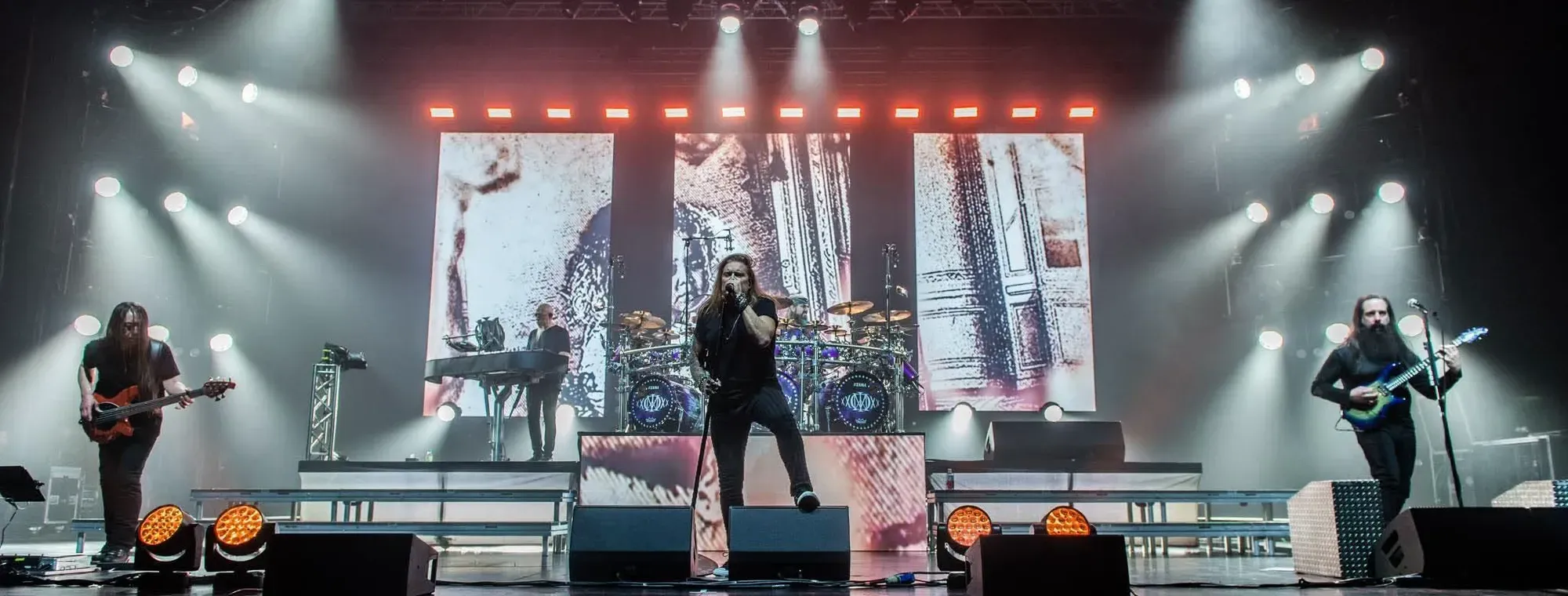
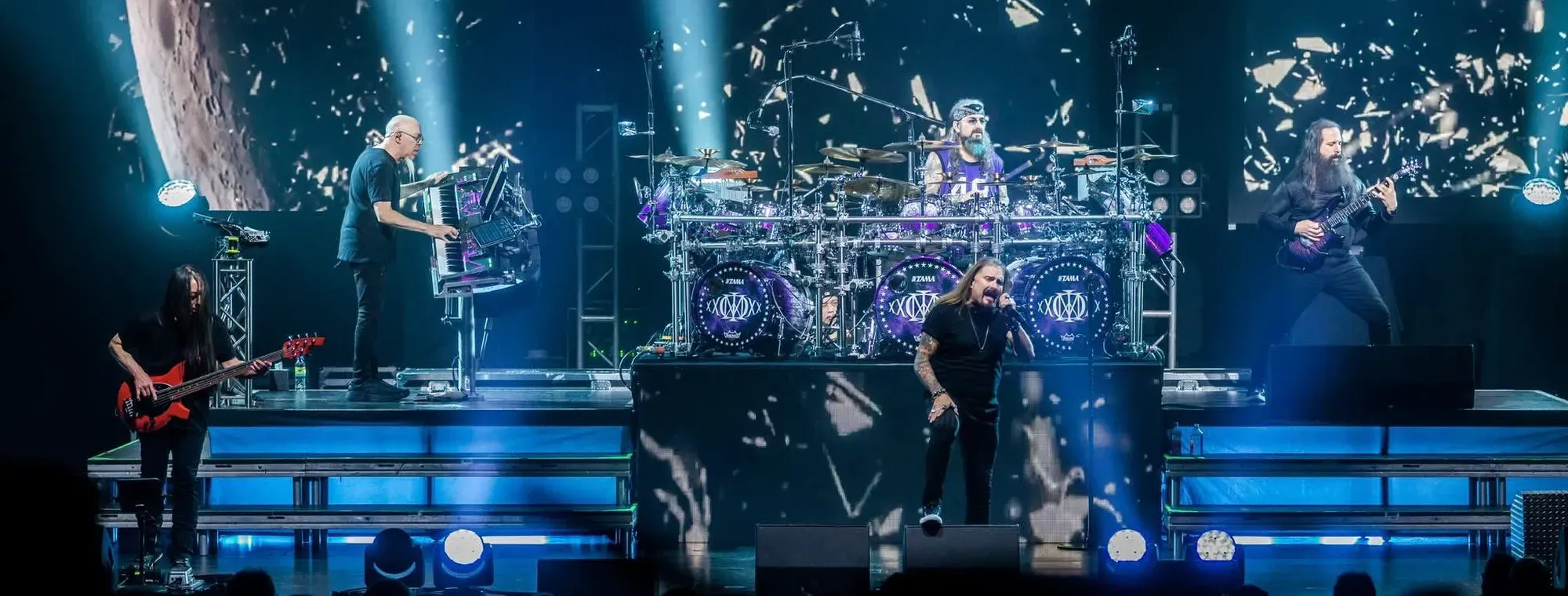
In the tradition of such epoch-making bands as Styx, The Dregs and Rush, Dream Theater are intent on taking over the world with their own ‘peculiar brand’ of heavy rock. Mike Portnoy tells Ronan Macdonald how he dropped out of Berklee in order to further his technique...
It’s all terribly English this; progressive rock and the Marquee – terribly English. The Marquee is of course one of Britain’s most historic rock and roll institutions, and progressive rock couldn’t really have started anywhere but blighty. It’s a fussy genre, generally trying too hard to say what, in the end, amounts to nothing – typically Anglosaxon. The progressive rock in this case comes in the form of Dream Theater (not at all English, ironically), while the Marquee comes in the form of the venue for their British live debut.
Dream Theater are undeniably progressive in the same way that Rush are undeniably progressive, but there’s something else there too, something that makes it listenable. It’s probably the fact that, unlike most progressive bands, Dream Theater do seem to have songs; songs that you can listen to; songs that you can sing along to; occasionally songs that you can even dance to, dammit! Of course, there are still loads of odd time signatures and early Genesis-style instrumental work, but somehow it doesn’t labour quite as heavily under the pretension as you might expect. In a nutshell, it’s prog for the nineties.
They did however recently release a seven-minute single in the States.
“Eight, but who’s counting?” corrects drummer Mike Portnoy. Now, you might think that this was a very bad move on the band’s part, I mean Lynyrd Skynyrd and Led Zep got away with it, but that was in the seventies and nobody does that sort of thing any more – do they? However, the success of the single speaks for itself...
“It was a top ten song,” exclaims Mike, “it was on hundreds of stations, number one most requested song for five weeks in a row across the country. So that was a shock for us and it blew the doors open to our exposure. So in the States the record right now is doing incredibly, it’s almost gold, it’s something we didn’t expect at all.”
I have to say this surprises me somewhat as well, but I wonder how many times a band could pull this off. Could it just be a brief trend towards something that people would normally feel rather alienated by? Mike is defiant.
“If anybody’s alienated by the length and intricacy of it it’s only because they’re bringing it upon themselves. People hear that it’s an eight-minute song and, ‘Oh, they’re a progressive band’. We get this stigma that we’re trying to be Yes or something, but I think if you try to listen to it, it’s very modern sounding and the length of the song isn’t done to try and be progressive.”
But the band must have realised they were taking a bit of a risk releasing it as a single.
“Yeah, originally we thought ‘Pull Me Under’ would scare everybody. But we feel that the songs that are that long need to be that long to fully express the ideas that are in there. When our first album came out it seemed like America wasn’t ready for it, but we got some reviews from England and Europe and they took to it, they were open to the progressive nature of it.”
Well, we did start the whole thing in the first place.
“That’s why we figured we’d do well here; a majority of those progressive bands were from here, and we’ve always known that it’s not like in America, where everything is run by MTV. It seems like people buy stuff on the credibility of the music and they listen to the stuff, so we’ve always thought that we’d have a good audience out here for what we do.”
But times are changing, and with the increasing dominance of satellite and cable TV it seems that MTV is becoming more and more influential over here. If it became a necessity, would Dream Theater ever compromise the shape of their music to fit MTV’s commercial demands?
“We already have in a sense,” Mike admits, “because we have two videos out in America, ‘Pull Me Under’ and ‘Take The Time’, both of which were edits. Both of those songs are over eight minutes and the edits were about five minutes. But getting us to edit the songs wasn’t easy, it took a lot for the label to convince us to do it. But our thinking was that we weren’t going to rely on MTV; we’re not here to immediately go for the mass appeal, we want people to appreciate what the band is about, and if we’re editing our songs we don’t feel true to ourselves.”
So, er... why do it?
“We figured that it might spark some interest in people who would appreciate what we’re about but wouldn’t ordinarily have heard it or seen it. If it sparks the interest then they’re going to buy that record, and once they do that then they’re going to hear the full-length version. As far as intentionally writing a song to get on the radio or appeal to a mass audience that wouldn’t normally be interested in what we do, that’s not what we’re all about. We’ve always had the attitude that we’re not going to change for radio or MTV. Let them change for us.”
Although essentially self-taught, Mike attended Berklee for a year, where he met John Myung (bass) and John Petrucci (guitar). The reason for the brevity of his stay at the college was the formation of Dream Theater with the two Johns. After the trio left Berklee, Tony Banks–style keyboards were brought in in the shape of Kevin Moore. The band were signed to Mechanic (MCA) and their first album, When Dream And Day Unite was released.
“After the release of that album, which was with another vocalist, we decided we had to make a line-up change and look for another singer,” explains Mike. “So we parted ways with our singer and decided we had to get off the label and go where we wanted to go, because Mechanic wasn’t giving us any of the financial support we needed to function as a band. They didn’t give us tour support or do a video. So basically, we spent about two years trying to pick up the pieces, and looking for a vocalist took about a year and a half.”
Finally, the band settled on James LaBrie, possibly the only person in the universe able to meet their very high expectations.
“Basically, we had already been through two singers, and the four of us have such a chemistry amongst each other, both musically and personally, and the fifth element was never there. The singers usually had different personalities or musically they weren’t really up to the level that we set for ourselves. A year and a half is a long time without a singer, and there was a period there when we weren’t sure if we’d ever find anybody that suited our needs, maybe we were being too picky.”
So what exactly were these needs? Did prospective songsters require two heads or something?
“There were so many factors,” Mike smiles. “Obviously we needed somebody with a great voice and a wide range who could sing a lot of different styles. And then we needed somebody who looked good; somebody who was young; somebody who had a good attitude. It was very important that they had a common musical direction, and that’s hard because the four of us, being instrumentalists, play very instrumentally oriented music, so it was hard to find a vocalist that wanted to play in a band like that. It took a long time, but we finally found James, after going through hundreds of tapes. He’s been with us for over two years now.”
It can’t be denied that a large part of Dream Theater’s success is down to their tenacity. They’ve been doing this a long time now, and they’re not exactly the sort of band that record companies would normally jump at. Further testimony to this high self-regard is in the dropping out of the three founder members from Berklee to try and make it as a working band, although that wasn’t the only reason.
“Up at Berklee, everything is so jazz,” Mike sighs. “In the mid-eighties it wasn’t like today, where metal is an accepted thing. So we were down there with long hair, listening to Metallica or Iron Maiden or whatever, as well as everything else: Rush and Yes and all the jazz bands. But sitting in the room listening to Iron Maiden was frowned upon by everybody. They try to shove jazz down your throat, constantly. One of the turnoffs I had at Berklee was that some of the instructors were very narrow-minded at times as far as music. You’d think in a music school they’d encourage diversity and open-mindedness, but it was quite the opposite, they really looked down on people who weren’t conforming to what they were listening to.”
But Mike had a philosophical and introspective way of dealing with this.
“Basically, you ignore the teachers,” he states. “Pretty much right off the bat when I got to Berklee in ‘85, I met John and John and we put the band together. So we were only there for two semesters, a year, and the year that we were there our interest and love for the music we were creating took priority over the schoolwork. We were practising literally six hours every single night, and you spend all day in classes taking ear training, sight-singing, harmony, theory and arranging and all that stuff. So we were doing that all day, plus homework and everything, and we were practising all night. So after about a year of it we decided we had to choose one or the other.”
The choice was made and the results are self-evident, but does Mike think his stay at Muso Central was worthwhile? How much do drummers really need to know about music theory?
“I found that stuff fascinating. People ask me what I got out of Berklee as far as drums go, and I don’t think I got too much, if anything I got it out of the other students. But the most rewarding thing I got in terms of training out of the school was those other classes, like harmony and arranging and ear training, and I use it every day, especially in this band where I’m an equal part of the writing process, I’m not just a drummer who’s handed his part. My knowledge of keys and time signatures and rhythms and all that stuff is invaluable to my position as a writer in this band.
“The thing I wanted out of Berklee,” he continues, “was to meet other musicians and be able to play with them. It was an incredibly educating experience and we got a lot out of it technically, but the fact that we found each other was the most rewarding thing I could have gotten out of Berklee.”
So it’s not a totally worthless place after all.
Mike Portnoy’s message is clear: further yourself any way you can, and don’t let people tell you that what you’re doing is wrong. He was a loss to Berklee; whether he’d have stayed had the institution been more receptive to his choice of music, I don’t know, but he’s the sort of musician who needs every influence he can get. Now he listens and draws from every sphere, be it pop, rock, hip-hop or jazz, and there’s nothing he feels he can’t use in some way.
“I get almost as much out of mental practice, just listening to stuff, as I do from physical practice. Public Enemy are one of my favourite bands and there’s no drummer, but there’s so many samples and the production... Fear Of A Black Planet – the production on that is incredible. I get as much inspiration from listening to the production on a Public Enemy album or the bass line on a Madonna song as I do listening to Dave Weckl or Terry Bozzio. It’s just a matter of applying it differently, but the inspiration’s always there.”