

Originally published in Keyboard magazine · April 1993
Kevin Moore – Kicking The Prog Corpse With Dream Theater
InterviewKevin Moore4 min read
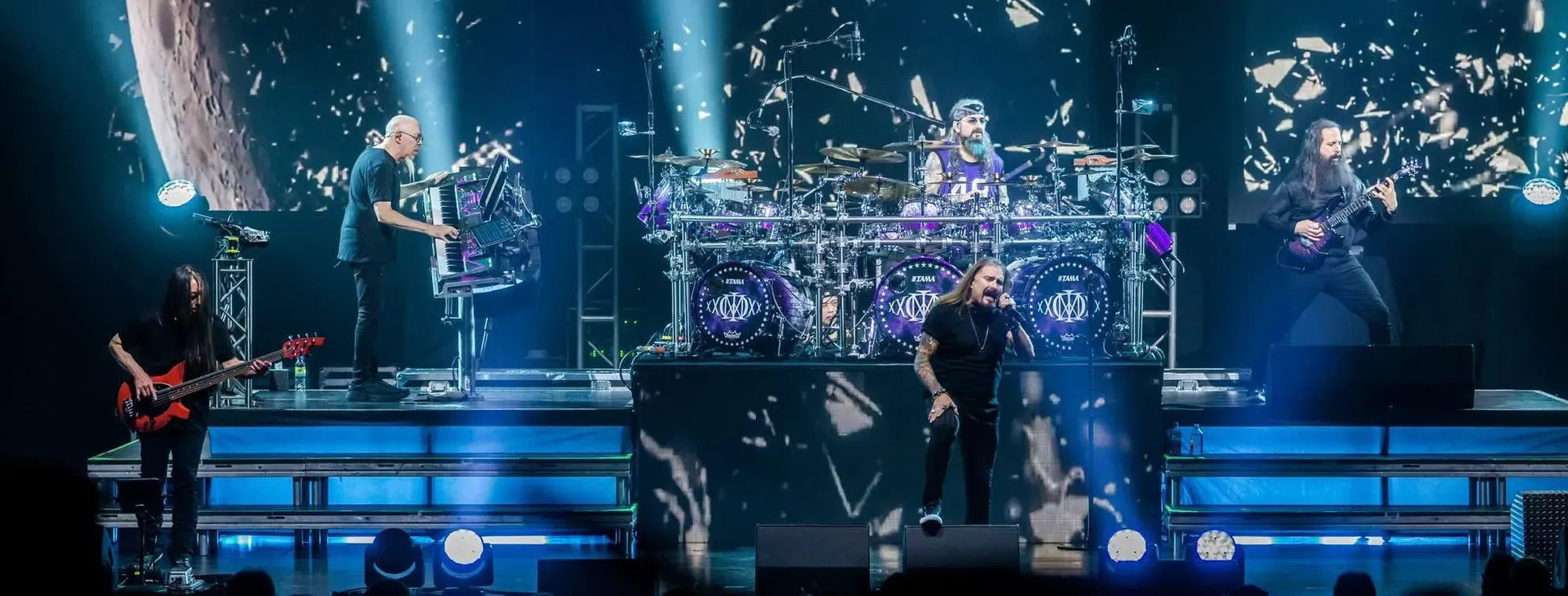
After years of snarling at each other, progressive rockers and speed-metal mashers are standing shoulder to shoulder at Dream Theater gigs. This New York band forges a fresh sound from elements once deemed irreconcilable: Raw raunch guitar crunches beneath Wakemanesque synths, head-banging beats power down complex polymetrical channels. Metallica meets Gentle Giant, Faith No More sits in with Yes, on the Dream Theater stage.
It sounds improbable, but on their current album, Images and Words, it works. The reason seems to be that the guys in this band are less stymied than critics and some fans by barriers between different kinds of music. It probably helped that all the instrumentalists got the kind of training that lets them play a multiplicity of styles. Keyboardist Kevin Moore, for example, took private lessons from age five and tackled advanced study at the Fredonia School of Music near Buffalo, New York.
Luckily, Moore never forgot how to rock. “I always knew that I wanted to be in a band,” he says. “Studying classical music was great. It helped a lot with my technique, influenced my writing, and helped me in theory. But I knew I wasn’t going to stay in that field. I was never good enough to be a classical player. My goal was to go through all that training so I could play the kind of music I really wanted to play.”
That music, even then, involved peculiar notions, including the idea that the keyboard player actually play, even solo, in a hardcore setting. “Keyboard players seem to have advanced more in a technological sense than in a performance sense,” Moore muses. “In the past 20 years, guitar players have evolved incredibly in terms of technique. When Steve Vai came out, for example, it changed guitar playing forever. But a lot of the keyboard players who I think are really great, like Jens Johansson, Jordan Rudess, and Tony MacAlpine, play neo-classically. They’re incredibly fast, but they don’t have a lot of bending or vibrato techniques.”
On Images and Words, the band’s debut album for Atco, Moore plays his share of fast notes too. He applies pitch-bends and vibrato sparely but effectively. Whether soloing over a simmering medium tempo on ‘Pull Me Under,’ a galloping 4/4 leading to 6/8 on ‘Metropolis,’ or a section of ‘Learning to Live’ that’s beyond our power to count, he adds just enough flavoring to give his lines more than a pianistic dimension. A logical and coherent improviser, he makes his statement over Einsteinian time signatures and brain-pounding backbeats with equal clarity.
In the sound department, Moore doesn’t cover as broad a field as Wakeman, Downes, and some other progressive icons. But working with an economical setup – a Korg DW-8000 and a Roland JD-800 on one two-tiered stand, neither one MIDied to anything – he stakes out a distinctive territory based on a combination of icy ‘70s-vintage and more aggressive contemporary timbres.
“That comes from playing a lot of unison lines with the guitar,” he explains. “In those parts, you have to have a sound that sounds loud. A lot of progressive bands use that [Roland] D-50 flutey type of sound during heavy parts. That doesn’t work, because it sounds soft, whether it actually is or not. It’s like playing piano over a distorted guitar. No matter how loud the piano is, it’s just not gonna fit.”
Moore does most of his solos on the DW-8000, mainly because he developed his pitch-bend technique on its joystick. “You can come up with a lot of piercing, heavy lead sounds with the DW-8000. But its organ sound is really thick too. I use that one at the beginning of ‘Pull Me Under,’ although I recorded it with a more digital sound on the JD-800. There’s another cool sound on the DW-8000; it’s just a square wave, but it’s biting. I use it on ‘Metropolis’ during what we call ‘the Dregs section’ because it separates from the guitar so well.”
There is room, Moore admits, for improvement. Some of the sounds on the album were a little dated. I’m not happy with the intro to ‘Take the Time’; it’s kind of cheesy. I used a D-50 sound there; if it’s MIDied well, it can be thick. But if it’s too much of the sound itself, it’s paper-thin, and that’s what happened there. The atmospheric string sounds on the album were D-50 too, and I’m thinking of getting a [Korg] 01/W Pro for those parts onstage. Maybe that’s all I’ll need; I wouldn’t ever want to have a really huge setup.”
Playing, not collecting new gear, remains Moore’s top priority, in part because this still distinguishes him from most modern rock keyboardists. “There weren’t many real keyboard players performing in rock when I broke in, and that left it wide open for me. There still isn’t much competition, and that’s been great for me. To be honest, if I was a guitar player at the same level I’m at now on synths, it would be hard to get recognized or even to get into a band. But that’s going to change. There’s going to be a lot more progressive music out there, so a lot more kids will be picking up keyboards.”
—Robert L. Doerschuk