

Originally published in press release · 1989
Mechanic intro
News3 min read
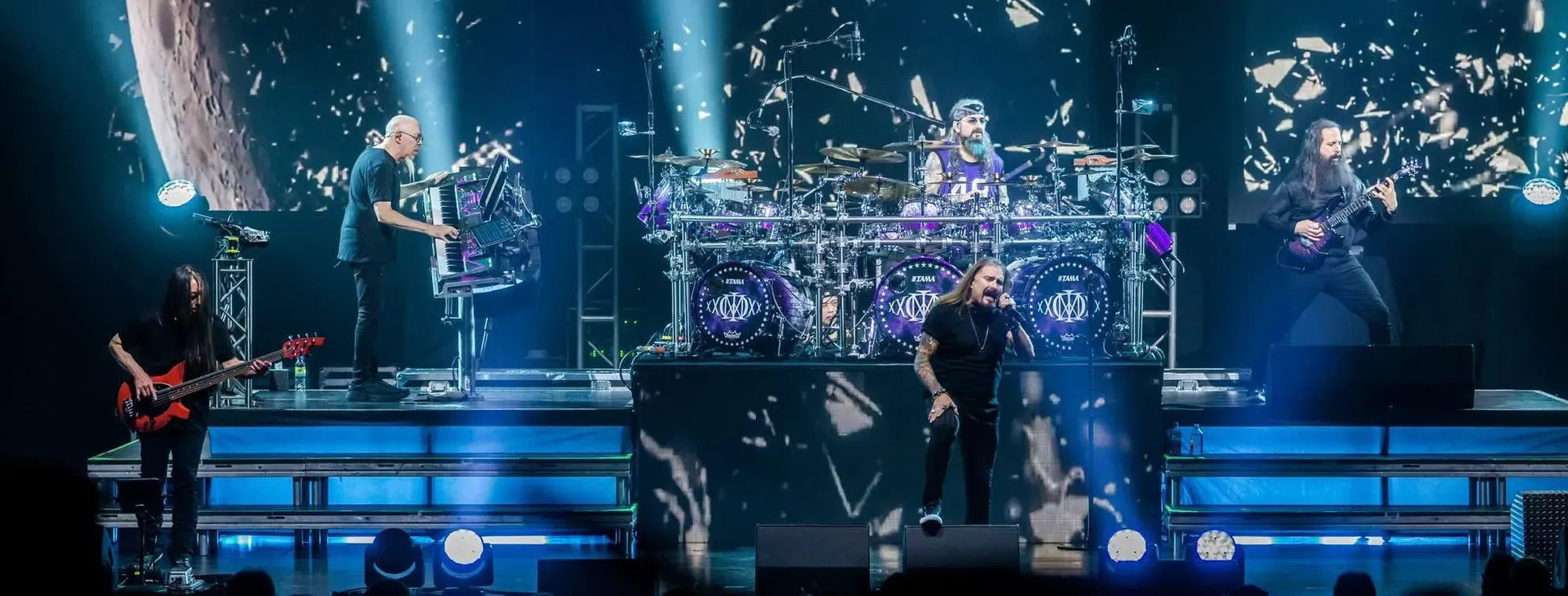
Some bands have a superstar member, that one unbelievable performer that guarantees success. Some groups have an amazing frontman, or a virtuoso guitarist, or a super songwriter, and some bands simply make girls crazy with their good looks. Surprisingly, in Dream Theater are found all the attributes that could be described as “star material.”
Talking about Dream Theater is like describing a new, sophisticated piece of equipment. Dream Theater are precision, high tech, innovative, and meticulous. As drummer/percussionist Mike Portnoy explains, “In Dream Theater, there is a very high standard set. Nothing is done in this band without reaching that standard, both individually and collectively.” Dream Theater are simply “state-of-the-art.”
Someone is going to use the label “progressive,” and Dream Theater doesn’t really mind, because this is definitely progress. What separates this group from a slew of other bands that have been called progressive is their utter lack of self indulgence, unheard-of teamwork, true melodiousness, and unbelievable hooks. These songs refuse to leave your mind.
Dream Theater is the carefully nurtured brainchild of its five members, who share a common vision of how they choose to direct their musical efforts. “We realize”, says Portnoy, that if you are going to spend the rest of your life making a living by making music, then you should be in a band with the best possible musicians you can find, that you should play your instrument to your fullest capabilities, and that you should write music that is taken to its furthest potential.”
Dream Theater are tremendously dedicated to their work. Each member finds the band the ideal outlet for their musical talents. As Petrucci explains, “The respect we have for each other as friends and musicians is tremendous in this band. There is a healthy challenge that exists every night at rehearsal. Everyone has the freedom to thrive as a songwriter, improviser, expressionist and visionary. There is no other situation I’d rather be in.”
Dream Theater was conceived in September, 1985. At that time, three members of what would become Dream Theater were studying in Boston at The Berklee School of Music. Portnoy, Petrucci, and bassist John Myung were composing original material, and rehearsing daily. During winter break in December, the trio returned to their home on Long Island, where they were rejoined by keyboardist Kevin Moore, who had played and written with both Petrucci and Myung throughout high school. Moore was also on break, but from the Fredonia School of Music. By March of the following year the foursome were joined by vocalist Chris Collins (who would later be replaced by current vocalist Charlie Dominici). Things were going so well for the band that no one returned to school that autumn.
Around this time, the group were calling themselves Majesty. Majestic, yes, but the band would later find that the name had been previously trademarked. Still, under the name Majesty, the band began gigging locally, and winning the admiration of their musician peers. In 1986 the band recorded a four track demo, that received rave reviews internationally. The first 1,000 copies of the demo sold out and fan mail started coming in from all over the world.
In November of 1986, the band parted ways with Collins. For a year they auditioned singers, and had met with close to 100 before they found Charlie Dominici in the autumn of 1987. Charlie suited the band in every respect, and as a quintet the band rehearsed daily throughout the winter.
In early 1988, the band’s demo crossed my desk. Before anyone knew what was happening, the entire staff of the record company were at their rehearsal in Long Island. I can honestly say this is the way it was; about 35 seconds into the first song a few glances were exchanged, a couple of jaws dropped, a contract was being written.
Immediately after the ink dried the band departed for Kajem Studios in Pennsylvania to record with producer Terry Date, (Metal Church, Fifth Angel, Sanctuary). The group named their album When Dream And Day Unite and christened themselves Dream Theater. Recently, Producer Terry Brown, (Rush, Cutting Crew), remixed two tracks from the album, “Status Seeker” and “Afterlife.”
It is my personal belief that this is an important opus from an exceptionally creative and ground-breaking new talent. I hope you feel the same.
Sincerely,
Steve Sinclair
President, Mechanic Records, Inc.